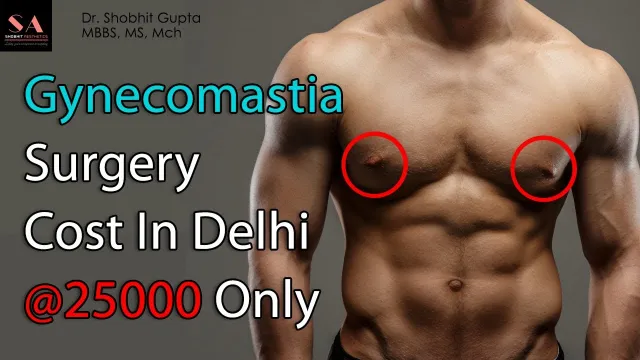
Gynecomastia is male breast enlargement caused by the abnormal growth of large mammary glands. Male breast enlargement can lower your self-esteem and cause emotional distress. It is also referred to as “man-boobs”. It is very normal to see significant changes in the general appearance in patients with Gynaecomastia, which influence their self-esteem till they accomplish the ideal outcomes with man breast reduction treatment.
It’s normal for men to be embarrassed by their large breasts. Don’t worry; this is a common medical condition called gynecomastia, or male boobs, in which men’s or boys’ breasts become larger. This increases the amount of breast gland tissue and can affect one or both breasts.
Although gynecomastia surgery is a great option, many people avoid it due to its high cost, which most people are unaware of. As a result, the purpose of this article is to provide you with an overview of the various aspects of gynecomastia, the best gynecomastia surgery in Delhi, the cost of the procedure, and the considerations you should make when weighing the costs associated with it.
What is Gynecomastia?
Gynecomastia is a medical condition characterised by the abnormal enlargement of breast tissue in males. The term is derived from the Greek words "gyne," meaning woman, and "mastos," meaning breast. Commonly referred to as "man boobs" or "moobs," gynecomastia affects men and boys of all age groups and can involve one or both breasts, sometimes unevenly.
Unlike the accumulation of chest fat seen in overweight individuals, gynecomastia specifically involves the growth of actual glandular breast tissue beneath the nipple area. This firm, rubbery tissue is the result of a hormonal imbalance — particularly an increase in estrogen relative to testosterone levels in the male body. While estrogen is primarily known as a female hormone, men naturally produce small amounts of it. When this balance is disrupted, breast tissue begins to develop abnormally.
Gynecomastia is far more common than many people realise. It affects an estimated 40 to 60 percent of men at some point in their lives and can occur at three distinct stages — during infancy due to the mother's estrogen, during puberty as hormone levels fluctuate, and in older age as testosterone levels naturally decline.
The condition can range from a small amount of puffiness around the nipples to a more significant enlargement that closely resembles female breasts. In addition to the physical appearance, gynecomastia can cause tenderness or sensitivity in the breast area, adding to the discomfort experienced by those affected.
While gynecomastia is not a life-threatening condition, its psychological impact should never be underestimated. Many men feel embarrassed, self-conscious, and reluctant to participate in activities that involve removing their shirt. Fortunately, with advancements in cosmetic surgery, gynecomastia is a highly treatable condition, and permanent results can be achieved safely and effectively through surgery.
Causes of Gynecomastia
Hormonal Imbalance: – An imbalance between estrogens, which are female hormones, and androgens, which are male hormones, results in pubertal gynecomastia, also known as male breast enlargement. The majority of cases are simply developmental during adolescence, with no apparent cause. The hormone levels in adults with pubertal gynaecomastia, which persists, are found to be normal. This may be because the circulating hormones have a different sensitivity.
Alcohol: – Excess consumption of alcohol is one of the reasons for developing gynecomastia. Excess alcohol can harm your liver which creates a condition called cirrhosis that prevents testosterone from being broken down and converting itself into estrogen.
Obesity: – One of the most common causes of gynecomastia or male boobs is obesity. A body enzyme known as “aromatase,” which is responsible for the process of “aromatization”—the transformation of androgens into estrogens—has been found to be more active in obese individuals. Estrogens are female hormones that men use to make their breasts bigger.
Steroids: – People sometimes take nutritional supplements laced with steroids, which inhibit our body’s natural male hormones (androgens) and cause an imbalance between estrogens and androgens, which is the shortcut for those striving for super fitness and six-pack abs. Male breast enlargement occurs as a result of estrogen’s relatively increased activity.
Medications: – Gynaecomastia can also occur when certain medications, such as antacids and antiepileptics, are taken for an extended period of time. Gynaecomastia can also be brought on by conditions like hypogonadism, hypothyroidism, and testicular tumors.
Candidates for Gynecomastia surgery: –
-
Who is above 18 years of age
- Healthy individuals with normal weight
- Nonsmokers and non-drug users
- Who has a positive outlook and specific goals
- Men who have low self-esteem the feeling that their breasts are too large
Gynecomastia Surgery Cost In Delhi
Gynecomastia surgery cost in Delhi vary from Rs. 27000 to 80000, however, you need to keep all of these things in mind; the patient’s condition, complications, and the portion of fat needed to be removed before deciding what the actual cost will be. At Shobhit Aesthetics, the Cost of Gynecomastia at our center starts from 27,000. Cost depends upon the grade of the surgery. This includes complete surgery cost which is done by the latest minimally invasive technology. We have treatment packages that include all of the costs and fees that will be incurred and are very open about our pricing structure. There would be no extra fees.
Please consult us for additional information and clarification.
Factors That Affect How Much Gynecomastia Surgery Costs in Delhi
The cost of gynecomastia surgery in Delhi is not too high. Numerous studies indicate that it is the lowest in comparison to other nations; consequently, many individuals from other nations are receiving this treatment in Delhi. Although the cost of gynecomastia surgery cannot be determined precisely, the following factors must be taken into account to determine the exact amount you will pay:
The volume of fat to be eliminated: Since Gynecomastia is a two-stage technique for example liposuction and tissue extraction, contingent on how much fat should be eliminated and whether only one strategy is required or both are required, the expense will fluctuate in like manner.
Anesthesia Charges: – The cost will vary depending on the type of anesthesia used—local or general. It will be decided by your surgeon as per the amount of fat that would be removed.
The area where treatment is required: In light of which particular region the fat or tissue should be eliminated, the expense varies. For instance, it will take more precision to remove tissue if it is close to the nipples, increasing the cost.
Experience and qualifications of the doctor:- Highly qualified and experienced doctors will charge more for the treatment. But it proves to be cost-effective in the long run if done by a board-certified and experienced surgeon. Always choose a well-qualified and experienced doctor for fewer complications.
Hospital stay fee if necessary: –Hospital stay fees will be added in the event that your condition necessitates a stay there.
The clinic’s Location: – There are slight regional variations in the clinic’s prices in Delhi. The price will be higher the posher the location.
If necessary, additional procedures and post-operative care: – Other expenses, such as medicines and compression garments, or if you want to have a similar procedure like a tummy tuck or something similar done in addition to it, the price will rise.
Grades of Gynecomastia:-
Gynaecomastia is classified under the following grades as per the size of the excess tissue or fat.
● Grade 1: Puffy nipples consist of fat up to 200 ml, and can be treated under local anesthesia
● Grade 2: Small enlargement with fat in the range of 250-500 ml without any extra skin
● Grade 3: Moderate tissue with up to 500 ml -1 liter of fat
● Grade 4: Large tissue having more than 1 liter of fat and appearing female-like breasts.
The Procedure of Gynecomastia Surgery
Gynecomastia surgery, medically known as reduction mammaplasty, is a safe and well-established cosmetic procedure designed to remove excess glandular tissue, fat, and in some cases skin from the male chest. The actual procedure is straightforward and can typically be completed within one and a half to two hours, depending on the grade of gynecomastia and the surgical technique required.
Before the Surgery Begins
On the day of the procedure, your surgeon will begin by marking the chest area to map out the regions where tissue and fat need to be removed. This pre-surgical marking is a critical step that guides precision during the operation and ensures symmetrical, natural-looking results. The anaesthesia plan — whether local, sedation, or general anaesthesia — will have been decided during your consultation based on the grade of your condition and the volume of tissue to be removed.
Step One — Anaesthesia
The patient is administered the appropriate form of anaesthesia to ensure complete comfort throughout the procedure. For Grade 1 cases involving only puffy nipples and a small amount of tissue, local anaesthesia is often sufficient. For higher grades involving larger volumes of fat and glandular tissue, general anaesthesia is typically preferred to allow the surgeon to work thoroughly and without interruption.
Step Two — Liposuction for Fat Removal
In cases where excess fatty tissue is a significant component of the enlargement, liposuction is performed first. The surgeon makes one or two tiny incisions — usually just a few millimetres in length — in inconspicuous locations around the chest. A thin, hollow tube called a cannula is inserted through these incisions and moved in controlled motions to loosen and suction out the fatty tissue.
Many leading clinics in Delhi, including Shobhit Aesthetics, use advanced VASER liposuction technology, which employs ultrasound energy to gently break down fat cells before removal. This results in smoother chest contours, reduced bruising, and faster healing compared to traditional liposuction techniques.
Step Three — Glandular Tissue Excision
Following liposuction, if glandular breast tissue is present — which is the hallmark of true gynecomastia — it must be surgically excised. The surgeon makes a carefully placed semicircular incision along the lower border of the areola, where it meets the normal chest skin. This placement is deliberate, as the natural colour transition of the areola effectively conceals the scar once healed.
Through this incision, the firm, rubbery glandular tissue beneath the nipple-areola complex is precisely removed. The surgeon takes great care to leave a small amount of tissue directly behind the nipple to prevent a sunken or inverted appearance, which is a common complication in less experienced hands.
Step Four — Skin Tightening and Closure
In higher-grade cases where excess skin is present alongside the fat and glandular tissue, additional skin removal may be performed to achieve a taut, flat chest. Once the necessary tissue has been removed and the surgeon is satisfied with the symmetry and contour of both sides, the incisions are closed with fine dissolvable sutures. A compression garment is applied immediately after the procedure.
The result is a flatter, firmer, and more masculine chest contour that the patient can begin appreciating as soon as the initial swelling begins to subside.
Post-Operative Care of Gynecomastia Surgery
Recovery from gynecomastia surgery is relatively quick compared to many other cosmetic procedures, but it does require strict adherence to your surgeon's aftercare instructions to ensure a smooth healing process and the best possible results.
The First 48 to 72 Hours
The initial days after surgery are the most important for rest and careful monitoring. Some degree of swelling, bruising, and soreness in the chest area is completely normal and expected. Your surgeon will prescribe painkillers to manage discomfort and antibiotics to prevent infection. It is essential to take the full course of both medications as directed, even if you begin to feel better sooner than expected.
Most patients are able to return home on the same day as the surgery or the following morning. Light walking around the house is encouraged from the very first day to promote healthy blood circulation, but strenuous activity must be strictly avoided.
Compression Garment Use
One of the most important aspects of post-operative care after gynecomastia surgery is wearing a compression garment consistently for three to six weeks. The compression garment serves multiple vital functions — it reduces swelling, minimises fluid accumulation, supports the healing tissues, helps the skin retract and conform to the new chest contour, and significantly improves the final aesthetic outcome.
Patients are advised to wear the garment round the clock initially, removing it only for bathing. As healing progresses, your surgeon will advise you on when it is safe to reduce the hours of wear.
Returning to Daily Activities
One of the advantages of modern minimally invasive gynecomastia surgery is the relatively short downtime. Most patients need just two to three days away from desk-based work or school before they feel comfortable resuming light daily activities. Physical jobs that involve lifting, pulling, or repetitive upper body movement will require a longer rest period of approximately three to four weeks.
Driving should be avoided for at least five to seven days after surgery or as long as you are taking prescription painkillers.
Exercise and Physical Activity
Light walking can be resumed within the first week. However, gym workouts, chest exercises, swimming, and any form of vigorous physical activity should be avoided for a minimum of four to six weeks after surgery. Returning to exercise too early can increase swelling, cause the incisions to reopen, and negatively affect the final results.
When you do return to exercise, start gradually. Begin with lower body workouts and light cardio before reintroducing upper body training. Always get your surgeon's clearance before resuming any strenuous activity.
Follow-Up Appointments
Attending all scheduled follow-up appointments is a non-negotiable part of your recovery. Your surgeon will examine the healing incisions, monitor for any signs of complications such as seroma (fluid collection) or infection, and advise you on scar care and activity progression. At Shobhit Aesthetics, multiple post-operative follow-up consultations are included at no additional cost as part of the treatment package.
When Will You See the Final Results?
While improvements in the chest contour are visible almost immediately after surgery, the final results of gynecomastia surgery become fully evident approximately six weeks after the procedure. By this point, the majority of swelling will have subsided, the skin will have tightened around the new contour, and the incision scars will have begun to fade. The chest will appear flatter, firmer, and more defined — results that, with the right lifestyle maintenance, are designed to last a lifetime.
Gynecomastia Do’s and Don’ts
After the surgery, it is prescribed as follows:
- Compression garments should be worn to prevent additional pressure at the surgical site, reduce swelling, and alleviate pain.
- Moderate activities should be started.
- Drink plenty of fluids and eat a healthy diet to get enough nutrients.
- It is not recommended to go directly into the sun for at least six weeks, or until the bruising has gone down.
- The patient must avoid doing anything strenuous like running, aerobics, heavy lifting, or swimming.
- The patient should not drink alcohol for at least 72 hours after the surgery.
Is Gynecomastia Surgery Permanent?
One of the most frequently asked questions by men considering gynecomastia surgery is whether the results are permanent. The good news is that in most cases, gynecomastia surgery delivers long-lasting and permanent results. Once the excess glandular tissue and fat are surgically removed, they do not grow back under normal circumstances.
However, it is important to understand that certain lifestyle factors can influence the longevity of your results. Significant weight gain after surgery, use of anabolic steroids, consumption of certain medications, or hormonal imbalances can potentially cause recurrence of breast tissue enlargement. This is why surgeons strongly advise patients to maintain a stable, healthy weight and follow a balanced lifestyle after their procedure.
When performed by a skilled and experienced plastic surgeon, gynecomastia surgery provides a flat, well-contoured chest that can dramatically improve a man's confidence and quality of life for many years to come.
Gynecomastia vs Pseudogynecomastia: Understanding the Difference
Before undergoing any surgical procedure, it is essential to understand whether you have true gynecomastia or pseudogynecomastia, as the treatment approach differs significantly between the two.
True Gynecomastia involves the actual enlargement of the glandular breast tissue beneath the nipple. It is caused by a hormonal imbalance between estrogen and testosterone and is not simply the result of fat accumulation. True gynecomastia requires surgical removal of the glandular tissue, typically performed through a small incision around the areola.
Pseudogynecomastia, on the other hand, is caused purely by the accumulation of fat in the chest area without any glandular tissue involvement. It is commonly associated with obesity or being overweight and can often be treated effectively with liposuction alone.
In many patients, a combination of both conditions is present, requiring both liposuction to remove the fat and surgical excision to remove the glandular tissue. A thorough clinical examination and sometimes an ultrasound or mammogram by your surgeon will confirm which condition you have and determine the most appropriate treatment plan.
Gynecomastia Surgery Techniques: What Are Your Options?
Modern gynecomastia surgery has evolved significantly, and patients today have access to a range of minimally invasive and advanced surgical techniques. The choice of technique depends on the grade of gynecomastia, the composition of the tissue, and the surgeon's expertise.
Liposuction
Liposuction is used to remove excess fatty tissue from the chest. It is most effective for pseudogynecomastia or mild cases of true gynecomastia where the fat-to-gland ratio is high. A thin tube called a cannula is inserted through tiny incisions to break up and suction out the fat. Modern variations such as VASER liposuction use ultrasound energy to liquefy fat before removal, resulting in smoother contours and less trauma to surrounding tissue.
Glandular Tissue Excision
For true gynecomastia, surgical excision of the glandular tissue is necessary. The surgeon makes a small semicircular incision along the lower edge of the areola, through which the firm glandular tissue is carefully removed. This technique is highly precise and leaves minimal visible scarring as the incision is hidden along the natural border of the areola.
Combination Approach
The majority of gynecomastia cases in clinical practice require a combination of liposuction and glandular excision for optimal results. This approach addresses both the fatty and glandular components of the condition simultaneously, delivering a flatter, more masculine chest contour.
Minimally Invasive Techniques
At leading clinics like Shobhit Aesthetics in Delhi, the latest minimally invasive technology is used to perform gynecomastia surgery with precision, reduced bleeding, minimal scarring, and faster recovery. These advanced techniques make it possible to perform the procedure under local anaesthesia for lower-grade cases, significantly reducing costs and the need for a hospital stay.
What Happens During the Gynecomastia Surgery Consultation?
The consultation is a critical step in your gynecomastia treatment journey. A detailed and transparent consultation helps both the patient and the surgeon align on expectations, understand the procedure, and plan for the best possible outcome.
During your consultation at Shobhit Aesthetics, you can expect the following:
Medical History Review: Your surgeon will ask about your overall health, any existing medical conditions, medications you are currently taking, history of steroid or supplement use, and family history of hormonal disorders.
Physical Examination: The surgeon will examine your chest to assess the amount and composition of breast tissue, skin elasticity, nipple position, and the grade of your gynecomastia.
Hormonal and Diagnostic Tests: In some cases, blood tests to check hormone levels, liver function, and thyroid function may be recommended to rule out underlying medical causes of gynecomastia. An ultrasound or mammogram may also be requested.
Discussion of Goals: Your surgeon will discuss your aesthetic goals, the degree of correction you are seeking, and what realistically can be achieved with surgery.
Treatment Plan and Cost Breakdown: A personalised treatment plan and a transparent cost breakdown will be presented, covering all aspects of the surgery including anaesthesia, facility fees, post-operative garments, and follow-up consultations.
Psychological Impact of Gynecomastia and How Surgery Helps
The physical appearance of enlarged male breasts goes far beyond a cosmetic concern. Many men and adolescents with gynecomastia experience a profound psychological impact that affects nearly every aspect of their daily lives.
Studies have shown that men with gynecomastia frequently report:
- Avoidance of social situations such as swimming, sports, and gym activities
- Reluctance to change clothes in communal spaces like locker rooms
- Persistent feelings of embarrassment, shame, and low self-worth
- Anxiety and depression linked to body image dissatisfaction
- Difficulty forming intimate relationships due to self-consciousness
The emotional burden of gynecomastia is often underestimated by those who have not experienced it personally. For many men, the condition has a greater impact on their quality of life than the physical discomfort it may cause.
Gynecomastia surgery has consistently been shown to produce significant improvements in psychological well-being. Patients report greater self-confidence, improved body image, increased willingness to participate in physical and social activities, and an overall enhancement in their quality of life following a successful procedure. For many, it is not merely a cosmetic surgery — it is a life-changing decision.
Diet and Lifestyle Tips to Support Your Gynecomastia Surgery Results
While gynecomastia surgery delivers immediate and lasting results, maintaining a healthy lifestyle after the procedure is essential to preserve those results long-term. Here are some practical diet and lifestyle recommendations to support your recovery and outcomes.
Maintain a Healthy Weight
Significant weight gain after surgery can lead to the reaccumulation of fat in the chest area, affecting the appearance of your results. Following a balanced diet rich in lean proteins, vegetables, whole grains, and healthy fats while limiting processed foods, sugar, and excess calories will help you maintain a stable weight.
Exercise Regularly
Once your surgeon clears you for physical activity — typically around four to six weeks after surgery — incorporating regular chest-strengthening exercises such as push-ups, bench press, and cable flyes can help tone the pectoral muscles and enhance the definition of your chest. Cardiovascular exercise also supports overall weight management.
Avoid Anabolic Steroids and Supplements
The use of anabolic steroids and certain bodybuilding supplements is a well-known trigger for gynecomastia. After surgery, it is critical to avoid these substances entirely to prevent recurrence of the condition.
Limit Alcohol Consumption
Excessive alcohol consumption can impair liver function, which in turn disrupts the metabolism of hormones and increases estrogen levels in men. Moderating alcohol intake is an important lifestyle change to support hormonal balance and long-term results.
Regular Follow-Ups
Attending all post-operative follow-up appointments allows your surgeon to monitor your healing progress and address any concerns early. Even after full recovery, periodic check-ins with your surgeon are advisable to ensure your results remain intact.
Gynecomastia Surgery in Delhi vs Other Cities in India
Delhi has established itself as one of the leading destinations for gynecomastia surgery in India, and for good reason. When compared to other major Indian cities, Delhi offers a compelling combination of surgical expertise, advanced facilities, competitive pricing, and accessibility.
| City | Average Cost Range | Surgeon Expertise | Facility Standards |
|---|---|---|---|
| Delhi | ₹27,000 – ₹80,000 | Very High | Excellent |
| Mumbai | ₹35,000 – ₹1,00,000 | Very High | Excellent |
| Bengaluru | ₹30,000 – ₹90,000 | High | Very Good |
| Hyderabad | ₹28,000 – ₹75,000 | High | Very Good |
| Chennai | ₹25,000 – ₹70,000 | High | Good |
Delhi consistently attracts patients from across India and abroad due to the high concentration of board-certified plastic surgeons, internationally accredited hospitals, and clinics that use the latest minimally invasive technology. Clinics like Shobhit Aesthetics offer all-inclusive treatment packages with no hidden costs, making the overall experience transparent and stress-free for patients.
Travelling to Delhi for Gynecomastia Surgery: A Practical Guide
For patients travelling from other states or countries to undergo gynecomastia surgery in Delhi, some advance planning can make the experience smooth and comfortable.
Booking in Advance: Schedule your consultation and surgery date well in advance. Many reputable clinics offer virtual consultations that allow you to complete your pre-operative assessment before you arrive in Delhi.
Accommodation: Plan to stay in Delhi for at least five to seven days after your surgery to attend follow-up appointments and allow for initial recovery. Many clinics, including Shobhit Aesthetics, assist patients in arranging comfortable accommodation nearby.
Transportation: Opt for a clinic that offers pick-up and drop-off services on the day of surgery, as driving yourself or navigating public transport after the procedure is not advisable.
Documentation: Carry all relevant medical records, diagnostic test results, and a list of current medications to share with your surgeon during the consultation.
Post-Travel Care: Avoid long journeys or flights immediately after surgery. If you are travelling back to another city or country after the procedure, consult your surgeon about the appropriate time to travel safely.
Choose Shobhit Aesthetics for Affordable Gynecomastia Treatment in Delhi:-
At Shobhit Aesthetics, we prioritize the needs of our patients first. That is why we have customized our services to ensure that patients receive the best possible care. We have: –
- A team of board-certified and skilled plastic surgeons.
- Our medical care coordinators provide complete assistance with treatment-related formalities and insurance claims.
- Options for making payments, such as cash, checks, debit and credit cards, etc.
- For cashless treatment, all insurance plans are accepted.
- On the day of surgery, there is a free pick-up and drop-off service to and from the hospital.
- Consultations for multiple follow-ups after surgery at no additional cost.
If you’re looking for an effective treatment option for gynecomastia, visit Shobhit Aesthetics, you’ll love to find a variety of presumed facilities that offer it. So, before making a decision, make sure you tell your surgeon everything you know about your health and your medical history. If you have the right surgery, your chest will be well-defined.
Shobhit Aesthetics by Dr. Shobhit Gupta clinic in Delhi gives patients a personalized approach by quoting their needs and sharing knowledge so you can make an informed decision. Dr. Shobhit Gupta is a board-certified plastic and cosmetic surgeon with over more than 12 years of experience. He is a gold medalist with a 100% success rate. Every procedure and treatment is tailored to each patient’s specific requirements. For more details about the facilities and services, go to the website shobhitaesthetics.com. Feel free to get in touch with us or set up an appointment and give us a chance to bring confidence in you by creating an aesthetic look.
Frequently Asked Questions (FAQs):-
Q1. What is the cost of gynecomastia surgery in Delhi?
The cost of gynecomastia surgery in Delhi typically ranges from ₹27,000 to ₹80,000 depending on several factors such as the grade of gynecomastia, the surgical technique required, the surgeon's experience, and the clinic's location. At Shobhit Aesthetics, the surgery is performed using the latest minimally invasive technology, and the pricing is completely transparent with no hidden charges. The final cost is determined after a thorough consultation and physical assessment by the surgeon.
Q2. Is gynecomastia surgery painful?
Gynecomastia surgery is performed under anaesthesia, so patients do not experience any pain during the procedure itself. After the surgery, some degree of soreness, tightness, and mild discomfort in the chest area is normal and expected. This is effectively managed with prescribed painkillers for the first few days. Most patients report that the discomfort is very manageable and significantly reduces within the first week of recovery. By the second week, the majority of patients feel comfortable enough to resume light daily activities.
Q3. How long does it take to recover from gynecomastia surgery?
Recovery from gynecomastia surgery is relatively quick. Most patients can return to desk-based work or school within two to three days of the procedure. Light daily activities can be resumed within the first week. Strenuous physical activities, gym workouts, and heavy lifting should be avoided for four to six weeks. The compression garment must be worn consistently for three to six weeks to support healing and improve the final contour. Full and final results are typically visible around six weeks after surgery when all swelling has completely subsided.
Q4. Will there be visible scars after gynecomastia surgery?
Scarring after gynecomastia surgery is minimal and strategically hidden. The surgeon places incisions along the natural lower border of the areola, where the colour transition of the skin effectively conceals the scar once healed. For liposuction, the incisions made are just a few millimetres in size and fade significantly over time. With proper post-operative scar care — including the use of silicone gel sheets, scar creams, and sun protection — scars become barely noticeable within a few months. An experienced surgeon like Dr. Shobhit Gupta takes great care to minimise scarring while delivering optimal results.
Q5. Can gynecomastia come back after surgery?
In the vast majority of cases, gynecomastia surgery delivers permanent results. Once the glandular tissue and fat are surgically removed, they do not grow back under normal circumstances. However, recurrence is possible if the underlying cause of gynecomastia is not addressed. Factors such as significant weight gain, use of anabolic steroids, consumption of certain medications, or hormonal imbalances can potentially trigger regrowth of breast tissue. Maintaining a stable weight, following a healthy lifestyle, and avoiding known triggers after surgery are the best ways to ensure long-lasting results.
Q6. At what age can a person undergo gynecomastia surgery?
Gynecomastia surgery is recommended for individuals who are 18 years of age or older. This ensures that the body has fully matured and that the hormonal fluctuations associated with puberty have stabilised, reducing the risk of recurrence after surgery. In adolescents, gynecomastia caused by puberty often resolves on its own within one to two years, so surgery is generally not advised until adulthood. In exceptional cases where the condition is severe and causing significant psychological distress in a younger patient, a surgeon may consider surgery after a thorough evaluation.
Q7. What is the difference between gynecomastia surgery and liposuction for the chest?
Liposuction removes excess fatty tissue from the chest and is effective for pseudogynecomastia, where chest enlargement is caused purely by fat accumulation. True gynecomastia, however, involves the growth of actual glandular breast tissue beneath the nipple, which cannot be removed by liposuction alone. In such cases, surgical excision of the glandular tissue through a small incision around the areola is necessary. Most patients with gynecomastia require a combination of both liposuction and glandular excision for complete and natural-looking results. Your surgeon will determine the most appropriate approach after examining your specific condition.
Q8. How do I know which grade of gynecomastia I have?
Gynecomastia is classified into four grades based on the size and composition of the excess tissue. Grade 1 involves only puffy nipples with a small amount of fat. Grade 2 is a small but noticeable enlargement without excess skin. Grade 3 involves moderate tissue enlargement of up to one litre of fat. Grade 4 is a significant enlargement with more than one litre of fat that closely resembles female breasts. Only a qualified plastic surgeon can accurately determine your grade through a physical examination and, if necessary, diagnostic imaging such as an ultrasound. The grade directly influences the surgical technique and the overall cost of the procedure.
Q9. Is gynecomastia surgery covered by insurance in India?
In most cases, gynecomastia surgery is considered a cosmetic procedure and is therefore not covered by standard health insurance policies in India. However, if the condition is caused by an underlying medical issue such as hypogonadism, testicular tumours, or certain hormonal disorders, some insurance providers may offer partial or full coverage. At Shobhit Aesthetics, the team assists patients with all insurance-related formalities and accepts all cashless insurance plans where applicable. It is advisable to check directly with your insurance provider regarding the terms of your policy before proceeding with surgery.
Q10. Why should I choose Shobhit Aesthetics for gynecomastia surgery in Delhi?
Shobhit Aesthetics is one of Delhi's most trusted names in cosmetic and plastic surgery, led by Dr. Shobhit Gupta — a gold medalist, board-certified plastic surgeon with over 12 years of experience and a 100% success rate. The clinic uses the latest minimally invasive surgical technology to deliver precise, natural-looking results with minimal scarring and faster recovery. Pricing is completely transparent with no hidden fees, and all-inclusive treatment packages are available. Patients benefit from free pick-up and drop-off on the day of surgery, cashless insurance processing, and multiple post-operative follow-up consultations at no additional cost. Every treatment plan is personalised to the individual patient's needs, ensuring the safest and most satisfying outcome possible.