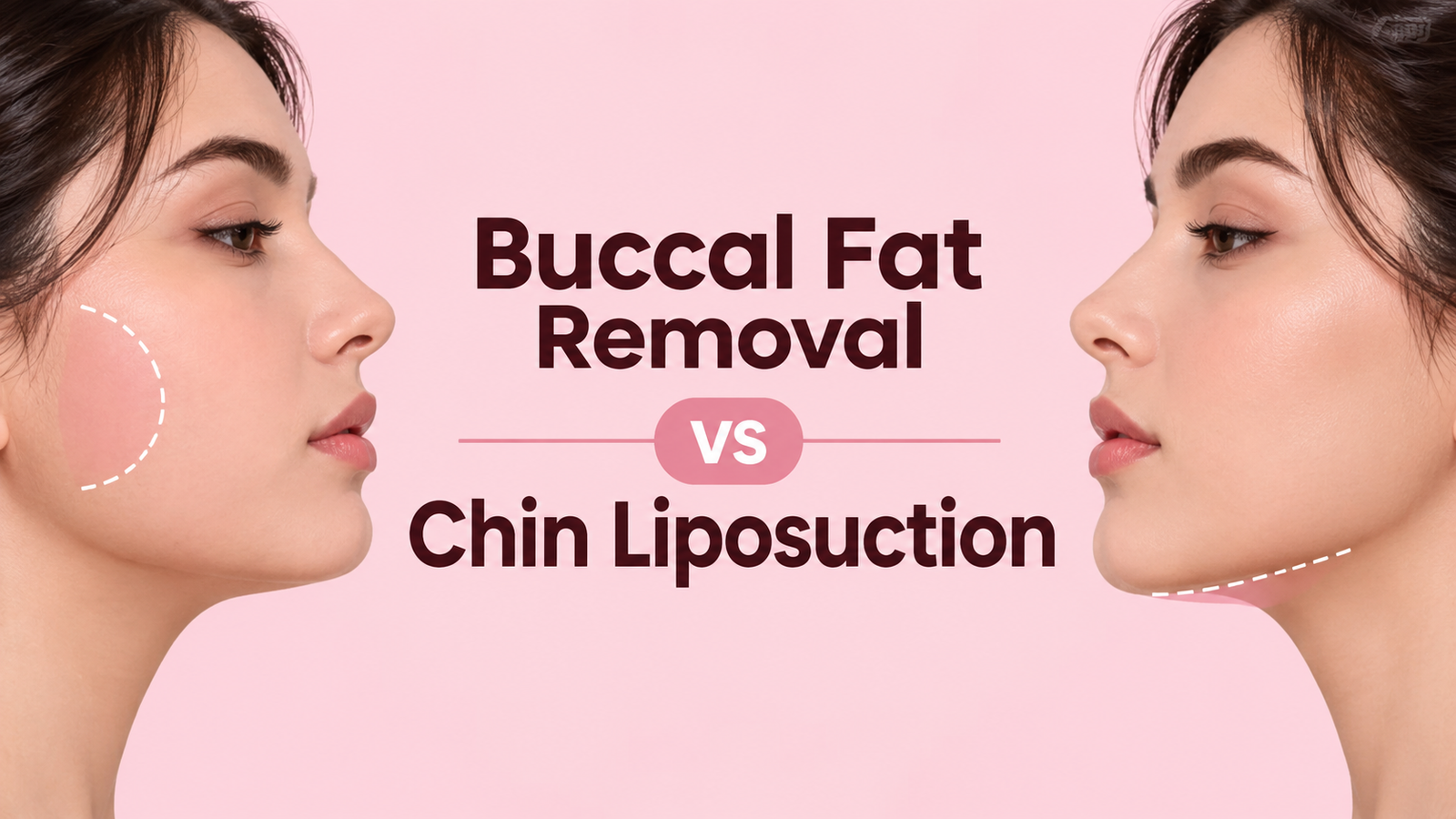
A well-defined face is often associated with balanced cheek contours, a sharper jawline and a more structured appearance. However, facial fullness can occur in different areas, and not every concern can be addressed with the same cosmetic procedure. Some people have naturally fuller cheeks, while others struggle with excess fat beneath the chin that creates the appearance of a double chin.
Two procedures commonly considered for facial contouring are buccal fat removal and chin liposuction. Both aim to reduce unwanted fat and improve facial definition, but they target different areas and involve different surgical techniques.
In this guide, we explain the differences between buccal fat removal and chin liposuction, how each procedure works, their benefits, recovery requirements and which option may be suitable for different facial structures.
Table of Contents
- What Is Buccal Fat Removal?
- What Is Chin Liposuction and How Does It Work?
- Buccal Fat Removal vs Chin Liposuction: What Is the Difference?
- How Does Buccal Fat Removal Create a More Defined Face?
- What Are the Benefits of Chin Liposuction?
- Which Procedure Is Better for Reducing Facial Fullness?
- Who Is a Suitable Candidate for Buccal Fat Removal or Chin Liposuction?
- What Is Chin Liposuction and How Is It Performed?
- What Is the Recovery Time for Buccal Fat Removal and Chin Liposuction?
- What Are the Risks of Buccal Fat Removal and Chin Liposuction?
- Why Choose Shobhit Aesthetics for Facial Contouring?
- Frequently Asked Questions
- Conclusion
What Is Buccal Fat Removal?
Buccal fat removal is a cosmetic procedure that reduces the size of the buccal fat pads located deep within the lower cheeks. These natural fat compartments contribute to cheek fullness and influence the overall shape of the face.
Some people naturally have prominent buccal fat pads, which can make the lower cheeks appear fuller even when they maintain a healthy body weight.
During the procedure, the surgeon generally makes a small incision inside the mouth to access the buccal fat pad. A carefully selected amount of fat is removed to create a more defined cheek contour.
The objective is to reduce excessive lower cheek fullness while maintaining natural facial proportions.
Buccal fat removal may be considered by people who have persistent cheek fullness that does not change significantly with weight management. However, not every round face is caused by prominent buccal fat pads. Bone structure, facial muscles, subcutaneous fat and overall facial anatomy also influence appearance.
It is particularly important to avoid excessive fat removal because buccal fat contributes to natural facial volume. Removing too much can create hollow cheeks, which may become more noticeable with age.
What Is Chin Liposuction and How Does It Work?
Chin liposuction is a cosmetic procedure that removes localised fat deposits from beneath the chin and, in selected cases, the upper neck.
The final result depends on factors such as skin elasticity, fat volume, chin projection and the underlying jaw structure. Patients with significant loose skin may require a different or additional treatment rather than liposuction alone.
Buccal Fat Removal vs Chin Liposuction: What Is the Difference?
Although both procedures are designed to improve facial contours, they address different anatomical concerns.
| Feature | Buccal Fat Removal | Chin Liposuction |
|---|---|---|
| Target area | Lower cheeks | Beneath the chin and selected upper neck areas |
| Main concern | Naturally full or rounded cheeks | Double chin or submental fullness |
| Surgical approach | Removal of selected buccal fat through an internal mouth incision | Fat removal using a cannula through small skin incisions |
| Main objective | More defined cheek contours | Sharper chin-to-neck transition |
| Visible external incision | Generally no | Small external incisions |
| Key consideration | Preserving natural cheek volume | Skin elasticity and jawline anatomy |
The biggest difference is the source of facial fullness.
Someone with prominent lower cheeks but little fat beneath the chin may be assessed for buccal fat removal. Someone with a double chin but naturally defined cheeks may benefit more from chin liposuction.
In some cases, both concerns may be present. However, combining procedures should only be considered after a detailed facial assessment.
How Does Buccal Fat Removal Create a More Defined Face?
Buccal fat removal creates a more defined facial appearance by reducing fullness in the lower cheeks. The buccal fat pads sit deep within the cheek area, and their size can influence how round or angular the lower face appears.
When a suitable amount of buccal fat is removed, the cheeks may appear slimmer, making the cheekbones and natural facial contours more noticeable.
Potential aesthetic changes include:
- Reduced fullness in the lower cheeks.
- More visible cheekbone definition.
- A slimmer-looking lower face.
- Improved balance between the cheeks and jawline.
- A more sculpted facial appearance.
However, the results depend on facial anatomy. People with naturally narrow faces or existing cheek hollowness may not benefit from the procedure.
It is also important to remember that buccal fat removal does not directly remove fat beneath the chin or reshape the jawbone. Its purpose is specifically to reduce fullness caused by the buccal fat pads.
According to Johns Hopkins Medicine, the procedure can create a narrower lower-face appearance, but removing too much fat may make the face look excessively hollow, particularly as natural ageing causes further facial volume loss.
What Are the Benefits of Chin Liposuction?
Chin liposuction focuses on improving the appearance of the chin and neck by removing unwanted fat beneath the jawline.
For people with a double chin, excess submental fat can hide the natural jawline and create a less defined transition between the face and neck.
Potential benefits include:
- Reduced Double Chin: The procedure removes localised fat beneath the chin, helping reduce fullness in this area.
- Improved Jawline Definition: Reducing excess fat can make the jawline appear more noticeable.
- Better Chin-to-Neck Contour: The treatment aims to create a smoother transition between the lower face and neck.
- Improved Facial Proportions: Reducing fullness beneath the chin can make the lower face appear more balanced.
- Targeted Fat Removal: Chin liposuction focuses on a specific area rather than changing the volume of the cheeks.
However, the results depend on skin elasticity and underlying anatomy. Patients with significant loose skin or weak chin projection may need a different or additional treatment.
The International Society of Aesthetic Plastic Surgery notes that neck liposuction is generally most suitable for patients with localised fat, good skin elasticity and limited muscle banding.
Which Procedure Is Better for Reducing Facial Fullness?
There is no single answer because buccal fat removal and chin liposuction treat different types of facial fullness.
The better option depends on where the unwanted fat is located.
When Buccal Fat Removal May Be More Suitable
Buccal fat removal may be considered when:
- The lower cheeks appear naturally full.
- Cheek fullness remains despite a stable body weight.
- The buccal fat pads contribute significantly to the rounded facial appearance.
- The patient has sufficient natural facial volume and appropriate skin quality.
The procedure is not generally recommended for people who already have narrow or hollow cheeks because removing additional fat may create an excessively thin appearance.
When Chin Liposuction May Be More Suitable
Chin liposuction may be considered when:
- There is noticeable fullness beneath the chin.
- A double chin affects the appearance of the jawline.
- Excess submental fat remains despite maintaining a stable weight.
- The skin has sufficient elasticity to adapt after fat removal.
People with significant skin laxity may require an assessment for additional procedures, such as a neck lift.
Who Is a Suitable Candidate for Buccal Fat Removal or Chin Liposuction?
Both procedures are intended for people with specific concerns about facial fullness, but their suitability requirements differ.
Suitable Candidates for Buccal Fat Removal
A suitable candidate generally:
- Has persistent fullness in the lower cheeks.
- Has prominent buccal fat pads.
- Maintains a relatively stable weight.
- Has sufficient natural facial volume.
- Is in good general health.
- Has realistic expectations about the results.
People with naturally thin faces, existing cheek hollowness or significant age-related facial volume loss may not be suitable.
Suitable Candidates for Chin Liposuction
A suitable candidate generally:
- Has localised fat beneath the chin.
- Has a double chin that affects facial definition.
- Has reasonably good skin elasticity.
- Is close to a stable, healthy weight.
- Is in suitable general health.
- Understands the limitations of fat removal.
If loose skin or poor chin projection is the main concern, liposuction alone may not provide the desired outcome.
A consultation and physical examination help identify whether the fullness comes from fat, skin laxity, muscle structure or the underlying bone.
What Is Chin Liposuction and How Is It Performed?
Chin liposuction is a surgical procedure that removes excess fat from beneath the chin and selected areas of the upper neck.
The procedure generally involves:
- Facial Assessment: The surgeon evaluates the amount of submental fat, skin elasticity, chin projection and jawline structure.
- Anaesthesia: Local anaesthesia, sometimes with sedation, or general anaesthesia may be selected.
- Small Incisions: Small incisions are made in discreet locations, commonly beneath the chin.
- Cannula Insertion: A thin cannula is inserted beneath the skin to remove unwanted fat through controlled suction.
- Completion: The incisions are closed or managed according to the surgical technique, and a compression garment may be recommended.
The aim is to remove appropriate amounts of fat without creating uneven contours or excessive skin laxity.
What Is the Recovery Time for Buccal Fat Removal and Chin Liposuction?
Recovery depends on the procedure, the amount of tissue treated and individual healing. Although both procedures involve facial contouring, their aftercare requirements are different.
Buccal Fat Removal Recovery
After buccal fat removal, patients may experience swelling inside the cheeks, mild discomfort and temporary difficulty eating certain foods.
Since the incision is inside the mouth, maintaining oral hygiene is particularly important.
General recovery instructions may include:
- Following a soft-food diet during the initial recovery period.
- Using prescribed mouthwash as directed.
- Avoiding strenuous exercise until medically cleared.
- Keeping the mouth and surgical area clean.
- Taking prescribed medication.
- Attending follow-up appointments.
Many patients can return to routine activities within approximately a week, although swelling may take several weeks or longer to settle. Final facial contours may take a few months to become apparent.
Chin Liposuction Recovery
Recovery after chin liposuction generally involves temporary swelling, bruising, tenderness and tightness beneath the chin.
Patients may be advised to:
- Wear a compression garment as recommended.
- Keep the incision areas clean.
- Avoid strenuous physical activities initially.
- Follow instructions regarding sleeping positions.
- Attend scheduled follow-up appointments.
- Avoid pressure on the treated area.
Swelling and bruising generally improve over several weeks, while final results may take three to six months to become clear. The timeline varies depending on skin quality, the amount of fat removed and individual healing.
What Are the Risks of Buccal Fat Removal and Chin Liposuction?
Both procedures involve surgery and carry potential complications. Understanding these risks is important before making a treatment decision.
Risks of Buccal Fat Removal
Possible complications include:
- Infection.
- Bleeding and swelling.
- Facial asymmetry.
- Injury to salivary ducts.
- Injury to nearby facial nerve branches.
- Changes in sensation.
- Prolonged discomfort.
- Excessive cheek hollowing.
- Unsatisfactory cosmetic results.
One of the biggest concerns is excessive fat removal. Since buccal fat contributes to natural facial volume, removing too much may make the cheeks appear hollow, particularly as the face ages.
Risks of Chin Liposuction
Possible complications include:
- Bruising and swelling.
- Infection.
- Bleeding or fluid accumulation.
- Uneven skin contours.
- Temporary or persistent numbness.
- Skin irregularities.
- Changes in skin sensitivity.
- Nerve injury.
- Loose or sagging skin.
The risk of loose skin may be higher in patients with reduced skin elasticity.
Choosing an appropriately qualified surgeon and following post-operative instructions can help reduce avoidable risks, but no surgical procedure is completely risk-free.
Why Choose Shobhit Aesthetics for Facial Contouring?
At Shobhit Aesthetics, facial contouring should begin with understanding the patient's natural facial structure and identifying the actual source of unwanted fullness.
Buccal fat removal and chin liposuction address different concerns, so choosing the correct procedure requires an individual assessment.
The treatment planning process should consider:
- Natural cheek and jawline structure.
- Location and amount of excess facial fat.
- Skin elasticity.
- Existing facial volume.
- Medical history and surgical suitability.
- Desired aesthetic results.
Whether someone is considering cheek reduction or chin liposuction, the objective should be to improve facial proportions without removing excessive fat or creating an unnatural appearance.
A personalised consultation can help patients understand the available options, surgical techniques, recovery requirements and potential limitations before making a decision.
Frequently Asked Questions
What is the difference between buccal fat removal and chin liposuction?
Buccal fat removal reduces the natural fat pads located deep inside the lower cheeks, helping create a slimmer cheek contour. Chin liposuction removes excess fat beneath the chin to improve jawline definition and reduce the appearance of a double chin. Both procedures target different areas of the face.
How does buccal fat removal create a more defined face?
Buccal fat removal reduces fullness in the lower cheeks, making the cheekbones and surrounding facial contours more noticeable. The procedure can create a slimmer-looking lower face when performed on suitable candidates with naturally prominent buccal fat pads.
What is chin liposuction and how does it work?
Chin liposuction is a surgical procedure that removes localised fat beneath the chin using a thin cannula. Small incisions are made in discreet locations, allowing the surgeon to remove unwanted fat and improve the transition between the chin, jawline and neck.
Which procedure is better for reducing facial fullness?
The right procedure depends on where the fullness is located. Buccal fat removal may be suitable for prominent lower cheeks, while chin liposuction addresses excess fat beneath the chin. A facial assessment helps determine which procedure, if either, is appropriate.
What is the recovery time for buccal fat removal and chin liposuction?
Buccal fat removal generally involves several days of initial recovery, although swelling may take weeks or months to settle. Chin liposuction also requires several weeks of healing, with final contours potentially taking three to six months to develop. Individual recovery varies.
Conclusion
Both buccal fat removal and chin liposuction can help improve facial definition, but they address different concerns. Buccal fat removal focuses on reducing fullness in the lower cheeks, while chin liposuction targets unwanted fat beneath the chin to create a more defined jawline.
The right procedure depends on facial anatomy, fat distribution, skin elasticity and individual aesthetic goals. Some people may benefit from one treatment, while others may require a different approach altogether.
At Shobhit Aesthetics, a personalised consultation can help identify the source of facial fullness and determine whether buccal fat removal, chin liposuction or another facial contouring approach is suitable.
Remember, achieving a more defined face is not simply about removing fat. It is about maintaining natural facial proportions and choosing a treatment that complements your features both now and as you age.