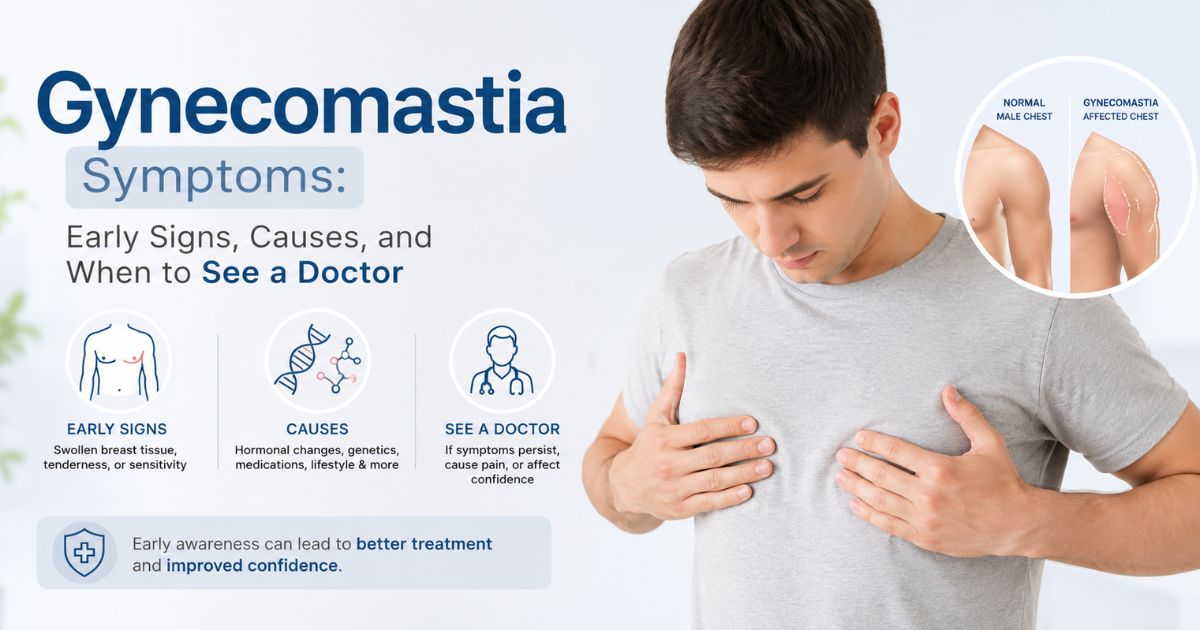
Many men experience changes in their chest appearance at some point in life. While some changes may be related to weight gain, others can be caused by the enlargement of actual Breast Tissue. This condition is known as gynecomastia and affects males of different ages, from newborns and teenagers to older adults.
Recognizing Gynecomastia Symptoms early can help individuals understand what is happening in their bodies and seek appropriate medical advice when needed. Although gynecomastia is generally not a serious medical condition, it can cause physical discomfort and significantly impact self-confidence.
In this guide, we will discuss the common signs, causes, and risk factors associated with gynecomastia, along with when it may be time to consult a doctor.
What Is Gynecomastia?
Gynecomastia is a condition characterized by the enlargement of glandular Breast Tissue in males. It occurs when there is an imbalance between the hormones estrogen and testosterone.
Many people mistakenly assume that any increase in the size of the Male Chest is gynecomastia. However, there is an important difference between gynecomastia and excess chest fat.
Gynecomastia involves the growth of glandular tissue beneath the nipple, while chest fat is usually related to overall weight gain and obesity.
The condition can affect one side of the chest or both sides and may develop gradually or suddenly depending on the underlying cause.
Understanding the Role of Hormones
Hormones play a major role in the development of gynecomastia.
Although testosterone is considered the primary male hormone and estrogen is considered the primary female hormone, both hormones are naturally present in males and females. Gynecomastia often develops when there is a Hormonal Imbalance that causes estrogen activity to become relatively stronger than testosterone activity.
These Hormone Changes can occur naturally during different stages of life or may result from certain medical conditions, medications, or lifestyle factors.
Early Gynecomastia Symptoms to Watch For
Recognizing early Gynecomastia Symptoms can help patients seek timely evaluation and avoid unnecessary anxiety.
1. Chest Swelling Beneath the Nipple
One of the earliest and most common signs is Chest Swelling directly under the nipple area.
Patients often describe feeling:
- A firm lump beneath the nipple
- Thickened tissue in the chest
- Enlargement that feels different from normal body fat
The swelling may affect one side initially before appearing on the other side.
2. Tender Nipples
Many patients experience Tender Nipples during the early stages of gynecomastia.
This sensitivity may become noticeable when:
- Wearing tight clothing
- Exercising
- Touching the chest area
- Sleeping on the chest
Tenderness is often one of the first symptoms that prompts men to investigate the condition.
3. Increased Chest Fullness
Patients may notice that their shirts fit differently or that their chest appears more prominent than before.
This increase in chest volume may develop gradually over weeks or months.
4. Sensitivity Around the Breast Tissue
As glandular Breast Tissue grows, the surrounding area may become sensitive or mildly uncomfortable.
The sensation can range from slight tenderness to occasional aching.
5. Changes in Chest Appearance
Some individuals notice visible differences in the shape of the Male Chest, including:
- Enlarged nipples
- Puffy areolas
- Uneven chest contour
- Increased prominence of breast tissue
These changes often become more noticeable during adolescence or after significant hormonal fluctuations.
Is Every Enlarged Male Chest Gynecomastia?
Not necessarily.
Many men develop excess chest fat due to weight gain. This condition is commonly referred to as pseudogynecomastia. Unlike true gynecomastia, pseudogynecomastia involves fat accumulation rather than enlargement of glandular Breast Tissue.
Some differences include:
Gynecomastia
- Firm tissue beneath the nipple
- Possible tenderness
- Associated with Hormonal Imbalance
- May occur regardless of body weight
Excess Chest Fat
- Soft fatty tissue
- Usually linked to obesity
- Less likely to cause nipple tenderness
- May improve with weight loss
In some cases, patients may have both excess fat and glandular tissue enlargement.
Common Causes of Gynecomastia
Several factors can contribute to the development of gynecomastia.
Natural Hormone Changes
One of the most common causes involves normal Hormone Changes that occur throughout life.
These changes are especially common during:
- Infancy
- Puberty
- Older age
Temporary hormone fluctuations often resolve without treatment.
Puberty-Related Gynecomastia
Teenage boys frequently experience gynecomastia during puberty.
During this period, hormone levels fluctuate significantly, sometimes resulting in temporary Chest Swelling and Tender Nipples.
In many cases, the condition improves naturally within months or a few years.
Aging
As men age, testosterone levels gradually decline.
This shift can increase the likelihood of developing a Hormonal Imbalance, making gynecomastia more common in older adults.
Medical Conditions Associated With Gynecomastia
Certain health conditions may increase the risk of developing gynecomastia.
Low Testosterone Levels
Conditions that reduce testosterone production can contribute to breast tissue enlargement.
Thyroid Disorders
An overactive thyroid gland can alter hormone levels and increase estrogen activity.
Liver Disease
The liver plays a key role in hormone metabolism. Chronic liver conditions may contribute to hormonal disruptions.
Kidney Disease
Hormonal changes associated with kidney dysfunction can sometimes lead to gynecomastia.
Tumors Affecting Hormone Production
Although uncommon, some tumors may alter hormone levels and contribute to breast tissue growth.
Medications That May Trigger Gynecomastia
Certain medications have been associated with gynecomastia development.
Examples may include:
- Some blood pressure medications
- Certain antidepressants
- Hormone therapies
- Anti-androgen medications
- Some ulcer medications
Patients should never stop prescribed medications without consulting their doctor.
Lifestyle Factors That Can Contribute
Lifestyle choices can also influence hormonal balance.
Potential contributing factors include:
Excess Alcohol Consumption
Heavy alcohol use may interfere with normal hormone regulation.
Drug Use
Certain recreational drugs have been linked to gynecomastia.
Obesity
Excess body fat can increase estrogen production, contributing to a Hormonal Imbalance and increasing the likelihood of breast tissue enlargement.
Poor Lifestyle Habits
Lack of exercise, poor nutrition, and significant weight gain may indirectly contribute to hormone-related changes.
Emotional and Psychological Effects of Gynecomastia
While gynecomastia is often discussed as a physical condition, its emotional impact can be equally significant.
Many men experience:
- Reduced confidence
- Self-consciousness
- Social anxiety
- Reluctance to remove shirts in public
- Avoidance of certain activities
These concerns can affect quality of life regardless of the actual severity of the condition.
Understanding that gynecomastia is a common medical condition can help reduce feelings of embarrassment and encourage patients to seek professional guidance.
Is Gynecomastia Painful?
One of the most common questions patients ask is whether gynecomastia causes pain.
The answer varies from person to person. While some individuals experience no discomfort at all, others may notice tenderness, sensitivity, or mild pain in the chest area. Pain is usually more common during the early stages of gynecomastia when the glandular Breast Tissue is actively growing.
Patients may experience:
- Tenderness beneath the nipple
- Sensitivity when touching the chest
- Mild aching or soreness
- Discomfort while exercising
- Irritation from tight clothing
Severe pain is uncommon. If significant pain develops suddenly or is associated with other symptoms, medical evaluation is recommended.
Can Gynecomastia Go Away Naturally?
In some cases, yes.
Whether gynecomastia resolves naturally depends largely on the underlying cause and the patient's age.
Puberty-Related Gynecomastia
Gynecomastia during adolescence often improves without treatment.
Many teenagers experience temporary Hormone Changes during puberty that lead to enlargement of the Male Chest. As hormone levels stabilize, the condition may gradually disappear over time.
Temporary Hormonal Fluctuations
When gynecomastia is caused by a short-term Hormonal Imbalance, the body may naturally restore hormonal balance and reduce breast tissue enlargement.
Cases That May Not Resolve Naturally
Long-standing gynecomastia is less likely to disappear on its own.
When glandular tissue has been present for several years, spontaneous improvement becomes less common. In such situations, medical or surgical treatment may be considered depending on the patient's symptoms and goals.
When Should You Consult a Doctor?
Not every case of gynecomastia requires immediate treatment, but medical evaluation can help identify the underlying cause and rule out other conditions.
You should consider consulting a doctor if you notice:
- Persistent Chest Swelling
- Increasing breast enlargement
- Significant discomfort
- Noticeable asymmetry
- Nipple discharge
- A hard or rapidly growing lump
- Changes that affect confidence and daily life
Seeking professional advice early can provide reassurance and help determine the most appropriate management plan.
How Is Gynecomastia Diagnosed?
Diagnosis typically begins with a detailed medical consultation and physical examination.
A doctor may ask questions about:
- Duration of symptoms
- Medications
- Medical history
- Weight changes
- Lifestyle habits
- Family history
- Hormone-related conditions
The goal is to understand what may be contributing to the enlargement of Breast Tissue.
Physical Examination
During examination, the doctor evaluates:
- Size and location of the enlarged tissue
- Presence of tenderness
- Symmetry between both sides
- Characteristics of the chest enlargement
This helps distinguish gynecomastia from other causes of chest enlargement.
Blood Tests
Blood tests may be recommended to evaluate hormone levels and identify possible causes of Hormonal Imbalance.
Imaging Studies
In selected cases, imaging such as ultrasound or mammography may be advised to obtain additional information.
These investigations help ensure an accurate diagnosis before treatment decisions are made.
Treatment Options for Gynecomastia
Treatment depends on several factors, including:
- The underlying cause
- Severity of symptoms
- Duration of the condition
- Patient goals
- Overall health
Observation and Monitoring
Mild cases may only require regular monitoring.
If the condition is recent and likely related to temporary Hormone Changes, doctors may recommend observation before considering intervention.
Managing Underlying Medical Conditions
When gynecomastia is linked to an underlying health issue, treating the root cause may help improve symptoms.
Examples include:
- Hormonal disorders
- Thyroid conditions
- Liver disease
- Medication-related causes
Lifestyle Modifications
Healthy lifestyle habits may support overall hormone health.
Patients are often encouraged to:
- Maintain a healthy weight
- Exercise regularly
- Follow a balanced diet
- Limit alcohol consumption
- Avoid recreational drug use
Although lifestyle changes may not eliminate glandular tissue, they can improve overall health and body composition.
When Is Gynecomastia Surgery Considered?
For some men, enlarged breast tissue persists despite lifestyle improvements or medical management.
In these situations, gynecomastia surgery may be considered.
Surgery is often recommended when:
- The condition has remained stable for a prolonged period
- Excess glandular tissue is present
- Physical discomfort persists
- Confidence and quality of life are affected
- Non-surgical approaches have not produced satisfactory improvement
The goal of surgery is to create a flatter, firmer, and more masculine chest contour.
What to Expect From Recovery
Recovery experiences vary among patients, but most individuals are able to return to normal daily activities relatively quickly.
During the recovery period, patients may experience:
- Mild swelling
- Bruising
- Temporary tightness
- Mild discomfort
Following post-operative instructions carefully helps support healing and optimize results.
Most swelling gradually improves over the following weeks, with final results becoming more visible as the chest settles.
Can Gynecomastia Return After Treatment?
Recurrence is uncommon but possible in certain situations.
Factors that may contribute to recurrence include:
- Significant weight gain
- Ongoing hormonal disorders
- Continued use of medications associated with gynecomastia
- Use of anabolic steroids or recreational drugs
Maintaining a healthy lifestyle and addressing underlying causes can help reduce the likelihood of recurrence.
Living Confidently With Gynecomastia
Many men struggle with the emotional effects of gynecomastia for years before seeking help.
Feelings of embarrassment, frustration, or self-consciousness are common, particularly when changes in the Male Chest affect clothing choices, physical activities, or social confidence.
It is important to remember that gynecomastia is a common medical condition that affects men across different age groups. Seeking medical advice is not about vanity—it is about understanding your body and exploring available options.
Early evaluation can provide clarity, reassurance, and access to appropriate treatment if needed.
Conclusion
Recognizing Gynecomastia Symptoms early can help men understand the changes occurring in their bodies and seek timely medical guidance. Signs such as Chest Swelling, enlargement of Breast Tissue, å indicate an underlying Hormonal Imbalance or other contributing factors.
While some cases improve naturally, others may persist and affect both physical comfort and self-confidence. Understanding the cause is the first step toward choosing the right treatment approach.
At Shobhit Aesthetics, every patient receives a personalized assessment to identify the underlying cause of gynecomastia and explore the most suitable treatment options. The focus is on providing honest guidance, realistic expectations, and individualized care to help patients make informed decisions about their health and appearance.
Frequently Asked Questions
What are the first signs of gynecomastia?
The earliest Gynecomastia Symptoms often include Chest Swelling beneath the nipple, tenderness, sensitivity, and the development of a firm lump of glandular tissue.
Can gynecomastia go away naturally?
Yes. Some cases, especially those related to puberty or temporary Hormone Changes, may improve naturally over time. Persistent cases are less likely to resolve without treatment.
Is gynecomastia painful?
Gynecomastia can cause tenderness, sensitivity, or mild discomfort, particularly during the early stages when breast tissue is actively growing.
What causes gynecomastia in men?
The most common cause is a Hormonal Imbalance between estrogen and testosterone. Other causes may include aging, medications, obesity, medical conditions, and certain lifestyle factors.
When should I consult a doctor for gynecomastia?
You should consult a doctor if you experience persistent enlargement, discomfort, increasing Chest Swelling, nipple discharge, or any changes that affect your confidence or daily life.