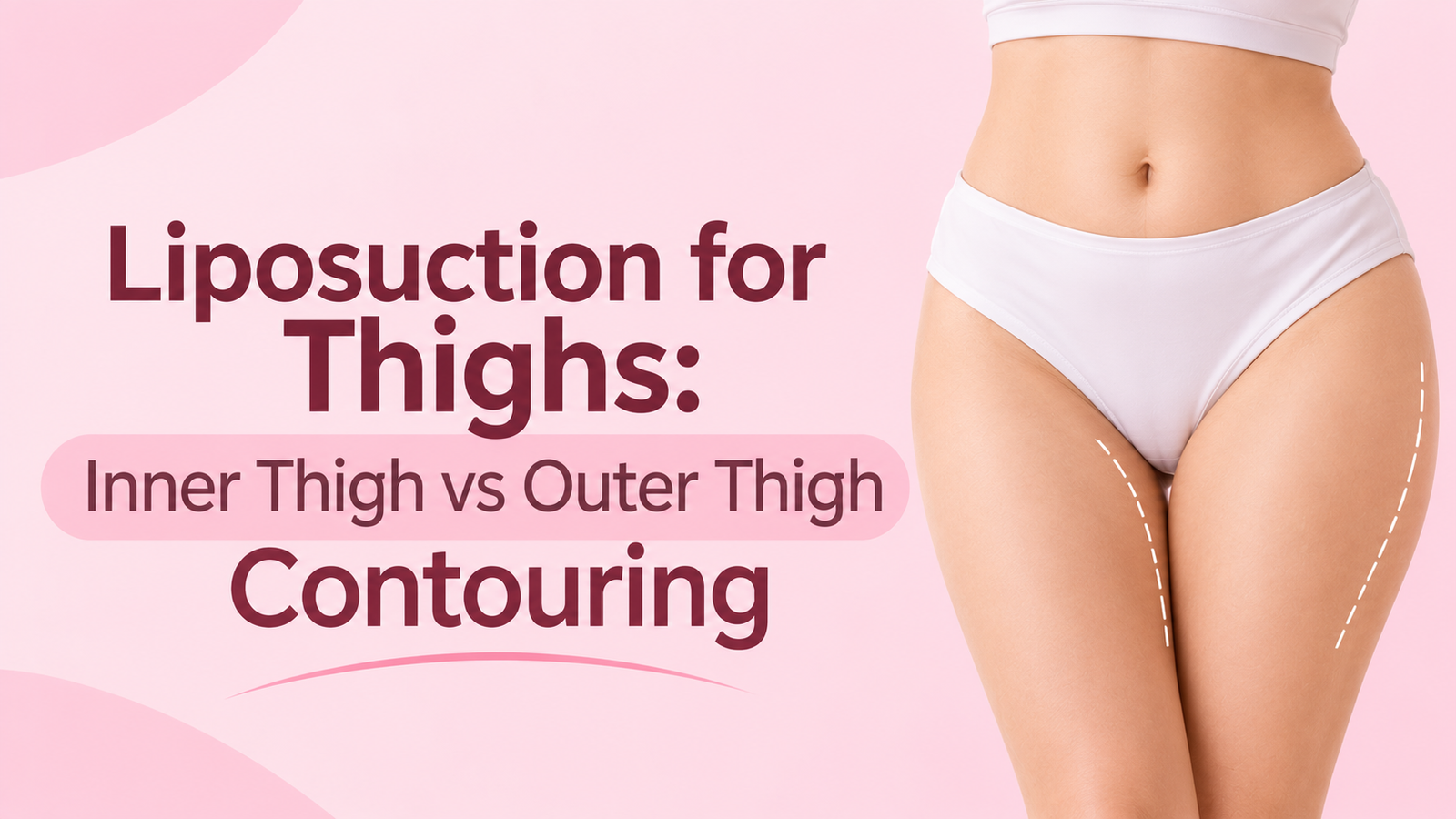
Liposuction for Thighs: Inner Thigh vs Outer Thigh Contouring
Thighs are an important part of overall body proportions, but stubborn fat in this area can sometimes remain despite regular exercise and a balanced diet. Some people notice excess fat along the inner thighs, while others experience fullness around the outer thighs that affects the shape of their hips and legs.
Thigh liposuction is a cosmetic procedure designed to remove localised fat deposits and improve the contours of the legs. However, inner thigh and outer thigh liposuction address different areas and require individualised surgical planning.
Understanding the difference between these procedures can help you decide which option may suit your body shape and aesthetic goals. In this guide, we explain how inner and outer thigh liposuction work, which areas can be treated, what recovery involves and what results you can realistically expect.
What Is Thigh Liposuction?
Thigh liposuction is a surgical procedure that removes excess fat from specific areas of the thighs to create a more proportionate appearance.
During the procedure, a surgeon makes small incisions and inserts a thin tube called a cannula to remove unwanted fat. The technique and amount of fat removed depend on the patient's anatomy, skin elasticity and desired outcome.
The procedure can address several areas, including:
- Inner thighs
- Outer thighs
- Front of the thighs
- Back of the thighs
- Areas around the knees
Thigh liposuction is intended for body contouring rather than significant weight loss. It works best for people who are near a stable, healthy weight but have localised fat deposits that do not respond as desired to lifestyle changes.
What Is Inner Thigh Liposuction?
Inner thigh liposuction focuses on removing excess fat from the inner surfaces of the thighs, particularly the area where the thighs may rub against each other.
Some people naturally store more fat in this region because of genetics, hormones and individual fat distribution. Even with regular exercise, this area may remain fuller than desired.
Inner thigh liposuction can help reduce this fullness and create a smoother transition between the upper legs.
Benefits of Inner Thigh Fat Removal
Potential benefits include:
- Reduced fullness along the inner thighs
- Improved leg contours
- Less rubbing between the thighs in selected patients
- Better balance between the upper and lower legs
- More defined inner thigh contours
However, the outcome depends on skin elasticity and the amount of fat present. If the skin is significantly loose, removing fat alone may not produce the desired result.
What Is Outer Thigh Liposuction?
Outer thigh liposuction targets excess fat along the outer thighs, often around the hip and upper thigh region. This area is sometimes associated with the appearance commonly called saddlebags.
Fat in the outer thighs can affect the transition between the hips and legs, making the lower body appear wider in certain clothing.
Outer thigh contouring aims to create a smoother, more balanced silhouette by reducing localised fat deposits.
Benefits of Outer Thigh Fat Removal
Potential benefits include:
- Reduced fullness around the outer thighs
- Smoother hip-to-thigh transitions
- Improved lower-body proportions
- More defined outer thigh contours
- Better balance between the waist, hips and legs
The goal is not necessarily to make the thighs as slim as possible. A well-planned procedure aims to preserve natural curves while improving overall proportions.
Inner Thigh vs Outer Thigh Liposuction: What Is the Difference?
Although both procedures remove unwanted fat, they focus on different areas and require different considerations.
Feature |
Inner thigh liposuction |
Outer thigh liposuction |
| Target area | Inner surfaces of the thighs | Outer thighs and saddlebag area |
| Main goal | Reduce inner thigh fullness | Improve hip-to-thigh contours |
| Common concern | Thigh rubbing or excess inner thigh fat | Wider-looking hips or outer thigh fullness |
| Key consideration | Skin laxity and delicate tissue | Overall hip and leg proportions |
| Expected result | Smoother inner thigh contour | More balanced outer thigh silhouette |
The inner thighs have relatively delicate skin, so removing too much fat may increase the risk of uneven contours or loose skin. Outer thigh treatment requires careful attention to the hips and surrounding areas to avoid creating unnatural transitions.
In both cases, the surgeon must assess the amount of fat present and how well the skin is likely to contract after surgery.
Which Areas of the Thighs Can Be Treated With Liposuction?
The exact treatment area depends on where excess fat is concentrated.
Inner Thighs
This area is suitable for patients who have persistent fullness along the inner thigh and adequate skin quality.
Outer Thighs
Treatment focuses on the outer thigh and saddlebag region to improve the overall leg silhouette.
Front of the Thighs
Selected patients may have localised fat deposits on the front of the thighs that affect their leg contours.
Back of the Thighs
Liposuction may sometimes be used to address excess fat at the back of the thighs, depending on the patient's anatomy.
Around the Knees
Fat deposits around the inner or outer knees may also be considered for contouring in suitable patients.
Not every area needs to be treated during the same procedure. A surgeon may recommend targeting one region or combining areas when this is appropriate and safe.
Who Is a Good Candidate for Thigh Liposuction?
Thigh liposuction may be suitable for adults who have localised fat deposits and want to improve their leg contours.
A potential candidate generally:
- Has a relatively stable body weight
- Has localised fat that persists despite healthy habits
- Has reasonable skin elasticity
- Is in suitable overall health for surgery
- Has realistic expectations
- Understands the recovery process and potential risks
People with significant loose skin may need a different approach. For example, a thigh lift removes excess skin and may be considered when skin laxity is a major concern.
A consultation helps determine whether liposuction alone is appropriate or whether another procedure would better address the patient's goals.
Can Thigh Liposuction Reduce Stubborn Fat?
Yes. Thigh liposuction can remove localised fat deposits that remain despite diet and exercise.
However, it is important to understand that the procedure does not prevent future weight gain or remove all fat from the treated area.
The remaining fat cells can still enlarge if a person gains weight. Significant weight changes can also affect the body's proportions and the appearance of the treated thighs.
Maintaining a stable weight through balanced nutrition and regular physical activity can help preserve the results.
How Long Does Thigh Liposuction Recovery Take?
Thigh liposuction recovery varies depending on the treatment area, the amount of fat removed and individual healing.
Swelling, bruising, tenderness and temporary changes in sensation are common during the initial recovery period.
Patients may be advised to wear a compression garment to support the treated area and help manage swelling.
During recovery, your surgeon may recommend:
- Walking gently as advised
- Avoiding strenuous exercise initially
- Following wound-care instructions
- Taking prescribed medication
- Wearing compression garments as directed
- Attending follow-up appointments
Many patients gradually resume routine activities within days to a couple of weeks, depending on the extent of treatment and their recovery. Strenuous exercise may require a longer break.
The final contours take longer to develop because swelling can persist for several weeks or months.
Are Inner and Outer Thigh Liposuction Results Permanent?
The fat cells removed during liposuction do not grow back. However, the remaining fat cells can increase in size with weight gain.
Patients should understand that liposuction improves contours rather than guaranteeing a particular thigh gap, leg shape or clothing size.
What Are the Risks of Thigh Liposuction?
Like any surgical procedure, thigh liposuction carries potential risks.
These may include:
- Bruising and swelling
- Infection
- Bleeding
- Fluid accumulation
- Uneven contours
- Asymmetry
- Loose skin
- Changes in skin sensation
- Scarring
- Blood clots
- Anaesthesia-related complications
The risk of unevenness or loose skin may be particularly relevant when the skin has limited elasticity or too much fat is removed.
Choosing an appropriately qualified surgeon and following post-operative instructions can help reduce avoidable risks, although complications cannot be eliminated entirely.
Why Choose Shobhit Aesthetics for Thigh Liposuction?
At Shobhit Aesthetics, thigh liposuction planning should begin with an assessment of fat distribution, skin elasticity and overall body proportions.
Inner and outer thigh contouring require different considerations, so the treatment plan should reflect the patient's anatomy rather than follow a standard approach. The aim is to remove appropriate amounts of localised fat while preserving natural contours and reducing the risk of unevenness.
During consultation, patients can discuss their desired results, suitability for liposuction, recovery requirements and whether additional procedures may be appropriate.
A personalised assessment also helps establish realistic expectations about skin contraction and the final shape of the thighs.
Frequently Asked Questions
What is the difference between inner and outer thigh liposuction?
Inner thigh liposuction removes localised fat from the inner surfaces of the thighs, while outer thigh liposuction targets fullness around the outer thighs and saddlebag region. The choice depends on where fat is concentrated and the patient's desired contours.
How long does it take to recover from thigh liposuction?
Many patients resume routine activities within days to a couple of weeks, depending on the extent of surgery. Swelling and bruising may take several weeks to improve, while the final results can take a few months to become clear.
Which areas of the thighs can be treated with liposuction?
Liposuction may target the inner thighs, outer thighs, front and back of the thighs, and selected areas around the knees. The appropriate areas depend on individual anatomy and skin quality.
Can thigh liposuction reduce stubborn fat?
Yes. Liposuction can remove localised fat deposits that persist despite diet and exercise. However, it is not a weight-loss treatment, and significant weight gain can affect the results.
Is inner thigh liposuction different from outer thigh liposuction?
Yes. Inner thigh liposuction focuses on reducing fullness between the legs, while outer thigh liposuction improves the contours around the hips and outer legs. Both require careful planning to achieve smooth, proportionate results.
Conclusion
Inner and outer thigh liposuction address different concerns, but both aim to improve the shape and proportions of the legs. Inner thigh treatment focuses on reducing fullness between the thighs, while outer thigh contouring targets saddlebag fat and the transition between the hips and legs.
The right approach depends on fat distribution, skin elasticity, body proportions and personal goals. Patients with significant loose skin may need an alternative or additional procedure rather than liposuction alone.
At Shobhit Aesthetics, a personalised consultation can help determine whether inner thigh liposuction, outer thigh liposuction or a combination of treatments is suitable for your needs. Understanding the procedure, recovery and realistic outcomes is an important first step towards making an informed decision about thigh contouring.