Ageing is a natural and inevitable part of life, but that does not mean you have to accept every change it brings to your appearance. Over time, the skin loses its elasticity, facial muscles weaken, and the effects of gravity, sun exposure, and lifestyle begin to show — particularly in the form of sagging skin, deepening lines, and a loss of definition along the jawline and neck. For many people, these changes affect not just how they look, but how they feel about themselves every day.
A facelift is one of the most powerful and transformative cosmetic procedures available today, offering a genuine and long-lasting solution to the visible signs of facial ageing. Unlike temporary treatments that require repeated sessions, a well-performed facelift addresses the deeper structural causes of ageing and delivers results that can last a decade or more.
However, one of the first questions most people ask when considering this procedure is — how much does it cost? Understanding the financial aspects of facelift surgery is just as important as understanding the procedure itself. In this comprehensive guide, we break down the different types of facelift surgery available in India, the key factors that influence the cost, financial plans to make the procedure more accessible, and why Shobhit Aesthetics in Delhi is the trusted choice for patients seeking outstanding results at a transparent and affordable price.
What is a Facelift?
A facelift, known medically as a rhytidectomy, is a surgical procedure designed to reduce the visible signs of ageing in the face and neck. The term rhytidectomy comes from the Greek words for wrinkle and excision, and it accurately describes the core purpose of the procedure — the removal and repositioning of tissues to create a smoother, firmer, and more youthful facial appearance.
As we age, the skin gradually loses collagen and elastin — the proteins responsible for keeping it firm and supple. At the same time, the underlying facial muscles and fat compartments begin to shift downward due to the effects of gravity. This combination of changes results in the classic signs of facial ageing: sagging cheeks, deepening nasolabial folds — the lines that run from the nose to the corners of the mouth — jowling along the jawline, loose neck skin, and an overall loss of the sharp, defined contours associated with a youthful face.
A facelift addresses these concerns by lifting and repositioning the deeper layers of the face, known as the SMAS — the superficial musculoaponeurotic system. By working at this deeper structural level rather than simply pulling the skin tighter, a modern facelift delivers results that look natural, refreshed, and genuinely rejuvenated rather than artificially stretched or overdone.
The procedure can be tailored to the individual patient's needs. Depending on the areas of concern and the degree of correction required, a surgeon may recommend a full traditional facelift, a mini facelift, a mid-facelift targeting the cheeks, or a lower facelift focusing on the jawline and neck. Each approach has its own indications, recovery timeline, and cost implications, all of which will be discussed in detail throughout this guide.
It is important to understand that a facelift is not a one-size-fits-all procedure. The best outcomes are achieved when the surgery is personalised to the patient's unique anatomy, skin quality, and aesthetic goals — something that the experienced team at Shobhit Aesthetics prioritises with every patient they treat.
Types of Facelift Surgery:-
Facelift surgery differs a lot. It depends on the procedure's scope and the exact spots it targets. Let's examine the main categories:
1. Traditional Facelift
This facelift's method is through cuts near the hairline. Beginning at the temples, it moves around the ears, wrapping up at the bottom of the scalp. This full-coverage process tackles drooping skin, profound wrinkles, and facial fat rearrangement. It's the perfect choice for people having mild to intense facial aging.
2. Mini Facelift
A "mini facelift" or a "weekend facelift" makes small cuts and is less harsh than a full facelift. It tackles minor to fair drooping, mostly around the lower face and jawline. This technique is good for younger folks or those after slight changes.
3. Mid-Facelift
A mid-facelift fine-tunes the middle section of the face, dealing with sagging cheeks and severe nasolabial fold issues. Cuts are usual along the hairline and inside the mouth. By hoisting and shifting the cheek's fat pads, this technique provides a fresher, younger look.
4. Lower Facelift
A lower facelift improves the appearance of your face's bottom third. This includes the jawline and neck. It's great for getting rid of sagging skin known as jowls and enhancing your jawline. Surgeons usually make cuts around the ears that extend into the hairline.
5. Non-Surgical Facelift
For those who prefer a less invasive approach, try non-surgical facelift surgery in India. These procedures use stuff like dermal fillers, Botox, and other injectables. They provide temporary augmentation and can cost less, yet they lack the lasting effects of surgical facelifts.
Cost Breakdown of Facelift Surgery
A facelift's price is influenced by many aspects. The procedure type, doctor's skill level, clinic's location, and other costs are all factors. Let's break it down: Surgeon's fees make up a big chunk.
1. Surgeon's Fees
Well-known, skilled surgeons often ask for more because they are in demand. In India, a facelift might cost between INR 1,00,000 and INR 2,00,000 at Shobhit Aesthetics. Anesthesia is another cost.
2. Anesthesia Fees
Facelifts need either local numbing with calming meds or full anesthesia. The facelift cost in India for this can be between INR 20,000 to INR 50,000, which is determined by the procedure type and length.
3. Hospital or Clinic Fees
A hospital or clinic charges for the usage of its operating room, tools, and medical personnel for surgery. Burdens of these facilities can greatly vary, with a general span of INR 50,000 to INR 1,50,000.
4. Pre-Operative Tests and Consultations
Patients must undergo various tests and meetings before a facelift surgery in India. Blood checks, health reviews, and imaging are in this bunch. The price for this early work varies, generally from INR 10,000 to INR 20,000.
5. Post-Operative Care
After the surgery includes follow-ups, medicines, and any necessary wraps or gear. Post-surgery costs generally vary from INR 10,000 to INR 30,000.
6. Additional Costs
Extra costs include prescribed medicine, travel, and unexpected mishaps or changes. For these possible costs, patients should have an extra INR 10,000 to INR 30,000 ready.
Facelift Surgery Costs in India and Delhi
India is known for affordable, top-notch cosmetic surgery. Let's talk about the price of facelift surgeries in India, especially Delhi.
Facelift Surgery Cost in India
You might see costs varying from about INR 1,50,000 to INR 4,50,000. What does this include? The surgeon's fee, anesthesia charge, hospital fees, and care after surgery. The final facelift surgery cost in India? It can fluctuate based on the type of facelift and the clinic chosen.
Facelift Surgery Cost in Delhi
Delhi boasts renowned cosmetic surgeons and advanced medical centers. Expect facelift prices to fall between INR 2,00,000 and INR 5,00,000. Thanks to its contemporary medical framework and skilled surgeons, Delhi stands as a popular choice for facelift seekers.
Financial Plans and Payment Options
Facelift surgery, being a considerable outlay, warrants an array of financial aids and modes of payment in many Indian clinics, easing the financial burden. Here are some common options:
1. Installment Plans
Various health centers have payment options available. These let people pay for operations over time. It can match the person's budget, helping control the expense.
2. Medical Loans
Several financial institutions provide loans for beauty treatments. If needed, one can get these loans for surgical fees and pay it back monthly.
3. Credit Card Payments
Most clinics accept credit card payments, allowing patients to use their existing credit limits to finance the surgery. Some credit cards also offer EMI (Equated Monthly Installment) options.
4. Insurance Coverage
Usually, facelift surgeries are elective, meaning insurance may not cover them. However, exceptions are there. If the surgery is for fixing inborn defects or problems caused by accident, insurance might partially fund it. It's crucial for patients to review their specific insurance plan details.
What Happens During a Facelift Procedure?
Understanding what actually takes place during a facelift surgery helps patients feel more informed, confident, and mentally prepared for the journey ahead. While the specific steps vary depending on the type of facelift being performed, the general process follows a well-established sequence that experienced surgeons like Dr. Shobhit Gupta at Shobhit Aesthetics have refined over years of practice.
The procedure begins with the administration of anaesthesia. Depending on the complexity of the surgery, the surgeon may use local anaesthesia with sedation for less extensive procedures such as a mini facelift, or general anaesthesia for a full traditional facelift. Once the patient is comfortable and the anaesthesia has taken effect, the surgeon carefully marks the areas of the face and neck that will be addressed.
Incisions are then made in strategically chosen locations to minimise visible scarring. For a traditional facelift, these incisions typically begin at the temples within the hairline, continue around the front of the ear, and extend behind the ear into the lower scalp. For a mini facelift, shorter incisions are made, usually just around the ears. The placement of these incisions is deliberate — by following the natural contours and hairline of the face, experienced surgeons ensure that scars are virtually undetectable once fully healed.
Once the incisions are made, the surgeon lifts the skin and accesses the deeper structural layers of the face, known as the SMAS — the superficial musculoaponeurotic system. Repositioning and tightening the SMAS layer is a key step in achieving natural, long-lasting results. This approach addresses the underlying cause of facial ageing rather than simply pulling the skin tighter, which can result in an unnatural, windswept appearance.
Excess fat may be redistributed or removed, and the underlying facial muscles may be tightened depending on the individual's anatomy and the degree of correction required. The skin is then re-draped smoothly over the newly repositioned structures and any excess skin is trimmed away. Finally, the incisions are closed with fine sutures and the face is gently wrapped in bandages to support healing and reduce swelling.
The entire procedure typically takes between two and five hours depending on the type and extent of the facelift being performed.
Recovery After Facelift Surgery: What to Expect Week by Week
Recovery from a facelift is a gradual process that unfolds over several weeks and months. Having a clear understanding of what to expect at each stage of recovery allows patients to plan their time, arrange support, and approach the healing process with patience and confidence.
During the first two to three days after surgery, patients will experience the most pronounced swelling, bruising, and discomfort. The face may feel tight, numb, or tender, and some patients report a sensation of pressure around the incision sites. Pain is effectively managed with prescribed medication, and most patients find the discomfort very manageable. Rest is essential during this period, and patients should keep their head elevated even during sleep to reduce swelling.
By the end of the first week, swelling and bruising begin to subside noticeably. Sutures are typically removed between five and ten days after surgery. Patients who have desk-based jobs may feel comfortable returning to light work activities within seven to ten days, though this varies between individuals. It is important to avoid any bending, straining, or heavy lifting during this period as increased blood pressure to the head can worsen swelling.
During weeks two and three, the majority of visible bruising fades and patients begin to see the initial outline of their results. The face may still feel slightly tight or stiff, and some degree of numbness in areas around the ears and cheeks is normal as the nerves gradually recover. Most patients feel comfortable attending social engagements with light makeup by the end of the second week.
By weeks four to six, swelling continues to reduce and the results become increasingly apparent. Most patients can resume light exercise such as walking during this period, though strenuous workouts, swimming, and activities that significantly elevate heart rate should be postponed until the surgeon gives clearance — usually around six weeks post-surgery.
The final results of a facelift become fully visible between three and six months after surgery, once all residual swelling has resolved and the tissues have fully settled into their new position. The outcome is a refreshed, naturally youthful appearance that can last ten years or more with proper skincare and a healthy lifestyle.
Facelift Surgery Risks and How to Minimise Them
Like any surgical procedure, a facelift carries a degree of risk. However, when performed by a qualified and experienced plastic surgeon in an accredited facility, the risks are minimised significantly. Being well-informed about potential complications allows patients to make educated decisions and take the appropriate steps to protect their safety.
The most commonly reported risks associated with facelift surgery include temporary bruising and swelling, numbness or changes in skin sensation, scarring, asymmetry, and reactions to anaesthesia. These are typically mild and resolve on their own during the healing process.
More serious but rare complications include infection, haematoma — a collection of blood beneath the skin — nerve injury, skin necrosis, and deep vein thrombosis. The risk of these complications is significantly reduced when patients choose a board-certified surgeon, undergo thorough pre-operative health screening, follow all pre- and post-operative care instructions, and attend all scheduled follow-up appointments.
Patients can further minimise their risk by stopping smoking at least four to six weeks before surgery, as smoking severely impairs blood circulation and wound healing. Certain medications and supplements such as aspirin, ibuprofen, and vitamin E should also be discontinued prior to surgery as they thin the blood and increase bleeding risk. Maintaining a stable, healthy weight and avoiding excessive sun exposure before and after surgery also contribute to safer outcomes and better results.
At Shobhit Aesthetics, patient safety is the highest priority. Every patient undergoes a comprehensive pre-operative assessment to ensure they are medically fit for surgery, and the entire team is trained to monitor and manage any post-operative concerns with the utmost care and diligence.
How to Choose the Right Facelift Surgeon in India
The single most important decision in your facelift journey is choosing the right surgeon. The quality of your results, the safety of your experience, and your long-term satisfaction are all directly influenced by the expertise and credibility of the plastic surgeon you select.
When evaluating potential surgeons, the first thing to verify is their board certification. In India, look for surgeons who hold an MCh in Plastic Surgery — the highest postgraduate qualification in the field — and are members of recognised professional bodies such as the Association of Plastic Surgeons of India (APSI) or the Indian Association of Aesthetic Plastic Surgeons (IAAPS). These credentials confirm that the surgeon has undergone rigorous training and adheres to established standards of practice.
Reviewing a surgeon's portfolio of before-and-after photographs is an essential step. Look for consistency in natural-looking results across a range of patients, particularly those with similar facial structures and concerns to your own. Be cautious of surgeons whose results appear overly tight, unnatural, or dramatic — these are often signs of techniques that prioritise quantity over quality.
Patient reviews and testimonials on independent platforms provide valuable insight into the overall experience at a clinic, including communication, support staff, aftercare quality, and the surgeon's bedside manner. Pay particular attention to reviews from patients who have had facelift procedures specifically.
A thorough consultation with your prospective surgeon is non-negotiable. During this meeting, assess how well the surgeon listens to your concerns, how clearly they explain the procedure and its risks, and whether they are transparent about what can and cannot be achieved. A trustworthy surgeon will never overpromise results or pressure you into booking quickly.
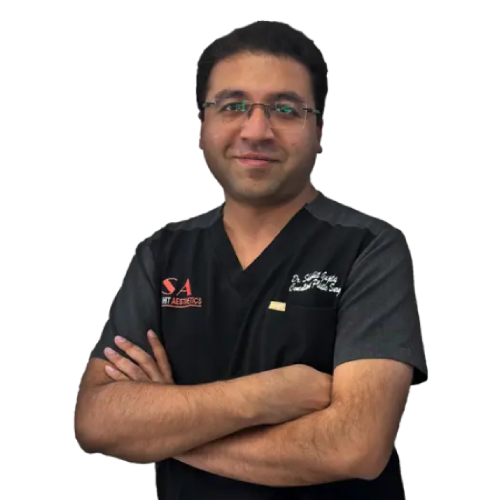
Dr. Shobhit Gupta at Shobhit Aesthetics brings over 12 years of experience, a gold medal in plastic surgery, and a deeply personalised approach to every patient's treatment plan. His commitment to natural-looking, long-lasting results and transparent communication has made him one of Delhi's most trusted names in cosmetic and reconstructive surgery.
Facelift vs Non-Surgical Alternatives: Which Is Right for You?
With the rapid advancement of non-surgical aesthetic treatments, many patients now wonder whether procedures like Botox, dermal fillers, thread lifts, or HIFU (High-Intensity Focused Ultrasound) can deliver results comparable to a surgical facelift. Understanding the differences between these options is crucial for making the right choice for your individual needs.
Non-surgical treatments are generally most effective for patients in their thirties and forties who are experiencing early signs of ageing such as fine lines, mild volume loss, and slight skin laxity. These procedures offer the advantages of minimal downtime, lower cost, and no surgical risk. However, their results are temporary — typically lasting between six months and two years depending on the treatment — and they cannot address more advanced signs of ageing such as significant skin sagging, deep jowls, or pronounced neck laxity.
A surgical facelift, on the other hand, addresses the deeper structural changes that occur with ageing. By repositioning the SMAS layer, removing excess skin, and redistributing facial fat, a facelift delivers comprehensive, long-lasting results that no non-surgical treatment can replicate. The results of a well-performed facelift can last between eight and fifteen years.
For many patients, a combination approach works best. Non-surgical treatments such as Botox and fillers can be used to complement and maintain facelift results by addressing areas like the forehead, around the eyes, and the lips — regions that are not typically addressed by a facelift alone.
The most appropriate treatment plan for you will depend on your age, the degree of facial ageing you wish to address, your tolerance for downtime, and your aesthetic goals. A detailed consultation with Dr. Shobhit Gupta at Shobhit Aesthetics will help you understand exactly which approach — surgical, non-surgical, or a combination — will deliver the results you are looking for.
Facelift Combined with Other Procedures
Many patients choose to combine a facelift with complementary procedures to achieve a more comprehensive facial rejuvenation. Addressing multiple concerns in a single surgical session reduces overall downtime, lowers the combined anaesthesia risk compared to multiple separate procedures, and often results in a more harmonious, balanced outcome.
Blepharoplasty, or eyelid surgery, is one of the most commonly combined procedures. While a facelift addresses the mid and lower face, blepharoplasty targets drooping upper eyelids and under-eye bags — concerns that a facelift alone cannot correct. Combining the two procedures produces a fully refreshed facial appearance without the mismatched ageing that can occur when only one area is treated.
A brow lift is another popular companion procedure. As the forehead and brow area tends to sag with age, creating a tired or heavy-browed appearance, a brow lift repositions the forehead tissue and opens up the upper face. When combined with a facelift, the result is a more uniformly youthful and rested appearance across the entire face.
Rhinoplasty, fat grafting to restore lost facial volume, skin resurfacing treatments such as laser therapy or chemical peels, and neck liposuction are among the other procedures that surgeons frequently combine with facelifts to maximise outcomes. Your surgeon will assess your facial anatomy and overall aesthetic goals during consultation and recommend the most appropriate combination of procedures for your specific situation.
Skincare Before and After a Facelift: Maximising Your Results
The health and condition of your skin play a significant role in the quality of your facelift results. Investing in your skin both before and after surgery can meaningfully enhance outcomes and extend the longevity of your results.
In the months leading up to surgery, focus on building a consistent skincare routine that includes daily SPF protection, a retinoid to stimulate collagen production and improve skin texture, a vitamin C serum to brighten and protect against oxidative damage, and a quality moisturiser to maintain the skin's barrier function. Staying well hydrated, eating a nutrient-rich diet, and avoiding excessive sun exposure will also improve skin health and elasticity before surgery.
After surgery, your skin will need gentle and targeted care to support healing. During the initial recovery phase, use only the mild cleansers and moisturisers recommended by your surgeon, and avoid any active ingredients such as retinoids, acids, or exfoliants until the skin has fully healed. Sun protection is non-negotiable after a facelift — UV exposure can worsen scarring, cause pigmentation changes, and accelerate the recurrence of skin ageing.
Once fully healed, reintroducing medical-grade skincare products and maintaining regular professional treatments such as facials, microneedling, or laser therapy can significantly prolong the results of your facelift and keep the skin looking its best for years to come.
Why Delhi Is the Best City in India for Facelift Surgery
Delhi has firmly established itself as India's premier destination for cosmetic and plastic surgery, attracting patients from across the country and internationally. Several factors contribute to the capital's reputation as a centre of excellence for facelift surgery.
Delhi is home to a high concentration of board-certified plastic surgeons trained at India's most prestigious medical institutions and with additional fellowships and training from internationally recognised centres. This depth of surgical expertise, combined with access to the latest technology and techniques, ensures that patients in Delhi receive care that is on par with the best in the world.
The city's medical infrastructure is world-class. Many cosmetic surgery clinics in Delhi operate within or alongside accredited hospitals equipped with advanced operating theatres, intensive care facilities, and comprehensive diagnostic capabilities. This level of infrastructure provides an important safety net and supports the delivery of consistent, high-quality outcomes.
Delhi's cosmetic surgery market is also highly competitive, which benefits patients by keeping costs significantly lower than comparable procedures in the UK, USA, or Western Europe — without any compromise on quality. International patients travelling to Delhi for facelift surgery often find that even after accounting for travel and accommodation, the total cost represents exceptional value compared to getting the same procedure done at home.
Shobhit Aesthetics, located in Delhi, exemplifies everything that makes the city a premier destination for facelift surgery. With a team led by Dr. Shobhit Gupta — gold medallist, board-certified plastic surgeon with over 12 years of experience — the clinic combines surgical excellence, personalised care, transparent pricing, and comprehensive patient support to deliver an outstanding experience from the very first consultation to the final follow-up appointment.
Conclusion
A facelift is far more than a cosmetic procedure — it is an investment in your confidence, your well-being, and the way you present yourself to the world. When performed by a skilled and experienced plastic surgeon, it delivers results that are natural, long-lasting, and genuinely life-changing. The decision to undergo facelift surgery is deeply personal, and it deserves careful thought, thorough research, and honest conversations with a qualified professional who has your best interests at heart.
Understanding the cost of facelift surgery in India is a crucial part of that decision-making process. As this guide has outlined, the total investment involves several components — surgeon's fees, anaesthesia charges, facility costs, pre- and post-operative care, and additional expenses — all of which add up to a price that, in India and particularly in Delhi, remains significantly more affordable than in Western countries without any compromise on quality or safety.
At Shobhit Aesthetics, patients benefit from the expertise of Dr. Shobhit Gupta — a gold medallist, board-certified plastic surgeon with over 12 years of experience and a deeply personalised approach to every procedure. The clinic's commitment to transparency means there are no hidden costs, no surprises, and no pressure — just honest guidance and exceptional care from the first consultation to the final follow-up.
Whether you are considering a full traditional facelift, a less invasive mini facelift, or a combination of procedures tailored to your unique concerns, the team at Shobhit Aesthetics is ready to help you explore your options and make the most informed decision possible. Take the first step toward a fresher, more confident version of yourself — reach out to Shobhit Aesthetics today and schedule your personalised consultation with Dr. Shobhit Gupta.
Frequently Asked Questions (FAQs)
Q1. What is the average cost of a facelift surgery in Delhi?
The average cost of facelift surgery in Delhi ranges from INR 2,00,000 to INR 5,00,000 depending on the type of facelift, the surgeon's experience, the clinic's facilities, and the extent of correction required. At Shobhit Aesthetics, facelift surgery starts from INR 1,00,000 and the final cost is determined after a thorough consultation and personalised assessment. The clinic follows a completely transparent pricing policy with no hidden fees, and all-inclusive packages covering anaesthesia, facility charges, post-operative care, and follow-up consultations are available.
Q2. How long do the results of a facelift last?
The results of a well-performed facelift typically last between eight and fifteen years, depending on factors such as the patient's age at the time of surgery, skin quality, genetics, lifestyle habits, and sun protection practices. While a facelift does not stop the natural ageing process, it essentially resets the clock — patients will continue to age naturally after the procedure, but will consistently look younger than they would have without surgery. Maintaining a healthy lifestyle, protecting the skin from sun damage, and using quality skincare products all contribute to prolonging the results.
Q3. What is the difference between a mini facelift and a full facelift?
A mini facelift uses shorter incisions and a less extensive surgical approach to address mild to moderate sagging, primarily in the lower face and jawline. It involves a shorter recovery time and is generally suited to younger patients in their late thirties to late forties who are experiencing early signs of ageing. A full traditional facelift is a more comprehensive procedure that addresses significant sagging, deep wrinkles, and volume loss across the mid and lower face and neck. It delivers more dramatic and longer-lasting results and is better suited to patients with more advanced facial ageing. Your surgeon will recommend the most appropriate option based on your anatomy and goals.
Q4. Will a facelift leave visible scars?
A well-performed facelift by an experienced surgeon leaves minimal and strategically hidden scars. Incisions are placed along the natural hairline, in front of and behind the ears, and within the lower scalp — locations where the transition of skin colour and texture effectively conceals the healed scar. In the initial weeks after surgery, scars may appear pink or slightly raised, but they progressively fade and flatten over the following months. Proper scar care — including silicone gel application, sun protection, and avoiding tension on the incision sites — further improves the appearance of scars over time.
Q5. At what age is it appropriate to get a facelift?
There is no single correct age for a facelift. The procedure is appropriate when the signs of facial ageing — such as loose skin, jowling, deep nasolabial folds, and neck laxity — are significant enough to bother the patient and cannot be adequately addressed with non-surgical treatments. Most patients who undergo facelift surgery are between the ages of 45 and 70, though some individuals in their late thirties or early forties with early but pronounced ageing may also benefit. The decision should be based on the degree of concern rather than a specific age.
Q6. Can a facelift be combined with other cosmetic procedures?
Yes, a facelift is very commonly combined with complementary procedures to achieve a more complete facial rejuvenation. Popular combinations include blepharoplasty for the eyelids, brow lift for the forehead, neck liposuction, fat grafting to restore lost volume, and skin resurfacing treatments such as laser therapy or chemical peels. Combining procedures in a single surgical session reduces overall downtime and often produces a more harmonious, balanced outcome. Your surgeon will assess your specific concerns and recommend the most appropriate combination of procedures during your consultation.
Q7. Is facelift surgery painful?
Facelift surgery is performed under anaesthesia, so patients do not feel any pain during the procedure. In the days following surgery, patients typically experience soreness, tightness, and mild discomfort around the face and neck, which is effectively managed with prescribed pain medication. Most patients describe the discomfort as very tolerable and report that it significantly reduces within the first week. A sensation of tightness and numbness in certain areas of the face is normal and gradually resolves as the tissues heal over the following weeks.
Q8. How do I prepare for facelift surgery?
Preparation for facelift surgery involves several important steps. Stop smoking at least four to six weeks before surgery, as nicotine severely impairs blood flow and wound healing. Discontinue blood-thinning medications and supplements such as aspirin, ibuprofen, fish oil, and vitamin E as advised by your surgeon. Arrange for a trusted adult to accompany you on the day of surgery and stay with you for the first 24 to 48 hours of recovery. Prepare a comfortable recovery space at home with essentials within easy reach. Follow all pre-operative dietary guidelines, particularly regarding fasting before general anaesthesia. Attending your pre-operative consultation and completing all required blood tests and health assessments is also essential.
Q9. Does insurance cover facelift surgery in India?
Facelift surgery is classified as a cosmetic elective procedure in most cases and is therefore not covered by standard health insurance policies in India. However, there are exceptions — if the surgery is being performed to correct a congenital deformity, repair damage caused by an accident or trauma, or address a medically diagnosed functional issue, some insurance providers may offer partial coverage. Patients are advised to review their specific insurance policy details and speak directly with their provider before assuming coverage. At Shobhit Aesthetics, the team assists patients with all insurance-related queries and facilitates cashless processing where applicable.
Q10. Why should I choose Shobhit Aesthetics for my facelift in Delhi?
Shobhit Aesthetics is one of Delhi's most trusted and reputable cosmetic surgery clinics, led by Dr. Shobhit Gupta — a gold medallist, board-certified plastic and cosmetic surgeon with an MCh in Plastic Surgery and over 12 years of specialised experience. Dr. Gupta's approach to facelift surgery is deeply personalised, focusing on natural-looking results that enhance each patient's unique features rather than creating a generic or operated appearance. The clinic uses the latest surgical techniques and technology, maintains fully transparent pricing with no hidden costs, and provides comprehensive support throughout every stage of the patient's journey — from the initial consultation and pre-operative preparation through to post-operative follow-up care. Flexible payment options including EMI plans, medical loans, and cashless insurance processing make the procedure accessible to a wider range of patients.