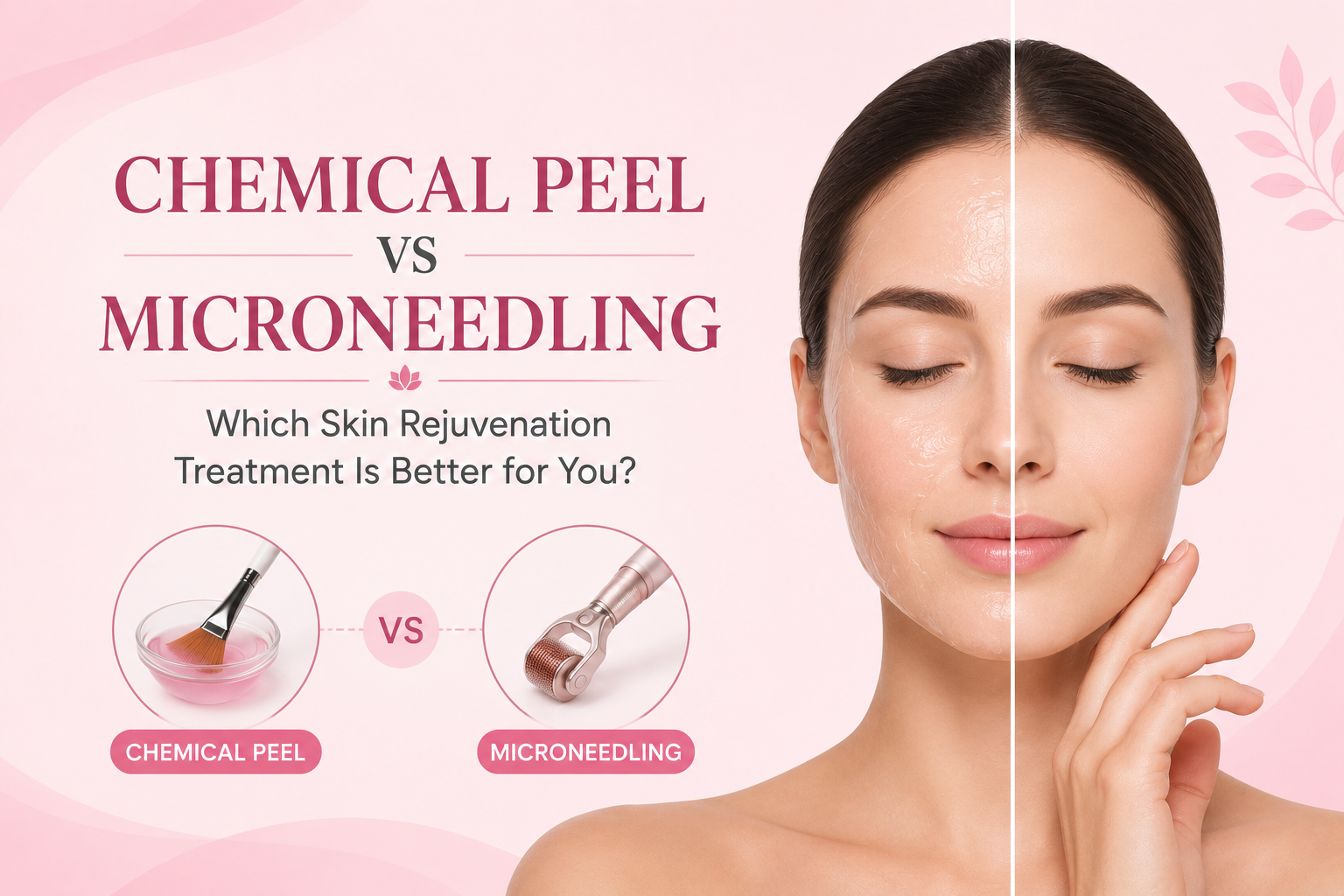
Healthy, radiant skin is something many people strive for, but concerns such as acne scars, pigmentation, uneven skin texture, fine lines, and dullness can make achieving that goal challenging. While a consistent skincare routine helps maintain skin health, some concerns develop in the deeper layers of the skin and may require professional treatment for noticeable improvement.
Among the most popular non-surgical skin rejuvenation procedures are Chemical Peel treatments and microneedling. Both are widely used to improve skin quality, reduce imperfections, and restore a youthful appearance. However, they work in completely different ways and are designed to address different skin concerns.
In this guide, we'll compare Chemical Peels and microneedling in detail, helping you understand their differences, benefits, and which treatment may be the right choice for your skin.
Understanding Skin Rejuvenation Treatments
Modern aesthetic medicine offers several treatments designed to improve the appearance and health of the skin without surgery. These procedures aim to stimulate the skin's natural healing process, encourage cell renewal, and improve concerns such as uneven pigmentation, acne scars, fine lines, enlarged pores, and dull skin.
Two of the most commonly recommended procedures are:
- Chemical Peel
- Microneedling
Although both treatments support skin resurfacing and rejuvenation, they achieve these results through different mechanisms.
Understanding these differences is important because every skin concern requires a personalised treatment approach rather than a one-size-fits-all solution.
What is a Chemical Peel?
A Chemical Peel is a non-surgical skin treatment that uses specially formulated chemical solutions to exfoliate the outer layers of the skin. As the treated skin gradually peels away, new, healthier skin replaces it, resulting in a smoother, brighter, and more even complexion.
Chemical peels are available in different strengths depending on the skin concern being treated.
They are commonly classified as:
- Superficial peels
- Medium-depth peels
- Deep peels
The depth of the peel determines how deeply it penetrates the skin and influences both the results and recovery time.
Chemical peels are commonly recommended for:
- Uneven skin tone
- Mild pigmentation
- Sun damage
- Fine lines
- Dull skin
- Mild acne scars
- Rough skin texture
Because the treatment removes damaged skin cells, it promotes healthier skin regeneration and contributes to improved skin glow.
How Does a Chemical Peel Work?
The treatment begins with cleansing the skin thoroughly before applying a carefully selected chemical solution.
The solution works by loosening the bonds between damaged skin cells, allowing them to exfoliate naturally over the following days.
As the old skin peels away, the body produces fresh skin cells, resulting in:
- Improved skin texture
- Brighter complexion
- More even pigmentation
- Smoother skin surface
- Reduced appearance of fine lines
Different chemical solutions are selected depending on the patient's skin type and treatment goals.
A qualified specialist determines the most suitable peel during the consultation.
What is Microneedling?
Microneedling is a minimally invasive skin rejuvenation procedure that stimulates the skin's natural healing process through controlled micro-injuries.
During the treatment, a specialised device fitted with fine, sterile needles creates tiny channels within the skin.
These microscopic injuries trigger the body's repair mechanisms, encouraging the production of:
- Collagen
- Elastin
- New skin cells
Unlike a Chemical Peel, which primarily removes damaged surface layers, microneedling works deeper within the skin to stimulate natural tissue regeneration.
This makes it particularly effective for improving:
- Acne scars
- Enlarged pores
- Uneven skin texture
- Fine lines
- Mild wrinkles
- Overall skin quality
The treatment promotes long-term collagen boost, leading to healthier and firmer skin over time.
How Does Microneedling Work?
Microneedling relies on the body's own healing ability.
During the procedure:
- Tiny controlled punctures are created in the skin.
- The body responds by initiating wound healing.
- Fresh collagen and elastin are produced.
- New skin cells gradually replace damaged tissue.
The microscopic channels also allow certain medical-grade serums to penetrate deeper into the skin, potentially enhancing treatment outcomes.
Since collagen production continues for several weeks after each session, improvements develop gradually rather than immediately.
Benefits of Chemical Peels
A Chemical Peel offers several advantages for individuals seeking healthier, brighter-looking skin.
Improves Skin Glow
By removing dull, damaged surface cells, chemical peels reveal fresher skin underneath, resulting in a brighter and more radiant complexion.
Enhances Skin Texture
Exfoliation smooths rough skin and contributes to a softer, more even skin texture.
Reduces Pigmentation
Chemical peels are commonly used to improve mild sun damage, uneven pigmentation, and post-inflammatory marks.
Softens Fine Lines
Superficial and medium-depth peels may reduce the appearance of early fine lines by encouraging healthy skin renewal.
Supports Skin Resurfacing
One of the primary goals of a chemical peel is skin resurfacing, helping replace damaged outer layers with healthier new skin.
Benefits of Microneedling
Microneedling provides a different set of advantages by focusing on collagen production rather than surface exfoliation.
Promotes Collagen Production
One of the biggest benefits is its natural collagen boost, helping improve skin firmness and elasticity.
Improves Acne Scars
Microneedling is widely recommended for improving the appearance of acne scars, especially depressed scars that develop after inflammatory acne.
Refines Skin Texture
New collagen helps smooth uneven skin texture, making the skin feel softer and appear healthier.
Reduces Fine Lines
Improved collagen production contributes to firmer skin and softer wrinkles over time.
Comprehensive Facial Rejuvenation
Because microneedling stimulates the body's natural healing response, it is an excellent option for long-term facial rejuvenation and overall skin improvement.
Which Skin Concerns Does Each Treatment Address?
Choosing between a Chemical Peel and microneedling depends largely on the concern you wish to treat.
A Chemical Peel is often preferred for:
- Uneven skin tone
- Mild pigmentation
- Sun damage
- Dull skin
- Superficial fine lines
- Improving overall skin glow
Microneedling is commonly recommended for:
- Acne scars
- Enlarged pores
- Uneven skin texture
- Early signs of ageing
- Mild wrinkles
- Long-term collagen boost
In many cases, both treatments can play an important role in a comprehensive skin rejuvenation plan. Rather than choosing one treatment based solely on popularity, the most appropriate option should always be determined after a professional skin assessment.
Which Treatment Is Better for Acne Scars?
One of the most common reasons people seek professional skin treatments is to reduce the appearance of acne scars. However, not all scars are the same, and the most effective treatment depends on the type and severity of scarring.
Chemical Peel for Acne Scars
A Chemical Peel is generally most effective for treating:
- Post-acne pigmentation
- Superficial acne marks
- Mild textural irregularities
- Uneven skin tone
By exfoliating damaged outer skin layers, chemical peels encourage the growth of healthier skin cells, making superficial scars and discoloration less noticeable over time.
Microneedling for Acne Scars
Microneedling is often preferred for deeper acne scars because it works beneath the skin's surface by stimulating new collagen production.
It can be particularly beneficial for:
- Rolling scars
- Boxcar scars
- Mild atrophic scars
- Uneven skin texture caused by acne
The increased collagen boost gradually helps remodel scar tissue, improving the skin's overall appearance and texture.
For individuals with a combination of pigmentation and depressed acne scars, a personalised treatment plan may include both procedures at different stages under the guidance of a qualified specialist.
Downtime and Recovery: Chemical Peel vs Microneedling
Recovery is another important factor when deciding between these two treatments.
Recovery After a Chemical Peel
The downtime depends on the depth of the peel.
Superficial peels generally involve:
- Mild redness
- Light flaking
- Minimal disruption to daily activities
Medium-depth peels may cause:
- More noticeable peeling
- Redness
- Mild swelling
- Recovery over several days
Deep peels require a significantly longer healing period and are recommended only in selected cases.
Recovery After Microneedling
Microneedling usually involves minimal downtime.
Immediately after treatment, patients may experience:
- Mild redness
- Slight swelling
- Skin sensitivity
- Temporary tightness
These effects generally improve within 24 to 72 hours.
Because microneedling does not remove the outer skin layer in the same way as a chemical peel, many patients are able to resume normal activities relatively quickly.
Is Microneedling Safer Than a Chemical Peel?
Both treatments are considered safe when performed by qualified professionals using appropriate techniques and after a thorough skin assessment.
Neither procedure is universally safer than the other. Safety depends on factors such as:
- Skin type
- Existing skin conditions
- Medical history
- Treatment depth
- Professional expertise
- Following post-treatment instructions
Possible Side Effects of Chemical Peels
Some temporary side effects may include:
- Redness
- Peeling
- Dryness
- Mild irritation
- Increased sun sensitivity
Possible Side Effects of Microneedling
Temporary effects may include:
- Redness
- Mild swelling
- Skin sensitivity
- Minor pinpoint bleeding during treatment
- Temporary dryness
Serious complications with either procedure are uncommon when treatments are performed by experienced professionals and patients follow the recommended aftercare instructions.
Can Chemical Peels and Microneedling Be Combined?
Yes. In many cases, Chemical Peel treatments and microneedling can complement each other as part of a comprehensive skin rejuvenation plan.
Since both procedures work differently, combining them at appropriate intervals may help address multiple skin concerns simultaneously.
For example:
- A Chemical Peel may improve pigmentation and skin glow.
- Microneedling may improve skin texture, collagen production, and acne scars.
However, these treatments are generally not performed on the same day. The skin requires adequate time to heal between procedures, and the treatment schedule should always be planned by a qualified medical professional.
A personalised consultation helps determine:
- Which treatment should be performed first
- Appropriate intervals between sessions
- The number of treatments required
- The safest approach for your skin type
Which Treatment Delivers Faster Results?
Many patients want to know which procedure provides quicker improvements.
The answer depends on the skin concern being treated.
Chemical Peel
Results such as improved brightness and smoother skin often become noticeable after the peeling process is complete.
Many patients observe:
- Brighter skin
- Improved complexion
- Enhanced skin glow
- Smoother surface texture
These improvements may be visible within days after recovery.
Microneedling
Microneedling stimulates the body's natural healing process, meaning results develop more gradually.
While some patients notice healthier-looking skin within a few weeks, collagen production continues for several months after treatment.
This gradual improvement contributes to:
- Better skin texture
- Reduced acne scars
- Softer fine lines
- Long-term skin rejuvenation
Chemical peels often provide faster improvements in skin brightness, while microneedling typically offers progressive improvements in skin quality through collagen remodeling.
How to Choose the Right Treatment
Choosing between a Chemical Peel and microneedling should never be based solely on online reviews or trends.
The ideal treatment depends on:
- Your skin type
- Your primary concern
- Severity of pigmentation or scarring
- Existing skin sensitivity
- Downtime preferences
- Long-term aesthetic goals
Generally speaking:
A Chemical Peel may be more suitable if your primary concerns include:
- Uneven skin tone
- Mild pigmentation
- Sun damage
- Dull complexion
- Superficial fine lines
Microneedling may be recommended if your goals include:
- Improving acne scars
- Enhancing collagen production
- Refining skin texture
- Reducing enlarged pores
- Long-term skin rejuvenation
A professional skin assessment remains the most reliable way to determine which procedure is best suited to your individual needs.
Why Choose Shobhit Aesthetics?
At Shobhit Aesthetics, we understand that healthy, radiant skin requires more than a standard treatment plan. Every individual's skin is unique, which is why we believe in providing personalised care based on your skin type, concerns, and aesthetic goals.
As a trusted Plastic Surgery Superspeciality Centre, we offer advanced skin rejuvenation treatments performed using evidence-based techniques and modern technology. Whether you're looking to improve skin texture, reduce acne scars, restore your natural skin glow, or address early signs of ageing, our specialists carefully evaluate your skin before recommending the most appropriate treatment.
Rather than promoting one procedure for every patient, we focus on selecting the treatment—or combination of treatments—that is most suitable for achieving safe, natural-looking, and long-lasting results.
From your initial consultation to post-treatment care, our experienced team is committed to providing ethical guidance, personalised treatment plans, and comprehensive support throughout your skin rejuvenation journey.
Frequently Asked Questions
What is the difference between a chemical peel and microneedling?
A Chemical Peel works by exfoliating the outer layers of the skin using a specially formulated chemical solution, while microneedling creates controlled micro-injuries that stimulate collagen production beneath the skin. Although both improve skin quality, they work through different mechanisms and are suited to different skin concerns.
Which treatment is better for acne scars?
It depends on the type of acne scars. Chemical peels are generally more effective for superficial acne marks and pigmentation, whereas microneedling is often preferred for depressed acne scars because it stimulates collagen production and improves skin texture.
Is microneedling safer than a chemical peel?
Both treatments are considered safe when performed by qualified professionals after an appropriate skin assessment. The safest option depends on your skin type, medical history, and the specific skin concern being treated.
Which treatment requires less downtime?
Microneedling typically involves minimal downtime, with redness usually resolving within a few days. Recovery after a Chemical Peel depends on the depth of the peel, with superficial peels requiring less downtime than medium or deep peels.
Can chemical peels and microneedling be combined?
Yes. These treatments can often be combined as part of a customised skin rejuvenation plan. However, they are usually performed during separate sessions to allow the skin to heal properly between treatments.
Which treatment delivers faster results?
Chemical peels often provide quicker improvements in skin brightness, smoothness, and overall glow. Microneedling delivers more gradual results as collagen production increases over several weeks, making it particularly effective for long-term skin renewal and scar improvement.
Conclusion
Both Chemical Peel treatments and microneedling are highly effective options for improving skin health, but they are designed to address different concerns. While Chemical Peels focus on skin resurfacing, pigmentation, skin glow, and superficial fine lines, microneedling works beneath the skin to stimulate a natural collagen boost, improve skin texture, and reduce acne scars.
Rather than asking which treatment is universally better, the more important question is which one is most suitable for your skin type and aesthetic goals. A personalised consultation allows your specialist to recommend the treatment that offers the greatest benefit for your specific concerns.
At Shobhit Aesthetics, we combine advanced technology, personalised treatment planning, and patient-focused care to help you achieve healthier, smoother, and more radiant skin. If you're considering professional skin rejuvenation, schedule a consultation with our experienced team to discover whether a Chemical Peel, microneedling, or a customised combination approach is the right choice for you.
Healthy, radiant skin is something many people strive for, but concerns such as acne scars, pigmentation, uneven skin texture, fine lines, and dullness can make achieving that goal challenging. While a consistent skincare routine helps maintain skin health, some concerns develop in the deeper layers of the skin and may require professional treatment for noticeable improvement.
Among the most popular non-surgical skin rejuvenation procedures are Chemical Peel treatments and microneedling. Both are widely used to improve skin quality, reduce imperfections, and restore a youthful appearance. However, they work in completely different ways and are designed to address different skin concerns.
In this guide, we'll compare Chemical Peels and microneedling in detail, helping you understand their differences, benefits, and which treatment may be the right choice for your skin.
Understanding Skin Rejuvenation Treatments
Modern aesthetic medicine offers several treatments designed to improve the appearance and health of the skin without surgery. These procedures aim to stimulate the skin's natural healing process, encourage cell renewal, and improve concerns such as uneven pigmentation, acne scars, fine lines, enlarged pores, and dull skin.
Two of the most commonly recommended procedures are:
- Chemical Peel
- Microneedling
Although both treatments support skin resurfacing and rejuvenation, they achieve these results through different mechanisms.
Understanding these differences is important because every skin concern requires a personalised treatment approach rather than a one-size-fits-all solution.
What is a Chemical Peel?
A Chemical Peel is a non-surgical skin treatment that uses specially formulated chemical solutions to exfoliate the outer layers of the skin. As the treated skin gradually peels away, new, healthier skin replaces it, resulting in a smoother, brighter, and more even complexion.
Chemical peels are available in different strengths depending on the skin concern being treated.
They are commonly classified as:
- Superficial peels
- Medium-depth peels
- Deep peels
The depth of the peel determines how deeply it penetrates the skin and influences both the results and recovery time.
Chemical peels are commonly recommended for:
- Uneven skin tone
- Mild pigmentation
- Sun damage
- Fine lines
- Dull skin
- Mild acne scars
- Rough skin texture
Because the treatment removes damaged skin cells, it promotes healthier skin regeneration and contributes to improved skin glow.
How Does a Chemical Peel Work?
The treatment begins with cleansing the skin thoroughly before applying a carefully selected chemical solution.
The solution works by loosening the bonds between damaged skin cells, allowing them to exfoliate naturally over the following days.
As the old skin peels away, the body produces fresh skin cells, resulting in:
- Improved skin texture
- Brighter complexion
- More even pigmentation
- Smoother skin surface
- Reduced appearance of fine lines
Different chemical solutions are selected depending on the patient's skin type and treatment goals.
A qualified specialist determines the most suitable peel during the consultation.
What is Microneedling?
Microneedling is a minimally invasive skin rejuvenation procedure that stimulates the skin's natural healing process through controlled micro-injuries.
During the treatment, a specialised device fitted with fine, sterile needles creates tiny channels within the skin.
These microscopic injuries trigger the body's repair mechanisms, encouraging the production of:
- Collagen
- Elastin
- New skin cells
Unlike a Chemical Peel, which primarily removes damaged surface layers, microneedling works deeper within the skin to stimulate natural tissue regeneration.
This makes it particularly effective for improving:
- Acne scars
- Enlarged pores
- Uneven skin texture
- Fine lines
- Mild wrinkles
- Overall skin quality
The treatment promotes long-term collagen boost, leading to healthier and firmer skin over time.
How Does Microneedling Work?
Microneedling relies on the body's own healing ability.
During the procedure:
- Tiny controlled punctures are created in the skin.
- The body responds by initiating wound healing.
- Fresh collagen and elastin are produced.
- New skin cells gradually replace damaged tissue.
The microscopic channels also allow certain medical-grade serums to penetrate deeper into the skin, potentially enhancing treatment outcomes.
Since collagen production continues for several weeks after each session, improvements develop gradually rather than immediately.
Benefits of Chemical Peels
A Chemical Peel offers several advantages for individuals seeking healthier, brighter-looking skin.
Improves Skin Glow
By removing dull, damaged surface cells, chemical peels reveal fresher skin underneath, resulting in a brighter and more radiant complexion.
Enhances Skin Texture
Exfoliation smooths rough skin and contributes to a softer, more even skin texture.
Reduces Pigmentation
Chemical peels are commonly used to improve mild sun damage, uneven pigmentation, and post-inflammatory marks.
Softens Fine Lines
Superficial and medium-depth peels may reduce the appearance of early fine lines by encouraging healthy skin renewal.
Supports Skin Resurfacing
One of the primary goals of a chemical peel is skin resurfacing, helping replace damaged outer layers with healthier new skin.
Benefits of Microneedling
Microneedling provides a different set of advantages by focusing on collagen production rather than surface exfoliation.
Promotes Collagen Production
One of the biggest benefits is its natural collagen boost, helping improve skin firmness and elasticity.
Improves Acne Scars
Microneedling is widely recommended for improving the appearance of acne scars, especially depressed scars that develop after inflammatory acne.
Refines Skin Texture
New collagen helps smooth uneven skin texture, making the skin feel softer and appear healthier.
Reduces Fine Lines
Improved collagen production contributes to firmer skin and softer wrinkles over time.
Comprehensive Facial Rejuvenation
Because microneedling stimulates the body's natural healing response, it is an excellent option for long-term facial rejuvenation and overall skin improvement.
Which Skin Concerns Does Each Treatment Address?
Choosing between a Chemical Peel and microneedling depends largely on the concern you wish to treat.
A Chemical Peel is often preferred for:
- Uneven skin tone
- Mild pigmentation
- Sun damage
- Dull skin
- Superficial fine lines
- Improving overall skin glow
Microneedling is commonly recommended for:
- Acne scars
- Enlarged pores
- Uneven skin texture
- Early signs of ageing
- Mild wrinkles
- Long-term collagen boost
In many cases, both treatments can play an important role in a comprehensive skin rejuvenation plan. Rather than choosing one treatment based solely on popularity, the most appropriate option should always be determined after a professional skin assessment.
Which Treatment Is Better for Acne Scars?
One of the most common reasons people seek professional skin treatments is to reduce the appearance of acne scars. However, not all scars are the same, and the most effective treatment depends on the type and severity of scarring.
Chemical Peel for Acne Scars
A Chemical Peel is generally most effective for treating:
- Post-acne pigmentation
- Superficial acne marks
- Mild textural irregularities
- Uneven skin tone
By exfoliating damaged outer skin layers, chemical peels encourage the growth of healthier skin cells, making superficial scars and discoloration less noticeable over time.
Microneedling for Acne Scars
Microneedling is often preferred for deeper acne scars because it works beneath the skin's surface by stimulating new collagen production.
It can be particularly beneficial for:
- Rolling scars
- Boxcar scars
- Mild atrophic scars
- Uneven skin texture caused by acne
The increased collagen boost gradually helps remodel scar tissue, improving the skin's overall appearance and texture.
For individuals with a combination of pigmentation and depressed acne scars, a personalised treatment plan may include both procedures at different stages under the guidance of a qualified specialist.
Downtime and Recovery: Chemical Peel vs Microneedling
Recovery is another important factor when deciding between these two treatments.
Recovery After a Chemical Peel
The downtime depends on the depth of the peel.
Superficial peels generally involve:
- Mild redness
- Light flaking
- Minimal disruption to daily activities
Medium-depth peels may cause:
- More noticeable peeling
- Redness
- Mild swelling
- Recovery over several days
Deep peels require a significantly longer healing period and are recommended only in selected cases.
Recovery After Microneedling
Microneedling usually involves minimal downtime.
Immediately after treatment, patients may experience:
- Mild redness
- Slight swelling
- Skin sensitivity
- Temporary tightness
These effects generally improve within 24 to 72 hours.
Because microneedling does not remove the outer skin layer in the same way as a chemical peel, many patients are able to resume normal activities relatively quickly.
Is Microneedling Safer Than a Chemical Peel?
Both treatments are considered safe when performed by qualified professionals using appropriate techniques and after a thorough skin assessment.
Neither procedure is universally safer than the other. Safety depends on factors such as:
- Skin type
- Existing skin conditions
- Medical history
- Treatment depth
- Professional expertise
- Following post-treatment instructions
Possible Side Effects of Chemical Peels
Some temporary side effects may include:
- Redness
- Peeling
- Dryness
- Mild irritation
- Increased sun sensitivity
Possible Side Effects of Microneedling
Temporary effects may include:
- Redness
- Mild swelling
- Skin sensitivity
- Minor pinpoint bleeding during treatment
- Temporary dryness
Serious complications with either procedure are uncommon when treatments are performed by experienced professionals and patients follow the recommended aftercare instructions.
Can Chemical Peels and Microneedling Be Combined?
Yes. In many cases, Chemical Peel treatments and microneedling can complement each other as part of a comprehensive skin rejuvenation plan.
Since both procedures work differently, combining them at appropriate intervals may help address multiple skin concerns simultaneously.
For example:
- A Chemical Peel may improve pigmentation and skin glow.
- Microneedling may improve skin texture, collagen production, and acne scars.
However, these treatments are generally not performed on the same day. The skin requires adequate time to heal between procedures, and the treatment schedule should always be planned by a qualified medical professional.
A personalised consultation helps determine:
- Which treatment should be performed first
- Appropriate intervals between sessions
- The number of treatments required
- The safest approach for your skin type
Which Treatment Delivers Faster Results?
Many patients want to know which procedure provides quicker improvements.
The answer depends on the skin concern being treated.
Chemical Peel
Results such as improved brightness and smoother skin often become noticeable after the peeling process is complete.
Many patients observe:
- Brighter skin
- Improved complexion
- Enhanced skin glow
- Smoother surface texture
These improvements may be visible within days after recovery.
Microneedling
Microneedling stimulates the body's natural healing process, meaning results develop more gradually.
While some patients notice healthier-looking skin within a few weeks, collagen production continues for several months after treatment.
This gradual improvement contributes to:
- Better skin texture
- Reduced acne scars
- Softer fine lines
- Long-term skin rejuvenation
Chemical peels often provide faster improvements in skin brightness, while microneedling typically offers progressive improvements in skin quality through collagen remodeling.
How to Choose the Right Treatment
Choosing between a Chemical Peel and microneedling should never be based solely on online reviews or trends.
The ideal treatment depends on:
- Your skin type
- Your primary concern
- Severity of pigmentation or scarring
- Existing skin sensitivity
- Downtime preferences
- Long-term aesthetic goals
Generally speaking:
A Chemical Peel may be more suitable if your primary concerns include:
- Uneven skin tone
- Mild pigmentation
- Sun damage
- Dull complexion
- Superficial fine lines
Microneedling may be recommended if your goals include:
- Improving acne scars
- Enhancing collagen production
- Refining skin texture
- Reducing enlarged pores
- Long-term skin rejuvenation
A professional skin assessment remains the most reliable way to determine which procedure is best suited to your individual needs.
Why Choose Shobhit Aesthetics?
At Shobhit Aesthetics, we understand that healthy, radiant skin requires more than a standard treatment plan. Every individual's skin is unique, which is why we believe in providing personalised care based on your skin type, concerns, and aesthetic goals.
As a trusted Plastic Surgery Superspeciality Centre, we offer advanced skin rejuvenation treatments performed using evidence-based techniques and modern technology. Whether you're looking to improve skin texture, reduce acne scars, restore your natural skin glow, or address early signs of ageing, our specialists carefully evaluate your skin before recommending the most appropriate treatment.
Rather than promoting one procedure for every patient, we focus on selecting the treatment—or combination of treatments—that is most suitable for achieving safe, natural-looking, and long-lasting results.
From your initial consultation to post-treatment care, our experienced team is committed to providing ethical guidance, personalised treatment plans, and comprehensive support throughout your skin rejuvenation journey.
Frequently Asked Questions
What is the difference between a chemical peel and microneedling?
A Chemical Peel works by exfoliating the outer layers of the skin using a specially formulated chemical solution, while microneedling creates controlled micro-injuries that stimulate collagen production beneath the skin. Although both improve skin quality, they work through different mechanisms and are suited to different skin concerns.
Which treatment is better for acne scars?
It depends on the type of acne scars. Chemical peels are generally more effective for superficial acne marks and pigmentation, whereas microneedling is often preferred for depressed acne scars because it stimulates collagen production and improves skin texture.
Is microneedling safer than a chemical peel?
Both treatments are considered safe when performed by qualified professionals after an appropriate skin assessment. The safest option depends on your skin type, medical history, and the specific skin concern being treated.
Which treatment requires less downtime?
Microneedling typically involves minimal downtime, with redness usually resolving within a few days. Recovery after a Chemical Peel depends on the depth of the peel, with superficial peels requiring less downtime than medium or deep peels.
Can chemical peels and microneedling be combined?
Yes. These treatments can often be combined as part of a customised skin rejuvenation plan. However, they are usually performed during separate sessions to allow the skin to heal properly between treatments.
Which treatment delivers faster results?
Chemical peels often provide quicker improvements in skin brightness, smoothness, and overall glow. Microneedling delivers more gradual results as collagen production increases over several weeks, making it particularly effective for long-term skin renewal and scar improvement.
Conclusion
Both Chemical Peel treatments and microneedling are highly effective options for improving skin health, but they are designed to address different concerns. While Chemical Peels focus on skin resurfacing, pigmentation, skin glow, and superficial fine lines, microneedling works beneath the skin to stimulate a natural collagen boost, improve skin texture, and reduce acne scars.
Rather than asking which treatment is universally better, the more important question is which one is most suitable for your skin type and aesthetic goals. A personalised consultation allows your specialist to recommend the treatment that offers the greatest benefit for your specific concerns.
At Shobhit Aesthetics, we combine advanced technology, personalised treatment planning, and patient-focused care to help you achieve healthier, smoother, and more radiant skin. If you're considering professional skin rejuvenation, schedule a consultation with our experienced team to discover whether a Chemical Peel, microneedling, or a customised combination approach is the right choice for you.
Healthy, radiant skin is something many people strive for, but concerns such as acne scars, pigmentation, uneven skin texture, fine lines, and dullness can make achieving that goal challenging. While a consistent skincare routine helps maintain skin health, some concerns develop in the deeper layers of the skin and may require professional treatment for noticeable improvement.
Among the most popular non-surgical skin rejuvenation procedures are Chemical Peel treatments and microneedling. Both are widely used to improve skin quality, reduce imperfections, and restore a youthful appearance. However, they work in completely different ways and are designed to address different skin concerns.
In this guide, we'll compare Chemical Peels and microneedling in detail, helping you understand their differences, benefits, and which treatment may be the right choice for your skin.
Understanding Skin Rejuvenation Treatments
Modern aesthetic medicine offers several treatments designed to improve the appearance and health of the skin without surgery. These procedures aim to stimulate the skin's natural healing process, encourage cell renewal, and improve concerns such as uneven pigmentation, acne scars, fine lines, enlarged pores, and dull skin.
Two of the most commonly recommended procedures are:
- Chemical Peel
- Microneedling
Although both treatments support skin resurfacing and rejuvenation, they achieve these results through different mechanisms.
Understanding these differences is important because every skin concern requires a personalised treatment approach rather than a one-size-fits-all solution.
What is a Chemical Peel?
A Chemical Peel is a non-surgical skin treatment that uses specially formulated chemical solutions to exfoliate the outer layers of the skin. As the treated skin gradually peels away, new, healthier skin replaces it, resulting in a smoother, brighter, and more even complexion.
Chemical peels are available in different strengths depending on the skin concern being treated.
They are commonly classified as:
- Superficial peels
- Medium-depth peels
- Deep peels
The depth of the peel determines how deeply it penetrates the skin and influences both the results and recovery time.
Chemical peels are commonly recommended for:
- Uneven skin tone
- Mild pigmentation
- Sun damage
- Fine lines
- Dull skin
- Mild acne scars
- Rough skin texture
Because the treatment removes damaged skin cells, it promotes healthier skin regeneration and contributes to improved skin glow.
How Does a Chemical Peel Work?
The treatment begins with cleansing the skin thoroughly before applying a carefully selected chemical solution.
The solution works by loosening the bonds between damaged skin cells, allowing them to exfoliate naturally over the following days.
As the old skin peels away, the body produces fresh skin cells, resulting in:
- Improved skin texture
- Brighter complexion
- More even pigmentation
- Smoother skin surface
- Reduced appearance of fine lines
Different chemical solutions are selected depending on the patient's skin type and treatment goals.
A qualified specialist determines the most suitable peel during the consultation.
What is Microneedling?
Microneedling is a minimally invasive skin rejuvenation procedure that stimulates the skin's natural healing process through controlled micro-injuries.
During the treatment, a specialised device fitted with fine, sterile needles creates tiny channels within the skin.
These microscopic injuries trigger the body's repair mechanisms, encouraging the production of:
- Collagen
- Elastin
- New skin cells
Unlike a Chemical Peel, which primarily removes damaged surface layers, microneedling works deeper within the skin to stimulate natural tissue regeneration.
This makes it particularly effective for improving:
- Acne scars
- Enlarged pores
- Uneven skin texture
- Fine lines
- Mild wrinkles
- Overall skin quality
The treatment promotes long-term collagen boost, leading to healthier and firmer skin over time.
How Does Microneedling Work?
Microneedling relies on the body's own healing ability.
During the procedure:
- Tiny controlled punctures are created in the skin.
- The body responds by initiating wound healing.
- Fresh collagen and elastin are produced.
- New skin cells gradually replace damaged tissue.
The microscopic channels also allow certain medical-grade serums to penetrate deeper into the skin, potentially enhancing treatment outcomes.
Since collagen production continues for several weeks after each session, improvements develop gradually rather than immediately.
Benefits of Chemical Peels
A Chemical Peel offers several advantages for individuals seeking healthier, brighter-looking skin.
Improves Skin Glow
By removing dull, damaged surface cells, chemical peels reveal fresher skin underneath, resulting in a brighter and more radiant complexion.
Enhances Skin Texture
Exfoliation smooths rough skin and contributes to a softer, more even skin texture.
Reduces Pigmentation
Chemical peels are commonly used to improve mild sun damage, uneven pigmentation, and post-inflammatory marks.
Softens Fine Lines
Superficial and medium-depth peels may reduce the appearance of early fine lines by encouraging healthy skin renewal.
Supports Skin Resurfacing
One of the primary goals of a chemical peel is skin resurfacing, helping replace damaged outer layers with healthier new skin.
Benefits of Microneedling
Microneedling provides a different set of advantages by focusing on collagen production rather than surface exfoliation.
Promotes Collagen Production
One of the biggest benefits is its natural collagen boost, helping improve skin firmness and elasticity.
Improves Acne Scars
Microneedling is widely recommended for improving the appearance of acne scars, especially depressed scars that develop after inflammatory acne.
Refines Skin Texture
New collagen helps smooth uneven skin texture, making the skin feel softer and appear healthier.
Reduces Fine Lines
Improved collagen production contributes to firmer skin and softer wrinkles over time.
Comprehensive Facial Rejuvenation
Because microneedling stimulates the body's natural healing response, it is an excellent option for long-term facial rejuvenation and overall skin improvement.
Which Skin Concerns Does Each Treatment Address?
Choosing between a Chemical Peel and microneedling depends largely on the concern you wish to treat.
A Chemical Peel is often preferred for:
- Uneven skin tone
- Mild pigmentation
- Sun damage
- Dull skin
- Superficial fine lines
- Improving overall skin glow
Microneedling is commonly recommended for:
- Acne scars
- Enlarged pores
- Uneven skin texture
- Early signs of ageing
- Mild wrinkles
- Long-term collagen boost
In many cases, both treatments can play an important role in a comprehensive skin rejuvenation plan. Rather than choosing one treatment based solely on popularity, the most appropriate option should always be determined after a professional skin assessment.
Which Treatment Is Better for Acne Scars?
One of the most common reasons people seek professional skin treatments is to reduce the appearance of acne scars. However, not all scars are the same, and the most effective treatment depends on the type and severity of scarring.
Chemical Peel for Acne Scars
A Chemical Peel is generally most effective for treating:
- Post-acne pigmentation
- Superficial acne marks
- Mild textural irregularities
- Uneven skin tone
By exfoliating damaged outer skin layers, chemical peels encourage the growth of healthier skin cells, making superficial scars and discoloration less noticeable over time.
Microneedling for Acne Scars
Microneedling is often preferred for deeper acne scars because it works beneath the skin's surface by stimulating new collagen production.
It can be particularly beneficial for:
- Rolling scars
- Boxcar scars
- Mild atrophic scars
- Uneven skin texture caused by acne
The increased collagen boost gradually helps remodel scar tissue, improving the skin's overall appearance and texture.
For individuals with a combination of pigmentation and depressed acne scars, a personalised treatment plan may include both procedures at different stages under the guidance of a qualified specialist.
Downtime and Recovery: Chemical Peel vs Microneedling
Recovery is another important factor when deciding between these two treatments.
Recovery After a Chemical Peel
The downtime depends on the depth of the peel.
Superficial peels generally involve:
- Mild redness
- Light flaking
- Minimal disruption to daily activities
Medium-depth peels may cause:
- More noticeable peeling
- Redness
- Mild swelling
- Recovery over several days
Deep peels require a significantly longer healing period and are recommended only in selected cases.
Recovery After Microneedling
Microneedling usually involves minimal downtime.
Immediately after treatment, patients may experience:
- Mild redness
- Slight swelling
- Skin sensitivity
- Temporary tightness
These effects generally improve within 24 to 72 hours.
Because microneedling does not remove the outer skin layer in the same way as a chemical peel, many patients are able to resume normal activities relatively quickly.
Is Microneedling Safer Than a Chemical Peel?
Both treatments are considered safe when performed by qualified professionals using appropriate techniques and after a thorough skin assessment.
Neither procedure is universally safer than the other. Safety depends on factors such as:
- Skin type
- Existing skin conditions
- Medical history
- Treatment depth
- Professional expertise
- Following post-treatment instructions
Possible Side Effects of Chemical Peels
Some temporary side effects may include:
- Redness
- Peeling
- Dryness
- Mild irritation
- Increased sun sensitivity
Possible Side Effects of Microneedling
Temporary effects may include:
- Redness
- Mild swelling
- Skin sensitivity
- Minor pinpoint bleeding during treatment
- Temporary dryness
Serious complications with either procedure are uncommon when treatments are performed by experienced professionals and patients follow the recommended aftercare instructions.
Can Chemical Peels and Microneedling Be Combined?
Yes. In many cases, Chemical Peel treatments and microneedling can complement each other as part of a comprehensive skin rejuvenation plan.
Since both procedures work differently, combining them at appropriate intervals may help address multiple skin concerns simultaneously.
For example:
- A Chemical Peel may improve pigmentation and skin glow.
- Microneedling may improve skin texture, collagen production, and acne scars.
However, these treatments are generally not performed on the same day. The skin requires adequate time to heal between procedures, and the treatment schedule should always be planned by a qualified medical professional.
A personalised consultation helps determine:
- Which treatment should be performed first
- Appropriate intervals between sessions
- The number of treatments required
- The safest approach for your skin type
Which Treatment Delivers Faster Results?
Many patients want to know which procedure provides quicker improvements.
The answer depends on the skin concern being treated.
Chemical Peel
Results such as improved brightness and smoother skin often become noticeable after the peeling process is complete.
Many patients observe:
- Brighter skin
- Improved complexion
- Enhanced skin glow
- Smoother surface texture
These improvements may be visible within days after recovery.
Microneedling
Microneedling stimulates the body's natural healing process, meaning results develop more gradually.
While some patients notice healthier-looking skin within a few weeks, collagen production continues for several months after treatment.
This gradual improvement contributes to:
- Better skin texture
- Reduced acne scars
- Softer fine lines
- Long-term skin rejuvenation
Chemical peels often provide faster improvements in skin brightness, while microneedling typically offers progressive improvements in skin quality through collagen remodeling.
How to Choose the Right Treatment
Choosing between a Chemical Peel and microneedling should never be based solely on online reviews or trends.
The ideal treatment depends on:
- Your skin type
- Your primary concern
- Severity of pigmentation or scarring
- Existing skin sensitivity
- Downtime preferences
- Long-term aesthetic goals
Generally speaking:
A Chemical Peel may be more suitable if your primary concerns include:
- Uneven skin tone
- Mild pigmentation
- Sun damage
- Dull complexion
- Superficial fine lines
Microneedling may be recommended if your goals include:
- Improving acne scars
- Enhancing collagen production
- Refining skin texture
- Reducing enlarged pores
- Long-term skin rejuvenation
A professional skin assessment remains the most reliable way to determine which procedure is best suited to your individual needs.
Why Choose Shobhit Aesthetics?
At Shobhit Aesthetics, we understand that healthy, radiant skin requires more than a standard treatment plan. Every individual's skin is unique, which is why we believe in providing personalised care based on your skin type, concerns, and aesthetic goals.
As a trusted Plastic Surgery Superspeciality Centre, we offer advanced skin rejuvenation treatments performed using evidence-based techniques and modern technology. Whether you're looking to improve skin texture, reduce acne scars, restore your natural skin glow, or address early signs of ageing, our specialists carefully evaluate your skin before recommending the most appropriate treatment.
Rather than promoting one procedure for every patient, we focus on selecting the treatment—or combination of treatments—that is most suitable for achieving safe, natural-looking, and long-lasting results.
From your initial consultation to post-treatment care, our experienced team is committed to providing ethical guidance, personalised treatment plans, and comprehensive support throughout your skin rejuvenation journey.
Frequently Asked Questions
What is the difference between a chemical peel and microneedling?
A Chemical Peel works by exfoliating the outer layers of the skin using a specially formulated chemical solution, while microneedling creates controlled micro-injuries that stimulate collagen production beneath the skin. Although both improve skin quality, they work through different mechanisms and are suited to different skin concerns.
Which treatment is better for acne scars?
It depends on the type of acne scars. Chemical peels are generally more effective for superficial acne marks and pigmentation, whereas microneedling is often preferred for depressed acne scars because it stimulates collagen production and improves skin texture.
Is microneedling safer than a chemical peel?
Both treatments are considered safe when performed by qualified professionals after an appropriate skin assessment. The safest option depends on your skin type, medical history, and the specific skin concern being treated.
Which treatment requires less downtime?
Microneedling typically involves minimal downtime, with redness usually resolving within a few days. Recovery after a Chemical Peel depends on the depth of the peel, with superficial peels requiring less downtime than medium or deep peels.
Can chemical peels and microneedling be combined?
Yes. These treatments can often be combined as part of a customised skin rejuvenation plan. However, they are usually performed during separate sessions to allow the skin to heal properly between treatments.
Which treatment delivers faster results?
Chemical peels often provide quicker improvements in skin brightness, smoothness, and overall glow. Microneedling delivers more gradual results as collagen production increases over several weeks, making it particularly effective for long-term skin renewal and scar improvement.
Conclusion
Both Chemical Peel treatments and microneedling are highly effective options for improving skin health, but they are designed to address different concerns. While Chemical Peels focus on skin resurfacing, pigmentation, skin glow, and superficial fine lines, microneedling works beneath the skin to stimulate a natural collagen boost, improve skin texture, and reduce acne scars.
Rather than asking which treatment is universally better, the more important question is which one is most suitable for your skin type and aesthetic goals. A personalised consultation allows your specialist to recommend the treatment that offers the greatest benefit for your specific concerns.
At Shobhit Aesthetics, we combine advanced technology, personalised treatment planning, and patient-focused care to help you achieve healthier, smoother, and more radiant skin. If you're considering professional skin rejuvenation, schedule a consultation with our experienced team to discover whether a Chemical Peel, microneedling, or a customised combination approach is the right choice for you.
Healthy, radiant skin is something many people strive for, but concerns such as acne scars, pigmentation, uneven skin texture, fine lines, and dullness can make achieving that goal challenging. While a consistent skincare routine helps maintain skin health, some concerns develop in the deeper layers of the skin and may require professional treatment for noticeable improvement.
Among the most popular non-surgical skin rejuvenation procedures are Chemical Peel treatments and microneedling. Both are widely used to improve skin quality, reduce imperfections, and restore a youthful appearance. However, they work in completely different ways and are designed to address different skin concerns.
In this guide, we'll compare Chemical Peels and microneedling in detail, helping you understand their differences, benefits, and which treatment may be the right choice for your skin.
Understanding Skin Rejuvenation Treatments
Modern aesthetic medicine offers several treatments designed to improve the appearance and health of the skin without surgery. These procedures aim to stimulate the skin's natural healing process, encourage cell renewal, and improve concerns such as uneven pigmentation, acne scars, fine lines, enlarged pores, and dull skin.
Two of the most commonly recommended procedures are:
- Chemical Peel
- Microneedling
Although both treatments support skin resurfacing and rejuvenation, they achieve these results through different mechanisms.
Understanding these differences is important because every skin concern requires a personalised treatment approach rather than a one-size-fits-all solution.
What is a Chemical Peel?
A Chemical Peel is a non-surgical skin treatment that uses specially formulated chemical solutions to exfoliate the outer layers of the skin. As the treated skin gradually peels away, new, healthier skin replaces it, resulting in a smoother, brighter, and more even complexion.
Chemical peels are available in different strengths depending on the skin concern being treated.
They are commonly classified as:
- Superficial peels
- Medium-depth peels
- Deep peels
The depth of the peel determines how deeply it penetrates the skin and influences both the results and recovery time.
Chemical peels are commonly recommended for:
- Uneven skin tone
- Mild pigmentation
- Sun damage
- Fine lines
- Dull skin
- Mild acne scars
- Rough skin texture
Because the treatment removes damaged skin cells, it promotes healthier skin regeneration and contributes to improved skin glow.
How Does a Chemical Peel Work?
The treatment begins with cleansing the skin thoroughly before applying a carefully selected chemical solution.
The solution works by loosening the bonds between damaged skin cells, allowing them to exfoliate naturally over the following days.
As the old skin peels away, the body produces fresh skin cells, resulting in:
- Improved skin texture
- Brighter complexion
- More even pigmentation
- Smoother skin surface
- Reduced appearance of fine lines
Different chemical solutions are selected depending on the patient's skin type and treatment goals.
A qualified specialist determines the most suitable peel during the consultation.
What is Microneedling?
Microneedling is a minimally invasive skin rejuvenation procedure that stimulates the skin's natural healing process through controlled micro-injuries.
During the treatment, a specialised device fitted with fine, sterile needles creates tiny channels within the skin.
These microscopic injuries trigger the body's repair mechanisms, encouraging the production of:
- Collagen
- Elastin
- New skin cells
Unlike a Chemical Peel, which primarily removes damaged surface layers, microneedling works deeper within the skin to stimulate natural tissue regeneration.
This makes it particularly effective for improving:
- Acne scars
- Enlarged pores
- Uneven skin texture
- Fine lines
- Mild wrinkles
- Overall skin quality
The treatment promotes long-term collagen boost, leading to healthier and firmer skin over time.
How Does Microneedling Work?
Microneedling relies on the body's own healing ability.
During the procedure:
- Tiny controlled punctures are created in the skin.
- The body responds by initiating wound healing.
- Fresh collagen and elastin are produced.
- New skin cells gradually replace damaged tissue.
The microscopic channels also allow certain medical-grade serums to penetrate deeper into the skin, potentially enhancing treatment outcomes.
Since collagen production continues for several weeks after each session, improvements develop gradually rather than immediately.
Benefits of Chemical Peels
A Chemical Peel offers several advantages for individuals seeking healthier, brighter-looking skin.
Improves Skin Glow
By removing dull, damaged surface cells, chemical peels reveal fresher skin underneath, resulting in a brighter and more radiant complexion.
Enhances Skin Texture
Exfoliation smooths rough skin and contributes to a softer, more even skin texture.
Reduces Pigmentation
Chemical peels are commonly used to improve mild sun damage, uneven pigmentation, and post-inflammatory marks.
Softens Fine Lines
Superficial and medium-depth peels may reduce the appearance of early fine lines by encouraging healthy skin renewal.
Supports Skin Resurfacing
One of the primary goals of a chemical peel is skin resurfacing, helping replace damaged outer layers with healthier new skin.
Benefits of Microneedling
Microneedling provides a different set of advantages by focusing on collagen production rather than surface exfoliation.
Promotes Collagen Production
One of the biggest benefits is its natural collagen boost, helping improve skin firmness and elasticity.
Improves Acne Scars
Microneedling is widely recommended for improving the appearance of acne scars, especially depressed scars that develop after inflammatory acne.
Refines Skin Texture
New collagen helps smooth uneven skin texture, making the skin feel softer and appear healthier.
Reduces Fine Lines
Improved collagen production contributes to firmer skin and softer wrinkles over time.
Comprehensive Facial Rejuvenation
Because microneedling stimulates the body's natural healing response, it is an excellent option for long-term facial rejuvenation and overall skin improvement.
Which Skin Concerns Does Each Treatment Address?
Choosing between a Chemical Peel and microneedling depends largely on the concern you wish to treat.
A Chemical Peel is often preferred for:
- Uneven skin tone
- Mild pigmentation
- Sun damage
- Dull skin
- Superficial fine lines
- Improving overall skin glow
Microneedling is commonly recommended for:
- Acne scars
- Enlarged pores
- Uneven skin texture
- Early signs of ageing
- Mild wrinkles
- Long-term collagen boost
In many cases, both treatments can play an important role in a comprehensive skin rejuvenation plan. Rather than choosing one treatment based solely on popularity, the most appropriate option should always be determined after a professional skin assessment.
Which Treatment Is Better for Acne Scars?
One of the most common reasons people seek professional skin treatments is to reduce the appearance of acne scars. However, not all scars are the same, and the most effective treatment depends on the type and severity of scarring.
Chemical Peel for Acne Scars
A Chemical Peel is generally most effective for treating:
- Post-acne pigmentation
- Superficial acne marks
- Mild textural irregularities
- Uneven skin tone
By exfoliating damaged outer skin layers, chemical peels encourage the growth of healthier skin cells, making superficial scars and discoloration less noticeable over time.
Microneedling for Acne Scars
Microneedling is often preferred for deeper acne scars because it works beneath the skin's surface by stimulating new collagen production.
It can be particularly beneficial for:
- Rolling scars
- Boxcar scars
- Mild atrophic scars
- Uneven skin texture caused by acne
The increased collagen boost gradually helps remodel scar tissue, improving the skin's overall appearance and texture.
For individuals with a combination of pigmentation and depressed acne scars, a personalised treatment plan may include both procedures at different stages under the guidance of a qualified specialist.
Downtime and Recovery: Chemical Peel vs Microneedling
Recovery is another important factor when deciding between these two treatments.
Recovery After a Chemical Peel
The downtime depends on the depth of the peel.
Superficial peels generally involve:
- Mild redness
- Light flaking
- Minimal disruption to daily activities
Medium-depth peels may cause:
- More noticeable peeling
- Redness
- Mild swelling
- Recovery over several days
Deep peels require a significantly longer healing period and are recommended only in selected cases.
Recovery After Microneedling
Microneedling usually involves minimal downtime.
Immediately after treatment, patients may experience:
- Mild redness
- Slight swelling
- Skin sensitivity
- Temporary tightness
These effects generally improve within 24 to 72 hours.
Because microneedling does not remove the outer skin layer in the same way as a chemical peel, many patients are able to resume normal activities relatively quickly.
Is Microneedling Safer Than a Chemical Peel?
Both treatments are considered safe when performed by qualified professionals using appropriate techniques and after a thorough skin assessment.
Neither procedure is universally safer than the other. Safety depends on factors such as:
- Skin type
- Existing skin conditions
- Medical history
- Treatment depth
- Professional expertise
- Following post-treatment instructions
Possible Side Effects of Chemical Peels
Some temporary side effects may include:
- Redness
- Peeling
- Dryness
- Mild irritation
- Increased sun sensitivity
Possible Side Effects of Microneedling
Temporary effects may include:
- Redness
- Mild swelling
- Skin sensitivity
- Minor pinpoint bleeding during treatment
- Temporary dryness
Serious complications with either procedure are uncommon when treatments are performed by experienced professionals and patients follow the recommended aftercare instructions.
Can Chemical Peels and Microneedling Be Combined?
Yes. In many cases, Chemical Peel treatments and microneedling can complement each other as part of a comprehensive skin rejuvenation plan.
Since both procedures work differently, combining them at appropriate intervals may help address multiple skin concerns simultaneously.
For example:
- A Chemical Peel may improve pigmentation and skin glow.
- Microneedling may improve skin texture, collagen production, and acne scars.
However, these treatments are generally not performed on the same day. The skin requires adequate time to heal between procedures, and the treatment schedule should always be planned by a qualified medical professional.
A personalised consultation helps determine:
- Which treatment should be performed first
- Appropriate intervals between sessions
- The number of treatments required
- The safest approach for your skin type
Which Treatment Delivers Faster Results?
Many patients want to know which procedure provides quicker improvements.
The answer depends on the skin concern being treated.
Chemical Peel
Results such as improved brightness and smoother skin often become noticeable after the peeling process is complete.
Many patients observe:
- Brighter skin
- Improved complexion
- Enhanced skin glow
- Smoother surface texture
These improvements may be visible within days after recovery.
Microneedling
Microneedling stimulates the body's natural healing process, meaning results develop more gradually.
While some patients notice healthier-looking skin within a few weeks, collagen production continues for several months after treatment.
This gradual improvement contributes to:
- Better skin texture
- Reduced acne scars
- Softer fine lines
- Long-term skin rejuvenation
Chemical peels often provide faster improvements in skin brightness, while microneedling typically offers progressive improvements in skin quality through collagen remodeling.
How to Choose the Right Treatment
Choosing between a Chemical Peel and microneedling should never be based solely on online reviews or trends.
The ideal treatment depends on:
- Your skin type
- Your primary concern
- Severity of pigmentation or scarring
- Existing skin sensitivity
- Downtime preferences
- Long-term aesthetic goals
Generally speaking:
A Chemical Peel may be more suitable if your primary concerns include:
- Uneven skin tone
- Mild pigmentation
- Sun damage
- Dull complexion
- Superficial fine lines
Microneedling may be recommended if your goals include:
- Improving acne scars
- Enhancing collagen production
- Refining skin texture
- Reducing enlarged pores
- Long-term skin rejuvenation
A professional skin assessment remains the most reliable way to determine which procedure is best suited to your individual needs.
Why Choose Shobhit Aesthetics?
At Shobhit Aesthetics, we understand that healthy, radiant skin requires more than a standard treatment plan. Every individual's skin is unique, which is why we believe in providing personalised care based on your skin type, concerns, and aesthetic goals.
As a trusted Plastic Surgery Superspeciality Centre, we offer advanced skin rejuvenation treatments performed using evidence-based techniques and modern technology. Whether you're looking to improve skin texture, reduce acne scars, restore your natural skin glow, or address early signs of ageing, our specialists carefully evaluate your skin before recommending the most appropriate treatment.
Rather than promoting one procedure for every patient, we focus on selecting the treatment—or combination of treatments—that is most suitable for achieving safe, natural-looking, and long-lasting results.
From your initial consultation to post-treatment care, our experienced team is committed to providing ethical guidance, personalised treatment plans, and comprehensive support throughout your skin rejuvenation journey.
Frequently Asked Questions
What is the difference between a chemical peel and microneedling?
A Chemical Peel works by exfoliating the outer layers of the skin using a specially formulated chemical solution, while microneedling creates controlled micro-injuries that stimulate collagen production beneath the skin. Although both improve skin quality, they work through different mechanisms and are suited to different skin concerns.
Which treatment is better for acne scars?
It depends on the type of acne scars. Chemical peels are generally more effective for superficial acne marks and pigmentation, whereas microneedling is often preferred for depressed acne scars because it stimulates collagen production and improves skin texture.
Is microneedling safer than a chemical peel?
Both treatments are considered safe when performed by qualified professionals after an appropriate skin assessment. The safest option depends on your skin type, medical history, and the specific skin concern being treated.
Which treatment requires less downtime?
Microneedling typically involves minimal downtime, with redness usually resolving within a few days. Recovery after a Chemical Peel depends on the depth of the peel, with superficial peels requiring less downtime than medium or deep peels.
Can chemical peels and microneedling be combined?
Yes. These treatments can often be combined as part of a customised skin rejuvenation plan. However, they are usually performed during separate sessions to allow the skin to heal properly between treatments.
Which treatment delivers faster results?
Chemical peels often provide quicker improvements in skin brightness, smoothness, and overall glow. Microneedling delivers more gradual results as collagen production increases over several weeks, making it particularly effective for long-term skin renewal and scar improvement.
Conclusion
Both Chemical Peel treatments and microneedling are highly effective options for improving skin health, but they are designed to address different concerns. While Chemical Peels focus on skin resurfacing, pigmentation, skin glow, and superficial fine lines, microneedling works beneath the skin to stimulate a natural collagen boost, improve skin texture, and reduce acne scars.
Rather than asking which treatment is universally better, the more important question is which one is most suitable for your skin type and aesthetic goals. A personalised consultation allows your specialist to recommend the treatment that offers the greatest benefit for your specific concerns.
At Shobhit Aesthetics, we combine advanced technology, personalised treatment planning, and patient-focused care to help you achieve healthier, smoother, and more radiant skin. If you're considering professional skin rejuvenation, schedule a consultation with our experienced team to discover whether a Chemical Peel, microneedling, or a customised combination approach is the right choice for you.