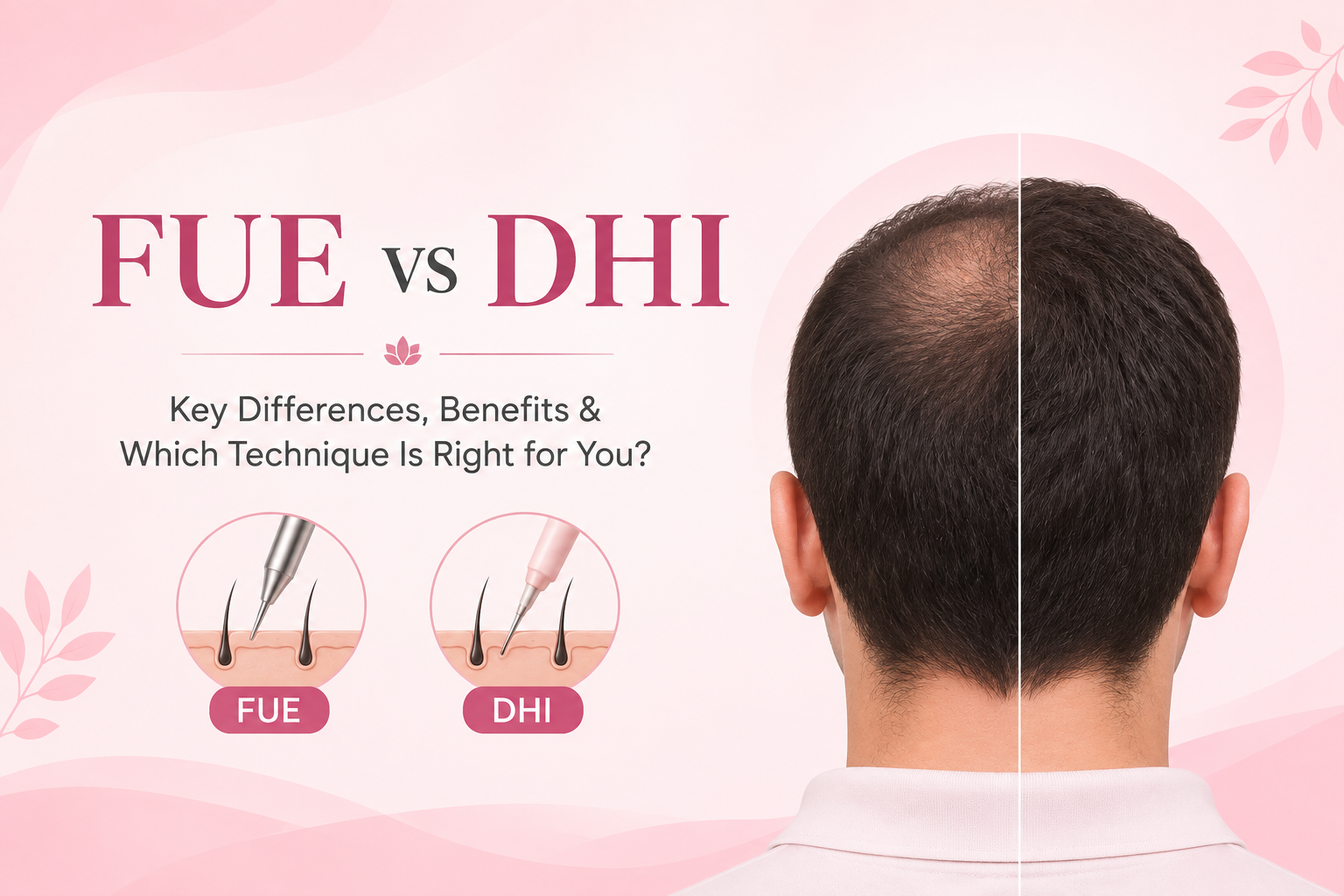
Hair loss affects millions of men and women worldwide, often impacting confidence and self-image. While losing some hair every day is a normal part of the hair growth cycle, excessive thinning or baldness may require medical evaluation and treatment. Fortunately, advancements in hair restoration have made it possible to restore natural-looking hair through modern hair transplant techniques.
Among the most popular methods available today are Follicular Unit Extraction (FUE) and Direct Hair Implantation (DHI). If you've been researching hair transplant procedures, you've likely come across the comparison of FUE vs DHI. Although both techniques aim to restore hair using your own healthy hair follicles, they differ in the way the follicles are implanted and the overall surgical approach.
In this guide, we'll explain the key differences between FUE and DHI hair transplants, their benefits, how each procedure works, and how to determine which option may be right for you.
Understanding Hair Transplant Surgery
A hair transplant is a minimally invasive surgical procedure that involves relocating healthy hair follicles from a donor area, typically the back or sides of the scalp—to areas affected by hair thinning or baldness.
Because the transplanted follicles are taken from areas that are genetically resistant to hair loss, they continue to grow naturally after transplantation.
Modern hair restoration techniques are designed to achieve results that blend seamlessly with existing hair, providing a natural-looking hairline and improved overall coverage.
Both FUE and DHI follow this same principle. The primary difference lies in how the extracted follicles are implanted into the recipient area.
What is FUE Hair Transplant?
Follicular Unit Extraction (FUE) Hair Transplant is one of the most widely performed hair transplant techniques worldwide. In this procedure, individual hair follicles are carefully removed from the donor area using specialised micro-punch instruments. These healthy follicles are then prepared before being implanted into tiny channels created in the recipient area.
Unlike older strip methods, FUE does not require the removal of a strip of scalp. Instead, follicles are extracted individually, resulting in minimal scarring and a faster recovery for many patients.
How FUE Works
The procedure generally follows these steps:
- The donor area is trimmed and prepared.
- Local anaesthesia is administered.
- Individual hair follicles are extracted using micro-punch instruments.
- Tiny recipient sites are carefully created.
- Each graft is implanted into the prepared sites according to the planned hairline design.
Because every follicle is placed individually, the surgeon can carefully recreate natural hair growth patterns.
Benefits of FUE
FUE has become a preferred option for many patients because it offers several advantages.
Some of the key benefits include:
- Minimal visible scarring
- Faster healing compared to older strip techniques
- Natural-looking results
- Suitable for treating larger areas of hair loss
- Flexibility in hairstyle after healing
- Preservation of donor area appearance
FUE is commonly used for restoring the scalp, beard, eyebrows, and other areas where hair transplantation may be required.
What is DHI Hair Transplant?
Direct Hair Implantation (DHI) is an advanced variation of the FUE technique. Like FUE, healthy hair follicles are extracted individually from the donor area. However, the implantation process differs significantly.
Instead of first creating recipient channels, DHI uses a specialised implantation device, commonly known as a Choi Implanter Pen, which allows the surgeon to implant each follicle directly into the scalp in a single step.
This provides greater control over the angle, depth, and direction of each implanted graft.
How DHI Works
The procedure typically involves:
- Preparing the donor area.
- Administering local anaesthesia.
- Performing individual follicle extraction.
- Loading each follicle into the implantation device.
- Directly implanting each graft into the recipient area without creating separate incisions beforehand.
The precise implantation technique makes DHI particularly useful for designing natural-looking frontal hairlines and improving hair density in selected patients.
Benefits of DHI
Some of the advantages of DHI include:
- Highly precise graft placement
- Excellent control over hairline design
- Minimal handling of hair follicles
- High-density implantation in suitable candidates
- Natural-looking hair growth
- Reduced trauma to surrounding tissues
Although DHI shares many similarities with FUE, the specialised implantation technique distinguishes it from conventional methods.
FUE vs DHI: Key Differences
Both procedures aim to achieve natural hair growth, but they differ in several important ways.
1. Implantation Technique
The biggest difference between FUE vs DHI lies in how the grafts are implanted.
FUE
- Recipient channels are created first.
- Hair follicles are implanted afterward.
DHI
- Recipient channels are not created separately.
- Hair follicles are implanted directly using a specialised implantation pen.
2. Hair Grafting Process
In both procedures, healthy follicles are removed individually.
However:
- FUE separates the extraction and implantation stages.
- DHI combines implantation into a single controlled step after extraction.
Both techniques rely on careful hair grafting, but DHI provides greater precision during placement.
3. Hairline Design
Creating a natural-looking hairline is one of the most important aspects of any hair transplant.
Because DHI allows greater control over the angle and direction of each implanted follicle, it may offer additional precision for intricate hairline design, particularly in the frontal scalp.
However, excellent hairline design ultimately depends more on the surgeon's experience than on the technique alone.
4. Hair Density
Patients seeking greater hair density, especially in smaller treatment areas, may benefit from DHI because of its controlled implantation process.
FUE also produces excellent density, particularly when performed by experienced surgeons using careful graft placement techniques.
The final outcome depends on several factors, including:
- Number of available grafts
- Donor hair quality
- Existing hair
- Scalp condition
- Overall treatment planning
5. Procedure Duration
DHI procedures often take longer because each follicle is implanted individually using the specialised implantation device.
FUE can sometimes be completed more efficiently, particularly when treating larger areas of hair loss.
The exact treatment time varies depending on:
- Number of grafts
- Extent of hair loss
- Individual treatment goals
Benefits of FUE
FUE Hair Transplant remains one of the most versatile and widely performed hair transplant techniques.
It is particularly suitable for:
- Larger treatment areas
- Patients requiring a higher number of grafts
- Individuals who prefer shorter hairstyles
- Restoring beard or eyebrow hair
- Patients seeking minimal visible scarring
Its flexibility makes it an excellent choice for many types of hair restoration procedures.
Benefits of DHI
DHI is often chosen when precision is especially important.
It may be particularly beneficial for:
- Restoring the frontal hairline
- Increasing hair density
- Smaller treatment areas
- Patients seeking highly controlled graft placement
- Individuals with specific aesthetic goals
Because every graft is placed with exceptional precision, DHI can produce highly refined results in carefully selected candidates.
Which Technique is Better for Hair Density?
One of the most common questions patients ask is whether FUE or DHI produces better hair density.
The answer depends on the individual's hair characteristics rather than the procedure alone.
Factors influencing hair density include:
- Donor hair availability
- Hair thickness
- Number of grafts
- Scalp flexibility
- Extent of hair loss
- Surgical planning
- Surgeon's expertise
While DHI may allow closer placement of grafts in selected areas, FUE can also produce excellent density when performed with proper planning and advanced surgical techniques.
Rather than asking which technique is universally better, it is more useful to determine which approach is best suited to your specific pattern of hair loss and desired outcome.
Recovery After FUE and DHI Hair Transplant
Recovery is one of the most important considerations when choosing between FUE vs DHI. The good news is that both procedures are minimally invasive and generally have relatively short recovery periods when performed by experienced specialists.
Since both techniques involve follicle extraction from the donor area and implantation into the recipient area, patients can expect mild swelling, redness, and tenderness during the initial healing phase.
The exact recovery experience varies depending on:
- The number of grafts transplanted
- The extent of hair loss
- Individual healing ability
- Post-operative care
- The technique used
The First Few Days
Immediately after the procedure, it is common to experience:
- Mild swelling around the forehead or scalp
- Redness in the treated areas
- Small scabs around each implanted graft
- Mild discomfort or tightness
These symptoms are temporary and generally improve within the first week.
Patients are usually advised to:
- Avoid touching or scratching the scalp.
- Sleep with the head slightly elevated for the first few nights.
- Avoid strenuous physical activities.
- Follow the prescribed hair washing instructions carefully.
Which Procedure Has a Faster Recovery?
When comparing FUE vs DHI, recovery times are generally quite similar.
Both techniques involve individual graft extraction, meaning the donor area heals in much the same way. However, because DHI allows direct implantation using a specialised implantation pen, there may be slightly less trauma to the recipient area in selected cases.
For most patients:
- Initial healing occurs within 7 to 10 days.
- Visible redness and scabbing gradually disappear.
- Normal daily activities can usually be resumed within a few days.
- Strenuous exercise should generally be avoided for around two weeks or as advised by your surgeon.
Ultimately, the speed of recovery depends more on proper aftercare and individual healing than on the technique itself.
Hair Growth Timeline After FUE and DHI
One of the most important things to understand is that hair transplant results develop gradually.
Immediately after surgery, the transplanted hair remains in place.
During the first few weeks, many patients experience shock loss, a normal process in which the transplanted hairs shed while the follicles remain healthy beneath the scalp.
New hair growth typically follows this timeline:
- First month: Healing continues, and transplanted hairs may shed.
- Three to four months: New hair begins to emerge.
- Six months: Noticeable improvement in hair density.
- Nine to twelve months: Significant growth and improved coverage.
- Twelve to eighteen months: Final results are usually visible.
Patience is essential, as the transplanted follicles require time to complete their natural growth cycle.
Is DHI More Expensive Than FUE?
Another common question when comparing FUE vs DHI is whether one procedure costs more than the other.
In many cases, DHI may have a higher overall cost because it requires:
- Specialised implantation instruments
- Greater procedural precision
- Longer operating time in selected cases
- Additional technical expertise
However, the overall cost of either procedure depends on several factors, including:
- Number of grafts required
- Degree of hair loss
- Complexity of the procedure
- Surgeon's experience
- Clinic facilities
- Post-operative care
Rather than selecting a procedure based solely on cost, patients should focus on choosing the technique that is most appropriate for their hair loss pattern and treatment goals.
Which Hair Transplant Technique Is Right for You?
There is no universal answer to the question of whether FUE or DHI is better.
The ideal choice depends on your individual needs and several clinical factors.
FUE May Be More Suitable If You:
- Require a large number of grafts.
- Have extensive hair loss.
- Need treatment over a larger scalp area.
- Want an efficient procedure with excellent long-term results.
DHI May Be More Suitable If You:
- Have mild to moderate hair loss.
- Want increased hair density, especially in the frontal hairline.
- Require highly precise graft placement.
- Are primarily focused on detailed hairline design.
During your consultation, an experienced hair restoration specialist will evaluate your scalp, donor area, hair characteristics, and expectations before recommending the most suitable treatment.
The best results come from choosing the right technique for the individual—not from choosing the newest or most popular procedure.
Why Choose Shobhit Aesthetics for Hair Transplant?
Choosing a qualified and experienced team is one of the most important decisions when considering a hair transplant.
At Shobhit Aesthetics, every hair restoration procedure is carefully planned to achieve natural-looking, long-lasting results that complement your facial features and hair growth pattern.
As a trusted Plastic Surgery Superspeciality Centre, we provide personalised treatment plans based on detailed scalp analysis, donor hair assessment, and individual aesthetic goals. Whether a patient is better suited for FUE or DHI, our approach focuses on selecting the technique that offers the best possible outcome rather than applying the same solution to everyone.
From your initial consultation through recovery and follow-up appointments, our team is committed to providing ethical guidance, personalised care, and results that look natural and age appropriately.
Conclusion
When comparing FUE vs DHI, it's important to remember that both techniques are highly effective methods of hair restoration. While they differ in the way hair follicles are implanted, their shared goal is to restore natural hair growth and improve overall hair density using your own healthy follicles.
The right technique depends on factors such as the extent of hair loss, donor hair availability, desired hairline design, and long-term treatment goals. Rather than asking which method is universally better, the focus should be on selecting the procedure that best suits your individual needs.
At Shobhit Aesthetics, we believe that every successful hair transplant begins with a personalised treatment plan. Our experienced specialists combine advanced surgical techniques, meticulous planning, and patient-focused care to deliver natural-looking, long-lasting results. If you're considering a hair transplant, schedule a consultation with our team to determine whether FUE or DHI is the right solution for your hair restoration journey.
Frequently Asked Questions
What is the difference between FUE and DHI hair transplant?
The primary difference is the implantation method. In FUE, recipient sites are created first, and the grafts are then implanted. In DHI, the grafts are implanted directly using a specialised implantation pen, allowing greater control over the angle, depth, and direction of each follicle.
Which hair transplant technique offers better results?
Both techniques can produce excellent and natural-looking outcomes. The best option depends on factors such as the extent of hair loss, donor hair quality, desired hair density, and overall treatment goals. A consultation with a qualified specialist helps determine the most suitable approach.
Is DHI more expensive than FUE?
In many cases, DHI may cost more because it requires specialised instruments, additional precision, and can take longer to perform. However, the overall cost varies depending on the number of grafts, the complexity of the procedure, and the individual treatment plan.
Which procedure has a faster recovery?
Both FUE and DHI have similar recovery timelines. Most patients experience initial healing within seven to ten days, while complete recovery and hair growth continue over several months.
Which hair transplant technique is less painful?
Both procedures are performed under local anaesthesia and are generally well tolerated. Patients may experience mild soreness or tenderness after the procedure, but significant pain is uncommon.
Who is the ideal candidate for FUE or DHI?
The ideal candidate is someone with sufficient healthy donor hair, realistic expectations, and hair loss that can be effectively treated with transplantation. The choice between FUE and DHI depends on individual hair loss patterns, scalp condition, donor hair quality, and cosmetic goals.
Hair loss affects millions of men and women worldwide, often impacting confidence and self-image. While losing some hair every day is a normal part of the hair growth cycle, excessive thinning or baldness may require medical evaluation and treatment. Fortunately, advancements in hair restoration have made it possible to restore natural-looking hair through modern hair transplant techniques.
Among the most popular methods available today are Follicular Unit Extraction (FUE) and Direct Hair Implantation (DHI). If you've been researching hair transplant procedures, you've likely come across the comparison of FUE vs DHI. Although both techniques aim to restore hair using your own healthy hair follicles, they differ in the way the follicles are implanted and the overall surgical approach.
In this guide, we'll explain the key differences between FUE and DHI hair transplants, their benefits, how each procedure works, and how to determine which option may be right for you.
Understanding Hair Transplant Surgery
A hair transplant is a minimally invasive surgical procedure that involves relocating healthy hair follicles from a donor area, typically the back or sides of the scalp—to areas affected by hair thinning or baldness.
Because the transplanted follicles are taken from areas that are genetically resistant to hair loss, they continue to grow naturally after transplantation.
Modern hair restoration techniques are designed to achieve results that blend seamlessly with existing hair, providing a natural-looking hairline and improved overall coverage.
Both FUE and DHI follow this same principle. The primary difference lies in how the extracted follicles are implanted into the recipient area.
What is FUE Hair Transplant?
Follicular Unit Extraction (FUE) is one of the most widely performed hair transplant techniques worldwide. In this procedure, individual hair follicles are carefully removed from the donor area using specialised micro-punch instruments. These healthy follicles are then prepared before being implanted into tiny channels created in the recipient area.
Unlike older strip methods, FUE does not require the removal of a strip of scalp. Instead, follicles are extracted individually, resulting in minimal scarring and a faster recovery for many patients.
How FUE Works
The procedure generally follows these steps:
- The donor area is trimmed and prepared.
- Local anaesthesia is administered.
- Individual hair follicles are extracted using micro-punch instruments.
- Tiny recipient sites are carefully created.
- Each graft is implanted into the prepared sites according to the planned hairline design.
Because every follicle is placed individually, the surgeon can carefully recreate natural hair growth patterns.
Benefits of FUE
FUE has become a preferred option for many patients because it offers several advantages.
Some of the key benefits include:
- Minimal visible scarring
- Faster healing compared to older strip techniques
- Natural-looking results
- Suitable for treating larger areas of hair loss
- Flexibility in hairstyle after healing
- Preservation of donor area appearance
FUE is commonly used for restoring the scalp, beard, eyebrows, and other areas where hair transplantation may be required.
What is DHI Hair Transplant?
Direct Hair Implantation (DHI) is an advanced variation of the FUE technique. Like FUE, healthy hair follicles are extracted individually from the donor area. However, the implantation process differs significantly.
Instead of first creating recipient channels, DHI uses a specialised implantation device, commonly known as a Choi Implanter Pen, which allows the surgeon to implant each follicle directly into the scalp in a single step.
This provides greater control over the angle, depth, and direction of each implanted graft.
How DHI Works
The procedure typically involves:
- Preparing the donor area.
- Administering local anaesthesia.
- Performing individual follicle extraction.
- Loading each follicle into the implantation device.
- Directly implanting each graft into the recipient area without creating separate incisions beforehand.
The precise implantation technique makes DHI particularly useful for designing natural-looking frontal hairlines and improving hair density in selected patients.
Benefits of DHI
Some of the advantages of DHI include:
- Highly precise graft placement
- Excellent control over hairline design
- Minimal handling of hair follicles
- High-density implantation in suitable candidates
- Natural-looking hair growth
- Reduced trauma to surrounding tissues
Although DHI shares many similarities with FUE, the specialised implantation technique distinguishes it from conventional methods.
FUE vs DHI: Key Differences
Both procedures aim to achieve natural hair growth, but they differ in several important ways.
1. Implantation Technique
The biggest difference between FUE vs DHI lies in how the grafts are implanted.
FUE
- Recipient channels are created first.
- Hair follicles are implanted afterward.
DHI
- Recipient channels are not created separately.
- Hair follicles are implanted directly using a specialised implantation pen.
2. Hair Grafting Process
In both procedures, healthy follicles are removed individually.
However:
- FUE separates the extraction and implantation stages.
- DHI combines implantation into a single controlled step after extraction.
Both techniques rely on careful hair grafting, but DHI provides greater precision during placement.
3. Hairline Design
Creating a natural-looking hairline is one of the most important aspects of any hair transplant.
Because DHI allows greater control over the angle and direction of each implanted follicle, it may offer additional precision for intricate hairline design, particularly in the frontal scalp.
However, excellent hairline design ultimately depends more on the surgeon's experience than on the technique alone.
4. Hair Density
Patients seeking greater hair density, especially in smaller treatment areas, may benefit from DHI because of its controlled implantation process.
FUE also produces excellent density, particularly when performed by experienced surgeons using careful graft placement techniques.
The final outcome depends on several factors, including:
- Number of available grafts
- Donor hair quality
- Existing hair
- Scalp condition
- Overall treatment planning
5. Procedure Duration
DHI procedures often take longer because each follicle is implanted individually using the specialised implantation device.
FUE can sometimes be completed more efficiently, particularly when treating larger areas of hair loss.
The exact treatment time varies depending on:
- Number of grafts
- Extent of hair loss
- Individual treatment goals
Benefits of FUE
FUE remains one of the most versatile and widely performed hair transplant techniques.
It is particularly suitable for:
- Larger treatment areas
- Patients requiring a higher number of grafts
- Individuals who prefer shorter hairstyles
- Restoring beard or eyebrow hair
- Patients seeking minimal visible scarring
Its flexibility makes it an excellent choice for many types of hair restoration procedures.
Benefits of DHI
DHI is often chosen when precision is especially important.
It may be particularly beneficial for:
- Restoring the frontal hairline
- Increasing hair density
- Smaller treatment areas
- Patients seeking highly controlled graft placement
- Individuals with specific aesthetic goals
Because every graft is placed with exceptional precision, DHI can produce highly refined results in carefully selected candidates.
Which Technique is Better for Hair Density?
One of the most common questions patients ask is whether FUE or DHI produces better hair density.
The answer depends on the individual's hair characteristics rather than the procedure alone.
Factors influencing hair density include:
- Donor hair availability
- Hair thickness
- Number of grafts
- Scalp flexibility
- Extent of hair loss
- Surgical planning
- Surgeon's expertise
While DHI may allow closer placement of grafts in selected areas, FUE can also produce excellent density when performed with proper planning and advanced surgical techniques.
Rather than asking which technique is universally better, it is more useful to determine which approach is best suited to your specific pattern of hair loss and desired outcome.
Recovery After FUE and DHI Hair Transplant
Recovery is one of the most important considerations when choosing between FUE vs DHI. The good news is that both procedures are minimally invasive and generally have relatively short recovery periods when performed by experienced specialists.
Since both techniques involve follicle extraction from the donor area and implantation into the recipient area, patients can expect mild swelling, redness, and tenderness during the initial healing phase.
The exact recovery experience varies depending on:
- The number of grafts transplanted
- The extent of hair loss
- Individual healing ability
- Post-operative care
- The technique used
The First Few Days
Immediately after the procedure, it is common to experience:
- Mild swelling around the forehead or scalp
- Redness in the treated areas
- Small scabs around each implanted graft
- Mild discomfort or tightness
These symptoms are temporary and generally improve within the first week.
Patients are usually advised to:
- Avoid touching or scratching the scalp.
- Sleep with the head slightly elevated for the first few nights.
- Avoid strenuous physical activities.
- Follow the prescribed hair washing instructions carefully.
Which Procedure Has a Faster Recovery?
When comparing FUE vs DHI, recovery times are generally quite similar.
Both techniques involve individual graft extraction, meaning the donor area heals in much the same way. However, because DHI allows direct implantation using a specialised implantation pen, there may be slightly less trauma to the recipient area in selected cases.
For most patients:
- Initial healing occurs within 7 to 10 days.
- Visible redness and scabbing gradually disappear.
- Normal daily activities can usually be resumed within a few days.
- Strenuous exercise should generally be avoided for around two weeks or as advised by your surgeon.
Ultimately, the speed of recovery depends more on proper aftercare and individual healing than on the technique itself.
Hair Growth Timeline After FUE and DHI
One of the most important things to understand is that hair transplant results develop gradually.
Immediately after surgery, the transplanted hair remains in place.
During the first few weeks, many patients experience shock loss, a normal process in which the transplanted hairs shed while the follicles remain healthy beneath the scalp.
New hair growth typically follows this timeline:
- First month: Healing continues, and transplanted hairs may shed.
- Three to four months: New hair begins to emerge.
- Six months: Noticeable improvement in hair density.
- Nine to twelve months: Significant growth and improved coverage.
- Twelve to eighteen months: Final results are usually visible.
Patience is essential, as the transplanted follicles require time to complete their natural growth cycle.
Is DHI More Expensive Than FUE?
Another common question when comparing FUE vs DHI is whether one procedure costs more than the other.
In many cases, DHI may have a higher overall cost because it requires:
- Specialised implantation instruments
- Greater procedural precision
- Longer operating time in selected cases
- Additional technical expertise
However, the overall cost of either procedure depends on several factors, including:
- Number of grafts required
- Degree of hair loss
- Complexity of the procedure
- Surgeon's experience
- Clinic facilities
- Post-operative care
Rather than selecting a procedure based solely on cost, patients should focus on choosing the technique that is most appropriate for their hair loss pattern and treatment goals.
Which Hair Transplant Technique Is Right for You?
There is no universal answer to the question of whether FUE or DHI is better.
The ideal choice depends on your individual needs and several clinical factors.
FUE May Be More Suitable If You:
- Require a large number of grafts.
- Have extensive hair loss.
- Need treatment over a larger scalp area.
- Want an efficient procedure with excellent long-term results.
DHI May Be More Suitable If You:
- Have mild to moderate hair loss.
- Want increased hair density, especially in the frontal hairline.
- Require highly precise graft placement.
- Are primarily focused on detailed hairline design.
During your consultation, an experienced hair restoration specialist will evaluate your scalp, donor area, hair characteristics, and expectations before recommending the most suitable treatment.
The best results come from choosing the right technique for the individual—not from choosing the newest or most popular procedure.
Why Choose Shobhit Aesthetics for Hair Transplant?
Choosing a qualified and experienced team is one of the most important decisions when considering a hair transplant.
At Shobhit Aesthetics, every hair restoration procedure is carefully planned to achieve natural-looking, long-lasting results that complement your facial features and hair growth pattern.
As a trusted Plastic Surgery Superspeciality Centre, we provide personalised treatment plans based on detailed scalp analysis, donor hair assessment, and individual aesthetic goals. Whether a patient is better suited for FUE or DHI, our approach focuses on selecting the technique that offers the best possible outcome rather than applying the same solution to everyone.
From your initial consultation through recovery and follow-up appointments, our team is committed to providing ethical guidance, personalised care, and results that look natural and age appropriately.
Conclusion
When comparing FUE vs DHI, it's important to remember that both techniques are highly effective methods of hair restoration. While they differ in the way hair follicles are implanted, their shared goal is to restore natural hair growth and improve overall hair density using your own healthy follicles.
The right technique depends on factors such as the extent of hair loss, donor hair availability, desired hairline design, and long-term treatment goals. Rather than asking which method is universally better, the focus should be on selecting the procedure that best suits your individual needs.
At Shobhit Aesthetics, we believe that every successful hair transplant begins with a personalised treatment plan. Our experienced specialists combine advanced surgical techniques, meticulous planning, and patient-focused care to deliver natural-looking, long-lasting results. If you're considering a hair transplant, schedule a consultation with our team to determine whether FUE or DHI is the right solution for your hair restoration journey.
Frequently Asked Questions
What is the difference between FUE and DHI hair transplant?
The primary difference is the implantation method. In FUE, recipient sites are created first, and the grafts are then implanted. In DHI, the grafts are implanted directly using a specialised implantation pen, allowing greater control over the angle, depth, and direction of each follicle.
Which hair transplant technique offers better results?
Both techniques can produce excellent and natural-looking outcomes. The best option depends on factors such as the extent of hair loss, donor hair quality, desired hair density, and overall treatment goals. A consultation with a qualified specialist helps determine the most suitable approach.
Is DHI more expensive than FUE?
In many cases, DHI may cost more because it requires specialised instruments, additional precision, and can take longer to perform. However, the overall cost varies depending on the number of grafts, the complexity of the procedure, and the individual treatment plan.
Which procedure has a faster recovery?
Both FUE and DHI have similar recovery timelines. Most patients experience initial healing within seven to ten days, while complete recovery and hair growth continue over several months.
Which hair transplant technique is less painful?
Both procedures are performed under local anaesthesia and are generally well tolerated. Patients may experience mild soreness or tenderness after the procedure, but significant pain is uncommon.
Who is the ideal candidate for FUE or DHI?
The ideal candidate is someone with sufficient healthy donor hair, realistic expectations, and hair loss that can be effectively treated with transplantation. The choice between FUE and DHI depends on individual hair loss patterns, scalp condition, donor hair quality, and cosmetic goals.
Hair loss affects millions of men and women worldwide, often impacting confidence and self-image. While losing some hair every day is a normal part of the hair growth cycle, excessive thinning or baldness may require medical evaluation and treatment. Fortunately, advancements in hair restoration have made it possible to restore natural-looking hair through modern hair transplant techniques.
Among the most popular methods available today are Follicular Unit Extraction (FUE) and Direct Hair Implantation (DHI). If you've been researching hair transplant procedures, you've likely come across the comparison of FUE vs DHI. Although both techniques aim to restore hair using your own healthy hair follicles, they differ in the way the follicles are implanted and the overall surgical approach.
In this guide, we'll explain the key differences between FUE and DHI hair transplants, their benefits, how each procedure works, and how to determine which option may be right for you.
Understanding Hair Transplant Surgery
A hair transplant is a minimally invasive surgical procedure that involves relocating healthy hair follicles from a donor area, typically the back or sides of the scalp—to areas affected by hair thinning or baldness.
Because the transplanted follicles are taken from areas that are genetically resistant to hair loss, they continue to grow naturally after transplantation.
Modern hair restoration techniques are designed to achieve results that blend seamlessly with existing hair, providing a natural-looking hairline and improved overall coverage.
Both FUE and DHI follow this same principle. The primary difference lies in how the extracted follicles are implanted into the recipient area.
What is FUE Hair Transplant?
Follicular Unit Extraction (FUE) is one of the most widely performed hair transplant techniques worldwide. In this procedure, individual hair follicles are carefully removed from the donor area using specialised micro-punch instruments. These healthy follicles are then prepared before being implanted into tiny channels created in the recipient area.
Unlike older strip methods, FUE does not require the removal of a strip of scalp. Instead, follicles are extracted individually, resulting in minimal scarring and a faster recovery for many patients.
How FUE Works
The procedure generally follows these steps:
- The donor area is trimmed and prepared.
- Local anaesthesia is administered.
- Individual hair follicles are extracted using micro-punch instruments.
- Tiny recipient sites are carefully created.
- Each graft is implanted into the prepared sites according to the planned hairline design.
Because every follicle is placed individually, the surgeon can carefully recreate natural hair growth patterns.
Benefits of FUE
FUE has become a preferred option for many patients because it offers several advantages.
Some of the key benefits include:
- Minimal visible scarring
- Faster healing compared to older strip techniques
- Natural-looking results
- Suitable for treating larger areas of hair loss
- Flexibility in hairstyle after healing
- Preservation of donor area appearance
FUE is commonly used for restoring the scalp, beard, eyebrows, and other areas where hair transplantation may be required.
What is DHI Hair Transplant?
Direct Hair Implantation (DHI) is an advanced variation of the FUE technique. Like FUE, healthy hair follicles are extracted individually from the donor area. However, the implantation process differs significantly.
Instead of first creating recipient channels, DHI uses a specialised implantation device, commonly known as a Choi Implanter Pen, which allows the surgeon to implant each follicle directly into the scalp in a single step.
This provides greater control over the angle, depth, and direction of each implanted graft.
How DHI Works
The procedure typically involves:
- Preparing the donor area.
- Administering local anaesthesia.
- Performing individual follicle extraction.
- Loading each follicle into the implantation device.
- Directly implanting each graft into the recipient area without creating separate incisions beforehand.
The precise implantation technique makes DHI particularly useful for designing natural-looking frontal hairlines and improving hair density in selected patients.
Benefits of DHI
Some of the advantages of DHI include:
- Highly precise graft placement
- Excellent control over hairline design
- Minimal handling of hair follicles
- High-density implantation in suitable candidates
- Natural-looking hair growth
- Reduced trauma to surrounding tissues
Although DHI shares many similarities with FUE, the specialised implantation technique distinguishes it from conventional methods.
FUE vs DHI: Key Differences
Both procedures aim to achieve natural hair growth, but they differ in several important ways.
1. Implantation Technique
The biggest difference between FUE vs DHI lies in how the grafts are implanted.
FUE
- Recipient channels are created first.
- Hair follicles are implanted afterward.
DHI
- Recipient channels are not created separately.
- Hair follicles are implanted directly using a specialised implantation pen.
2. Hair Grafting Process
In both procedures, healthy follicles are removed individually.
However:
- FUE separates the extraction and implantation stages.
- DHI combines implantation into a single controlled step after extraction.
Both techniques rely on careful hair grafting, but DHI provides greater precision during placement.
3. Hairline Design
Creating a natural-looking hairline is one of the most important aspects of any hair transplant.
Because DHI allows greater control over the angle and direction of each implanted follicle, it may offer additional precision for intricate hairline design, particularly in the frontal scalp.
However, excellent hairline design ultimately depends more on the surgeon's experience than on the technique alone.
4. Hair Density
Patients seeking greater hair density, especially in smaller treatment areas, may benefit from DHI because of its controlled implantation process.
FUE also produces excellent density, particularly when performed by experienced surgeons using careful graft placement techniques.
The final outcome depends on several factors, including:
- Number of available grafts
- Donor hair quality
- Existing hair
- Scalp condition
- Overall treatment planning
5. Procedure Duration
DHI procedures often take longer because each follicle is implanted individually using the specialised implantation device.
FUE can sometimes be completed more efficiently, particularly when treating larger areas of hair loss.
The exact treatment time varies depending on:
- Number of grafts
- Extent of hair loss
- Individual treatment goals
Benefits of FUE
FUE remains one of the most versatile and widely performed hair transplant techniques.
It is particularly suitable for:
- Larger treatment areas
- Patients requiring a higher number of grafts
- Individuals who prefer shorter hairstyles
- Restoring beard or eyebrow hair
- Patients seeking minimal visible scarring
Its flexibility makes it an excellent choice for many types of hair restoration procedures.
Benefits of DHI
DHI is often chosen when precision is especially important.
It may be particularly beneficial for:
- Restoring the frontal hairline
- Increasing hair density
- Smaller treatment areas
- Patients seeking highly controlled graft placement
- Individuals with specific aesthetic goals
Because every graft is placed with exceptional precision, DHI can produce highly refined results in carefully selected candidates.
Which Technique is Better for Hair Density?
One of the most common questions patients ask is whether FUE or DHI produces better hair density.
The answer depends on the individual's hair characteristics rather than the procedure alone.
Factors influencing hair density include:
- Donor hair availability
- Hair thickness
- Number of grafts
- Scalp flexibility
- Extent of hair loss
- Surgical planning
- Surgeon's expertise
While DHI may allow closer placement of grafts in selected areas, FUE Hair Transplant can also produce excellent density when performed with proper planning and advanced surgical techniques.
Rather than asking which technique is universally better, it is more useful to determine which approach is best suited to your specific pattern of hair loss and desired outcome.
Recovery After FUE and DHI Hair Transplant
Recovery is one of the most important considerations when choosing between FUE vs DHI. The good news is that both procedures are minimally invasive and generally have relatively short recovery periods when performed by experienced specialists.
Since both techniques involve follicle extraction from the donor area and implantation into the recipient area, patients can expect mild swelling, redness, and tenderness during the initial healing phase.
The exact recovery experience varies depending on:
- The number of grafts transplanted
- The extent of hair loss
- Individual healing ability
- Post-operative care
- The technique used
The First Few Days
Immediately after the procedure, it is common to experience:
- Mild swelling around the forehead or scalp
- Redness in the treated areas
- Small scabs around each implanted graft
- Mild discomfort or tightness
These symptoms are temporary and generally improve within the first week.
Patients are usually advised to:
- Avoid touching or scratching the scalp.
- Sleep with the head slightly elevated for the first few nights.
- Avoid strenuous physical activities.
- Follow the prescribed hair washing instructions carefully.
Which Procedure Has a Faster Recovery?
When comparing FUE vs DHI, recovery times are generally quite similar.
Both techniques involve individual graft extraction, meaning the donor area heals in much the same way. However, because DHI allows direct implantation using a specialised implantation pen, there may be slightly less trauma to the recipient area in selected cases.
For most patients:
- Initial healing occurs within 7 to 10 days.
- Visible redness and scabbing gradually disappear.
- Normal daily activities can usually be resumed within a few days.
- Strenuous exercise should generally be avoided for around two weeks or as advised by your surgeon.
Ultimately, the speed of recovery depends more on proper aftercare and individual healing than on the technique itself.
Hair Growth Timeline After FUE and DHI
One of the most important things to understand is that hair transplant results develop gradually.
Immediately after surgery, the transplanted hair remains in place.
During the first few weeks, many patients experience shock loss, a normal process in which the transplanted hairs shed while the follicles remain healthy beneath the scalp.
New hair growth typically follows this timeline:
- First month: Healing continues, and transplanted hairs may shed.
- Three to four months: New hair begins to emerge.
- Six months: Noticeable improvement in hair density.
- Nine to twelve months: Significant growth and improved coverage.
- Twelve to eighteen months: Final results are usually visible.
Patience is essential, as the transplanted follicles require time to complete their natural growth cycle.
Is DHI More Expensive Than FUE?
Another common question when comparing FUE vs DHI is whether one procedure costs more than the other.
In many cases, DHI may have a higher overall cost because it requires:
- Specialised implantation instruments
- Greater procedural precision
- Longer operating time in selected cases
- Additional technical expertise
However, the overall cost of either procedure depends on several factors, including:
- Number of grafts required
- Degree of hair loss
- Complexity of the procedure
- Surgeon's experience
- Clinic facilities
- Post-operative care
Rather than selecting a procedure based solely on cost, patients should focus on choosing the technique that is most appropriate for their hair loss pattern and treatment goals.
Which Hair Transplant Technique Is Right for You?
There is no universal answer to the question of whether FUE or DHI is better.
The ideal choice depends on your individual needs and several clinical factors.
FUE May Be More Suitable If You:
- Require a large number of grafts.
- Have extensive hair loss.
- Need treatment over a larger scalp area.
- Want an efficient procedure with excellent long-term results.
DHI May Be More Suitable If You:
- Have mild to moderate hair loss.
- Want increased hair density, especially in the frontal hairline.
- Require highly precise graft placement.
- Are primarily focused on detailed hairline design.
During your consultation, an experienced hair restoration specialist will evaluate your scalp, donor area, hair characteristics, and expectations before recommending the most suitable treatment.
The best results come from choosing the right technique for the individual—not from choosing the newest or most popular procedure.
Why Choose Shobhit Aesthetics for Hair Transplant?
Choosing a qualified and experienced team is one of the most important decisions when considering a hair transplant.
At Shobhit Aesthetics, every hair restoration procedure is carefully planned to achieve natural-looking, long-lasting results that complement your facial features and hair growth pattern.
As a trusted Plastic Surgery Superspeciality Centre, we provide personalised treatment plans based on detailed scalp analysis, donor hair assessment, and individual aesthetic goals. Whether a patient is better suited for FUE or DHI, our approach focuses on selecting the technique that offers the best possible outcome rather than applying the same solution to everyone.
From your initial consultation through recovery and follow-up appointments, our team is committed to providing ethical guidance, personalised care, and results that look natural and age appropriately.
Conclusion
When comparing FUE vs DHI, it's important to remember that both techniques are highly effective methods of hair restoration. While they differ in the way hair follicles are implanted, their shared goal is to restore natural hair growth and improve overall hair density using your own healthy follicles.
The right technique depends on factors such as the extent of hair loss, donor hair availability, desired hairline design, and long-term treatment goals. Rather than asking which method is universally better, the focus should be on selecting the procedure that best suits your individual needs.
At Shobhit Aesthetics, we believe that every successful hair transplant begins with a personalised treatment plan. Our experienced specialists combine advanced surgical techniques, meticulous planning, and patient-focused care to deliver natural-looking, long-lasting results. If you're considering a hair transplant, schedule a consultation with our team to determine whether FUE or DHI is the right solution for your hair restoration journey.
Frequently Asked Questions
What is the difference between FUE and DHI hair transplant?
The primary difference is the implantation method. In FUE, recipient sites are created first, and the grafts are then implanted. In DHI, the grafts are implanted directly using a specialised implantation pen, allowing greater control over the angle, depth, and direction of each follicle.
Which hair transplant technique offers better results?
Both techniques can produce excellent and natural-looking outcomes. The best option depends on factors such as the extent of hair loss, donor hair quality, desired hair density, and overall treatment goals. A consultation with a qualified specialist helps determine the most suitable approach.
Is DHI more expensive than FUE?
In many cases, DHI may cost more because it requires specialised instruments, additional precision, and can take longer to perform. However, the overall cost varies depending on the number of grafts, the complexity of the procedure, and the individual treatment plan.
Which procedure has a faster recovery?
Both FUE and DHI have similar recovery timelines. Most patients experience initial healing within seven to ten days, while complete recovery and hair growth continue over several months.
Which hair transplant technique is less painful?
Both procedures are performed under local anaesthesia and are generally well tolerated. Patients may experience mild soreness or tenderness after the procedure, but significant pain is uncommon.
Who is the ideal candidate for FUE or DHI?
The ideal candidate is someone with sufficient healthy donor hair, realistic expectations, and hair loss that can be effectively treated with transplantation. The choice between FUE and DHI depends on individual hair loss patterns, scalp condition, donor hair quality, and cosmetic goals.
Hair loss affects millions of men and women worldwide, often impacting confidence and self-image. While losing some hair every day is a normal part of the hair growth cycle, excessive thinning or baldness may require medical evaluation and treatment. Fortunately, advancements in hair restoration have made it possible to restore natural-looking hair through modern hair transplant techniques.
Among the most popular methods available today are Follicular Unit Extraction (FUE) and Direct Hair Implantation (DHI). If you've been researching hair transplant procedures, you've likely come across the comparison of FUE vs DHI. Although both techniques aim to restore hair using your own healthy hair follicles, they differ in the way the follicles are implanted and the overall surgical approach.
In this guide, we'll explain the key differences between FUE and DHI hair transplants, their benefits, how each procedure works, and how to determine which option may be right for you.
Understanding Hair Transplant Surgery
A hair transplant is a minimally invasive surgical procedure that involves relocating healthy hair follicles from a donor area, typically the back or sides of the scalp—to areas affected by hair thinning or baldness.
Because the transplanted follicles are taken from areas that are genetically resistant to hair loss, they continue to grow naturally after transplantation.
Modern hair restoration techniques are designed to achieve results that blend seamlessly with existing hair, providing a natural-looking hairline and improved overall coverage.
Both FUE and DHI follow this same principle. The primary difference lies in how the extracted follicles are implanted into the recipient area.
What is FUE Hair Transplant?
Follicular Unit Extraction (FUE) is one of the most widely performed hair transplant techniques worldwide. In this procedure, individual hair follicles are carefully removed from the donor area using specialised micro-punch instruments. These healthy follicles are then prepared before being implanted into tiny channels created in the recipient area.
Unlike older strip methods, FUE does not require the removal of a strip of scalp. Instead, follicles are extracted individually, resulting in minimal scarring and a faster recovery for many patients.
How FUE Works
The procedure generally follows these steps:
- The donor area is trimmed and prepared.
- Local anaesthesia is administered.
- Individual hair follicles are extracted using micro-punch instruments.
- Tiny recipient sites are carefully created.
- Each graft is implanted into the prepared sites according to the planned hairline design.
Because every follicle is placed individually, the surgeon can carefully recreate natural hair growth patterns.
Benefits of FUE
FUE has become a preferred option for many patients because it offers several advantages.
Some of the key benefits include:
- Minimal visible scarring
- Faster healing compared to older strip techniques
- Natural-looking results
- Suitable for treating larger areas of hair loss
- Flexibility in hairstyle after healing
- Preservation of donor area appearance
FUE is commonly used for restoring the scalp, beard, eyebrows, and other areas where hair transplantation may be required.
What is DHI Hair Transplant?
Direct Hair Implantation (DHI) is an advanced variation of the FUE technique. Like FUE, healthy hair follicles are extracted individually from the donor area. However, the implantation process differs significantly.
Instead of first creating recipient channels, DHI uses a specialised implantation device, commonly known as a Choi Implanter Pen, which allows the surgeon to implant each follicle directly into the scalp in a single step.
This provides greater control over the angle, depth, and direction of each implanted graft.
How DHI Works
The procedure typically involves:
- Preparing the donor area.
- Administering local anaesthesia.
- Performing individual follicle extraction.
- Loading each follicle into the implantation device.
- Directly implanting each graft into the recipient area without creating separate incisions beforehand.
The precise implantation technique makes DHI particularly useful for designing natural-looking frontal hairlines and improving hair density in selected patients.
Benefits of DHI
Some of the advantages of DHI include:
- Highly precise graft placement
- Excellent control over hairline design
- Minimal handling of hair follicles
- High-density implantation in suitable candidates
- Natural-looking hair growth
- Reduced trauma to surrounding tissues
Although DHI shares many similarities with FUE, the specialised implantation technique distinguishes it from conventional methods.
FUE vs DHI: Key Differences
Both procedures aim to achieve natural hair growth, but they differ in several important ways.
1. Implantation Technique
The biggest difference between FUE vs DHI lies in how the grafts are implanted.
FUE
- Recipient channels are created first.
- Hair follicles are implanted afterward.
DHI
- Recipient channels are not created separately.
- Hair follicles are implanted directly using a specialised implantation pen.
2. Hair Grafting Process
In both procedures, healthy follicles are removed individually.
However:
- FUE separates the extraction and implantation stages.
- DHI combines implantation into a single controlled step after extraction.
Both techniques rely on careful hair grafting, but DHI provides greater precision during placement.
3. Hairline Design
Creating a natural-looking hairline is one of the most important aspects of any hair transplant.
Because DHI allows greater control over the angle and direction of each implanted follicle, it may offer additional precision for intricate hairline design, particularly in the frontal scalp.
However, excellent hairline design ultimately depends more on the surgeon's experience than on the technique alone.
4. Hair Density
Patients seeking greater hair density, especially in smaller treatment areas, may benefit from DHI because of its controlled implantation process.
FUE also produces excellent density, particularly when performed by experienced surgeons using careful graft placement techniques.
The final outcome depends on several factors, including:
- Number of available grafts
- Donor hair quality
- Existing hair
- Scalp condition
- Overall treatment planning
5. Procedure Duration
DHI procedures often take longer because each follicle is implanted individually using the specialised implantation device.
FUE can sometimes be completed more efficiently, particularly when treating larger areas of hair loss.
The exact treatment time varies depending on:
- Number of grafts
- Extent of hair loss
- Individual treatment goals
Benefits of FUE
FUE remains one of the most versatile and widely performed hair transplant techniques.
It is particularly suitable for:
- Larger treatment areas
- Patients requiring a higher number of grafts
- Individuals who prefer shorter hairstyles
- Restoring beard or eyebrow hair
- Patients seeking minimal visible scarring
Its flexibility makes it an excellent choice for many types of hair restoration procedures.
Benefits of DHI
DHI is often chosen when precision is especially important.
It may be particularly beneficial for:
- Restoring the frontal hairline
- Increasing hair density
- Smaller treatment areas
- Patients seeking highly controlled graft placement
- Individuals with specific aesthetic goals
Because every graft is placed with exceptional precision, DHI can produce highly refined results in carefully selected candidates.
Which Technique is Better for Hair Density?
One of the most common questions patients ask is whether FUE or DHI produces better hair density.
The answer depends on the individual's hair characteristics rather than the procedure alone.
Factors influencing hair density include:
- Donor hair availability
- Hair thickness
- Number of grafts
- Scalp flexibility
- Extent of hair loss
- Surgical planning
- Surgeon's expertise
While DHI may allow closer placement of grafts in selected areas, FUE can also produce excellent density when performed with proper planning and advanced surgical techniques.
Rather than asking which technique is universally better, it is more useful to determine which approach is best suited to your specific pattern of hair loss and desired outcome.
Recovery After FUE and DHI Hair Transplant
Recovery is one of the most important considerations when choosing between FUE vs DHI. The good news is that both procedures are minimally invasive and generally have relatively short recovery periods when performed by experienced specialists.
Since both techniques involve follicle extraction from the donor area and implantation into the recipient area, patients can expect mild swelling, redness, and tenderness during the initial healing phase.
The exact recovery experience varies depending on:
- The number of grafts transplanted
- The extent of hair loss
- Individual healing ability
- Post-operative care
- The technique used
The First Few Days
Immediately after the procedure, it is common to experience:
- Mild swelling around the forehead or scalp
- Redness in the treated areas
- Small scabs around each implanted graft
- Mild discomfort or tightness
These symptoms are temporary and generally improve within the first week.
Patients are usually advised to:
- Avoid touching or scratching the scalp.
- Sleep with the head slightly elevated for the first few nights.
- Avoid strenuous physical activities.
- Follow the prescribed hair washing instructions carefully.
Which Procedure Has a Faster Recovery?
When comparing FUE vs DHI, recovery times are generally quite similar.
Both techniques involve individual graft extraction, meaning the donor area heals in much the same way. However, because DHI allows direct implantation using a specialised implantation pen, there may be slightly less trauma to the recipient area in selected cases.
For most patients:
- Initial healing occurs within 7 to 10 days.
- Visible redness and scabbing gradually disappear.
- Normal daily activities can usually be resumed within a few days.
- Strenuous exercise should generally be avoided for around two weeks or as advised by your surgeon.
Ultimately, the speed of recovery depends more on proper aftercare and individual healing than on the technique itself.
Hair Growth Timeline After FUE and DHI
One of the most important things to understand is that hair transplant results develop gradually.
Immediately after surgery, the transplanted hair remains in place.
During the first few weeks, many patients experience shock loss, a normal process in which the transplanted hairs shed while the follicles remain healthy beneath the scalp.
New hair growth typically follows this timeline:
- First month: Healing continues, and transplanted hairs may shed.
- Three to four months: New hair begins to emerge.
- Six months: Noticeable improvement in hair density.
- Nine to twelve months: Significant growth and improved coverage.
- Twelve to eighteen months: Final results are usually visible.
Patience is essential, as the transplanted follicles require time to complete their natural growth cycle.
Is DHI More Expensive Than FUE?
Another common question when comparing FUE vs DHI is whether one procedure costs more than the other.
In many cases, DHI may have a higher overall cost because it requires:
- Specialised implantation instruments
- Greater procedural precision
- Longer operating time in selected cases
- Additional technical expertise
However, the overall cost of either procedure depends on several factors, including:
- Number of grafts required
- Degree of hair loss
- Complexity of the procedure
- Surgeon's experience
- Clinic facilities
- Post-operative care
Rather than selecting a procedure based solely on cost, patients should focus on choosing the technique that is most appropriate for their hair loss pattern and treatment goals.
Which Hair Transplant Technique Is Right for You?
There is no universal answer to the question of whether FUE or DHI is better.
The ideal choice depends on your individual needs and several clinical factors.
FUE May Be More Suitable If You:
- Require a large number of grafts.
- Have extensive hair loss.
- Need treatment over a larger scalp area.
- Want an efficient procedure with excellent long-term results.
DHI May Be More Suitable If You:
- Have mild to moderate hair loss.
- Want increased hair density, especially in the frontal hairline.
- Require highly precise graft placement.
- Are primarily focused on detailed hairline design.
During your consultation, an experienced hair restoration specialist will evaluate your scalp, donor area, hair characteristics, and expectations before recommending the most suitable treatment.
The best results come from choosing the right technique for the individual—not from choosing the newest or most popular procedure.
Why Choose Shobhit Aesthetics for Hair Transplant?
Choosing a qualified and experienced team is one of the most important decisions when considering a hair transplant.
At Shobhit Aesthetics, every hair restoration procedure is carefully planned to achieve natural-looking, long-lasting results that complement your facial features and hair growth pattern.
As a trusted Plastic Surgery Superspeciality Centre, we provide personalised treatment plans based on detailed scalp analysis, donor hair assessment, and individual aesthetic goals. Whether a patient is better suited for FUE or DHI, our approach focuses on selecting the technique that offers the best possible outcome rather than applying the same solution to everyone.
From your initial consultation through recovery and follow-up appointments, our team is committed to providing ethical guidance, personalised care, and results that look natural and age appropriately.
Conclusion
When comparing FUE vs DHI, it's important to remember that both techniques are highly effective methods of hair restoration. While they differ in the way hair follicles are implanted, their shared goal is to restore natural hair growth and improve overall hair density using your own healthy follicles.
The right technique depends on factors such as the extent of hair loss, donor hair availability, desired hairline design, and long-term treatment goals. Rather than asking which method is universally better, the focus should be on selecting the procedure that best suits your individual needs.
At Shobhit Aesthetics, we believe that every successful hair transplant begins with a personalised treatment plan. Our experienced specialists combine advanced surgical techniques, meticulous planning, and patient-focused care to deliver natural-looking, long-lasting results. If you're considering a hair transplant, schedule a consultation with our team to determine whether FUE or DHI is the right solution for your hair restoration journey.
Frequently Asked Questions
What is the difference between FUE and DHI hair transplant?
The primary difference is the implantation method. In FUE, recipient sites are created first, and the grafts are then implanted. In DHI, the grafts are implanted directly using a specialised implantation pen, allowing greater control over the angle, depth, and direction of each follicle.
Which hair transplant technique offers better results?
Both techniques can produce excellent and natural-looking outcomes. The best option depends on factors such as the extent of hair loss, donor hair quality, desired hair density, and overall treatment goals. A consultation with a qualified specialist helps determine the most suitable approach.
Is DHI more expensive than FUE?
In many cases, DHI may cost more because it requires specialised instruments, additional precision, and can take longer to perform. However, the overall cost varies depending on the number of grafts, the complexity of the procedure, and the individual treatment plan.
Which procedure has a faster recovery?
Both FUE and DHI have similar recovery timelines. Most patients experience initial healing within seven to ten days, while complete recovery and hair growth continue over several months.
Which hair transplant technique is less painful?
Both procedures are performed under local anaesthesia and are generally well tolerated. Patients may experience mild soreness or tenderness after the procedure, but significant pain is uncommon.
Who is the ideal candidate for FUE or DHI?
The ideal candidate is someone with sufficient healthy donor hair, realistic expectations, and hair loss that can be effectively treated with transplantation. The choice between FUE and DHI depends on individual hair loss patterns, scalp condition, donor hair quality, and cosmetic goals.