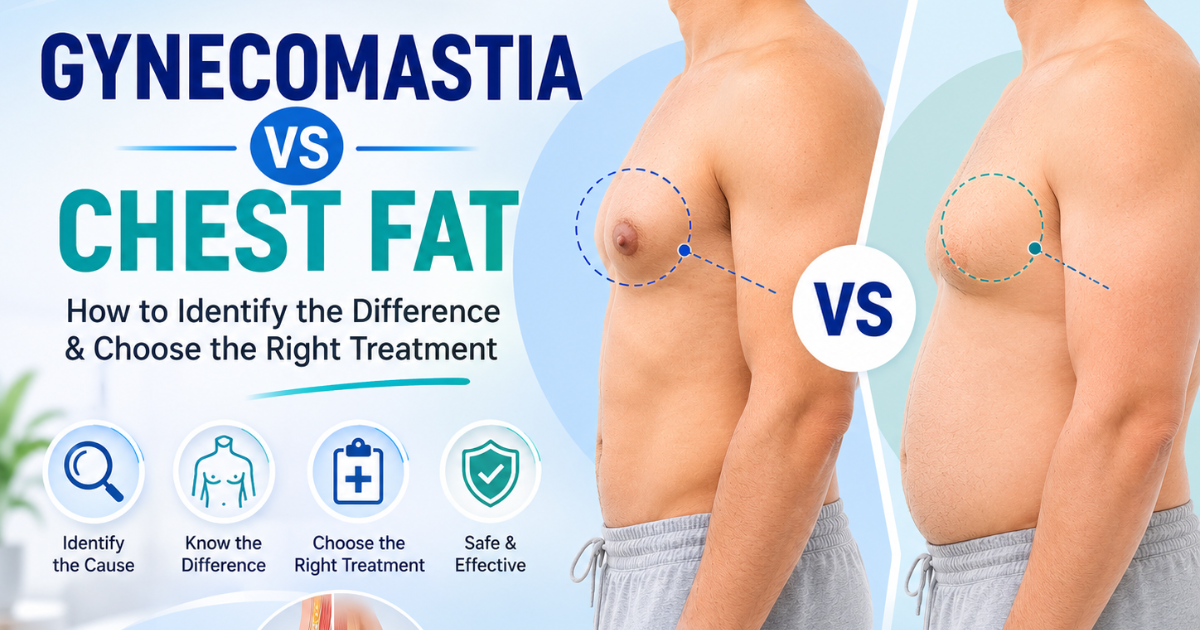
Many men become concerned when they notice changes in the appearance of their chest. A fuller or enlarged chest can affect confidence, clothing choices, and body image. However, one of the biggest misconceptions is assuming that every enlarged chest is gynecomastia.
In reality, Chest Enlargement can occur for different reasons. Some men develop excess Chest Fat, while others experience enlargement of glandular breast tissue, a condition known as gynecomastia. Although the two conditions may look similar, they have different causes and often require different treatment approaches.
Understanding the difference between gynecomastia and Pseudogynecomastia is essential for choosing the most effective solution and achieving the desired Chest Shape.
Understanding Gynecomastia
Gynecomastia is a condition in which glandular breast tissue enlarges in the male chest. This enlargement is typically linked to Hormone Issues, particularly an imbalance between testosterone and estrogen levels.
Although estrogen is commonly considered a female hormone, men naturally produce small amounts of it. When estrogen levels become relatively higher than testosterone levels, breast tissue growth can occur.
Gynecomastia can affect:
- Teenagers during puberty
- Young adults
- Middle-aged men
- Older men
The condition may affect one side of the chest or both sides.
What Is Pseudogynecomastia?
Pseudogynecomastia refers to enlargement of the chest caused primarily by excess fat rather than glandular breast tissue.
This condition is usually associated with:
- Weight gain
- Obesity
- Sedentary lifestyle
- Poor dietary habits
Unlike gynecomastia, pseudogynecomastia is not primarily caused by hormonal changes affecting breast tissue growth.
Instead, fat accumulates in the chest area, creating the appearance of enlarged breasts.
Although the visual appearance may resemble gynecomastia, the underlying cause is completely different.
Why Men Often Confuse the Two Conditions
Both gynecomastia and Chest Fat can create a similar appearance.
Common concerns include:
- Enlarged chest contour
- Puffy appearance beneath clothing
- Reduced confidence
- Difficulty achieving a flatter chest
- Changes in overall Chest Shape
Because the symptoms can overlap, many men struggle to determine which condition they have.
Accurate diagnosis is important because the treatment approach differs significantly.
The Key Difference Between Gynecomastia and Chest Fat
The main distinction lies in the type of tissue responsible for the enlargement.
Gynecomastia
In gynecomastia:
- Glandular breast tissue enlarges
- Enlargement is often concentrated beneath the nipple
- Tissue may feel firm or rubbery
- Hormonal factors are commonly involved
- Exercise may have limited impact on glandular tissue
Pseudogynecomastia
In pseudogynecomastia:
- Excess Chest Fat accumulates
- Tissue generally feels soft
- Enlargement is more evenly distributed
- Weight gain is often a contributing factor
- Fat Loss may significantly improve chest appearance
Understanding this distinction is often the first step toward finding the right treatment.
How to Identify Gynecomastia
Several signs may suggest that enlarged chest tissue is caused by gynecomastia rather than fat accumulation.
Firm Tissue Beneath the Nipple
One of the most common signs is a firm lump directly underneath the nipple.
Many patients describe it as:
- Rubbery tissue
- Disc-like tissue
- A concentrated area of fullness
This tissue feels different from ordinary body fat.
Nipple Sensitivity
Gynecomastia may be associated with:
- Tenderness
- Sensitivity
- Mild discomfort
- Occasional soreness
These symptoms are less common in cases involving only excess fat.
Persistent Enlargement Despite Fat Loss
Some men successfully lose weight through diet and exercise but notice that their chest remains enlarged.
This may indicate the presence of glandular tissue rather than excess fat alone.
Uneven Chest Enlargement
Gynecomastia can sometimes affect one side more than the other, creating visible asymmetry.
How to Identify Chest Fat
Enlargement caused by Chest Fat often presents differently.
Soft Tissue Throughout the Chest
Unlike gynecomastia, fatty tissue usually feels soft and diffuse.
There is often no firm mass beneath the nipple.
Associated Weight Gain
Men with Pseudogynecomastia frequently notice fat accumulation in other areas as well, including:
- Abdomen
- Waistline
- Back
- Thighs
The chest enlargement often develops alongside overall body weight gain.
Improvement With Fat Loss
One of the strongest indicators of chest fat is noticeable improvement following:
- Weight reduction
- Improved nutrition
- Regular exercise
- Body fat reduction
As overall body fat decreases, chest fullness often improves as well.
The Role of Hormone Issues in Gynecomastia
One of the major factors distinguishing gynecomastia from Pseudogynecomastia is the presence of Hormone Issues.
Gynecomastia often develops when there is an imbalance between testosterone and estrogen.
Common causes include:
Puberty
Teenage boys frequently experience temporary hormonal fluctuations that can lead to breast tissue enlargement.
Aging
As men age, testosterone levels naturally decline.
These changes may increase the likelihood of gynecomastia.
Medical Conditions
Certain health conditions can affect hormone production and regulation.
Examples include:
- Thyroid disorders
- Liver disease
- Kidney disease
- Testosterone deficiency
Medications
Some medications may contribute to hormonal changes that promote breast tissue growth.
A medical evaluation can help determine whether hormone-related factors are involved.
Why Exercise Works for Some Men but Not Others
Many men attempt to solve chest enlargement through workouts alone. The results often depend on the underlying cause.
When Exercise Helps
If the enlargement is primarily caused by Chest Fat, exercise and healthy eating can be highly effective.
Benefits may include:
- Improved body composition
- Reduced body fat percentage
- Better muscle definition
- Enhanced Chest Shape
In cases of Pseudogynecomastia, lifestyle changes can sometimes produce significant improvement.
When Exercise Has Limited Impact
For men with true gynecomastia, exercise may strengthen the chest muscles but cannot eliminate glandular breast tissue.
Patients often report:
- Improved fitness
- Reduced body fat
- Better muscle tone
Yet the enlarged tissue beneath the nipple remains visible.
This is one of the most common reasons men seek professional evaluation.
The Emotional Impact of Chest Enlargement
Regardless of whether the cause is gynecomastia or excess Chest Fat, the emotional effects can be substantial.
Many men experience:
- Reduced self-confidence
- Social anxiety
- Reluctance to remove shirts in public
- Frustration with appearance
- Difficulty finding well-fitting clothes
These concerns may persist even when the physical enlargement is relatively mild.
Understanding the true cause of the condition can provide reassurance and help patients pursue the most appropriate treatment path.
Why Accurate Diagnosis Matters
Treating gynecomastia as if it were simply excess fat can lead to frustration.
Similarly, assuming every enlarged chest requires surgery may lead to unnecessary concerns.
A proper diagnosis helps determine:
- Whether glandular tissue is present
- Whether Hormone Issues are contributing
- Whether lifestyle changes may help
- Whether medical treatment is needed
- Whether surgical correction may be appropriate
Choosing the right treatment starts with understanding exactly what is causing the Chest Enlargement.
How Doctors Diagnose Gynecomastia and Chest Fat
While some men can identify obvious signs of gynecomastia or Pseudogynecomastia, a professional evaluation is often the most reliable way to determine the cause of Chest Enlargement.
The diagnostic process typically begins with a detailed consultation and physical examination.
A doctor may assess:
- The size and location of the enlarged tissue
- Whether the tissue feels firm or soft
- The presence of tenderness or discomfort
- Medical history
- Weight changes
- Medication use
- Lifestyle habits
This evaluation helps determine whether the enlargement is primarily caused by glandular breast tissue, excess Chest Fat, or a combination of both.
Additional Tests
In some cases, further investigations may be recommended.
These may include:
- Hormone level testing
- Blood tests
- Ultrasound imaging
- Other diagnostic studies if medically necessary
These tests help identify underlying Hormone Issues and rule out other possible causes of chest enlargement.
Treatment Options for Chest Fat
If the diagnosis is Pseudogynecomastia, treatment usually focuses on reducing body fat.
Since the enlargement is caused by excess fat rather than glandular tissue, lifestyle changes can often produce noticeable improvements.
Fat Loss Through Nutrition
A balanced diet is one of the most effective tools for reducing body fat.
Patients are often advised to:
- Focus on whole foods
- Increase protein intake
- Limit processed foods
- Reduce excess sugar consumption
- Maintain a calorie deficit when appropriate
Consistent dietary improvements can support gradual and sustainable Fat Loss.
Regular Exercise
Exercise plays an important role in improving body composition.
A combination of:
- Strength training
- Cardiovascular exercise
- Resistance workouts
- Full-body fitness programs
can help reduce overall body fat and improve the appearance of the Male Chest.
Long-Term Weight Management
For many individuals, maintaining healthy habits is essential to prevent the return of excess Chest Fat.
Successful treatment often requires a long-term commitment rather than a temporary solution.
Treatment Options for Gynecomastia
When enlargement is caused by glandular breast tissue, the treatment approach may differ significantly.
Observation and Monitoring
Some cases of gynecomastia may improve naturally. This is particularly common among teenagers experiencing temporary Hormone Issues during puberty.
Doctors may recommend observation if the condition appears likely to resolve on its own.
Managing Underlying Causes
If gynecomastia is linked to:
- Hormonal disorders
- Certain medications
- Medical conditions
addressing the root cause may help improve symptoms.
Treatment plans are often tailored to the individual's specific situation.
Surgical Treatment
For men with persistent glandular enlargement, surgery may be considered. Gynecomastia surgery removes excess glandular tissue and, when necessary, excess fat to create a flatter and more masculine chest contour.
This option is commonly considered when:
- The condition has been present for a long time
- Lifestyle changes have not helped
- Confidence is significantly affected
- Enlargement remains despite successful Fat Loss
Can Chest Fat and Gynecomastia Exist Together?
Yes.
In fact, many patients have a combination of both conditions.
A man may develop:
- Excess Chest Fat
- Enlarged glandular tissue
- Changes in overall Chest Shape
at the same time.
This is why self-diagnosis can sometimes be challenging.
A professional evaluation helps determine the relative contribution of each factor and identify the most effective treatment plan.
Can Chest Fat Look Like Gynecomastia?
Absolutely.
One of the reasons Pseudogynecomastia is often misunderstood is that it can closely resemble gynecomastia.
Both conditions may cause:
- A fuller chest appearance
- Enlarged chest contours
- Reduced confidence
- Difficulty wearing fitted clothing
However, the underlying tissue differs significantly.
While gynecomastia involves enlarged glandular tissue, pseudogynecomastia is primarily caused by fat accumulation.
Although the appearance may look similar, the treatment approach can be very different.
When Should You Seek Professional Advice?
Many men delay seeking treatment because they assume chest enlargement is simply a cosmetic concern.
However, a medical evaluation may be helpful if:
- Enlargement persists despite exercise
- The chest feels firm beneath the nipple
- There is tenderness or discomfort
- One side appears significantly larger than the other
- The condition affects confidence or quality of life
Early assessment can provide clarity and help patients understand their options.
Choosing the Right Treatment Based on Your Condition
The most effective treatment depends on the underlying cause of the enlargement.
If the Cause Is Chest Fat
Treatment typically focuses on:
- Nutrition improvements
- Exercise
- Weight management
- Overall Fat Reduction
Patients often notice improvement as body fat decreases.
If the Cause Is Gynecomastia
When glandular tissue is responsible, treatment may involve:
- Monitoring
- Hormonal evaluation
- Medical management when appropriate
- Surgical correction in selected cases
If Both Conditions Are Present
A personalized treatment plan may combine:
- Weight management
- Lifestyle improvements
- Surgical treatment if necessary
The goal is to achieve a balanced, natural-looking Chest Shape while addressing the specific cause of the enlargement.
Recovery After Gynecomastia Surgery
For patients who undergo surgery, recovery is generally straightforward.
Most individuals can return to light daily activities within a relatively short period.
Common post-operative experiences include:
- Mild swelling
- Bruising
- Temporary tightness
- Mild discomfort
Following post-operative instructions carefully helps support healing and optimize results.
As swelling improves, patients gradually notice a flatter and more defined Male Chest.
The Importance of Realistic Expectations
Whether pursuing Fat Reduction or surgical treatment, realistic expectations are essential.
No treatment can guarantee perfection. However, understanding the cause of Chest Enlargement and selecting the appropriate treatment can significantly improve outcomes and patient satisfaction.
A personalized approach is often the most effective path toward long-term confidence and comfort.
Conclusion
Understanding the difference between gynecomastia and Chest Fat is the first step toward choosing the right treatment. While both conditions can affect the appearance of the Male Chest, they have different causes and often require different solutions. Gynecomastia is typically linked to glandular tissue growth and Hormone Issues, whereas Pseudogynecomastia is primarily caused by excess fat accumulation.
Because the two conditions can look very similar, professional evaluation is often the best way to determine the exact cause of Chest Enlargement. At Shobhit Aesthetics, patients receive a detailed assessment and personalized treatment recommendations based on their individual needs, body composition, and goals. Whether the solution involves Fat Loss, lifestyle modifications, or surgical treatment, an accurate diagnosis can help you achieve a more balanced and confident Chest Shape.
Frequently Asked Questions
How can I tell if I have gynecomastia or chest fat?
Gynecomastia often involves firm glandular tissue beneath the nipple, while Chest Fat usually feels soft and is associated with overall weight gain. A medical evaluation can provide an accurate diagnosis.
Does exercise help gynecomastia?
Exercise can improve overall fitness and support Fat Loss, but it may not remove glandular breast tissue. Results depend on whether the enlargement is caused by fat, gynecomastia, or both.
What is pseudogynecomastia?
Pseudogynecomastia is enlargement of the chest caused by excess fat rather than glandular breast tissue. It is commonly associated with obesity and weight gain.
Can chest fat look like gynecomastia?
Yes. Excess Chest Fat can closely resemble gynecomastia because both conditions can create a fuller chest appearance. Proper diagnosis helps determine the underlying cause.
What treatment works best for gynecomastia?
The best treatment depends on the cause and severity of the condition. Options may include observation, management of underlying Hormone Issues, lifestyle modifications, or gynecomastia surgery for persistent glandular enlargement.