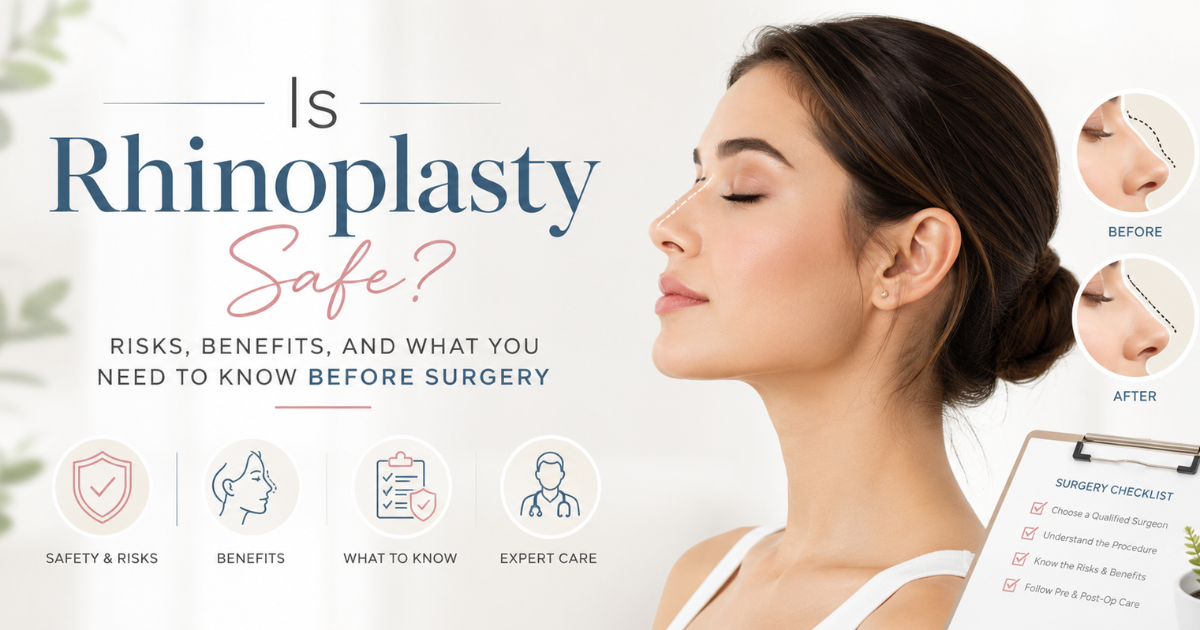
Many people consider Nose Surgery to improve the appearance of their nose or address functional concerns such as Breathing Issues. However, one question remains common among patients: Is Rhinoplasty Safe?
Rhinoplasty is one of the most frequently performed facial procedures worldwide. While it is generally considered safe when performed by a qualified and experienced surgeon, every surgical procedure carries certain risks. Understanding the benefits, limitations, recovery process, and possible complications can help you make an informed decision.
If you are considering Nose Reshaping or Nose Correction, it is important to know what the procedure involves and what you can realistically expect before, during, and after surgery.
Understanding Rhinoplasty
Rhinoplasty, commonly known as a nose job, is a type of Cosmetic Surgery that changes the shape, size, or structure of the nose. The procedure can be performed for aesthetic reasons, functional reasons, or both.
Some common reasons patients choose rhinoplasty include:
- Reducing a nasal hump
- Refining the nasal tip
- Correcting asymmetry
- Improving facial harmony
- Repairing injuries
- Addressing congenital deformities
- Improving airflow and breathing
Modern rhinoplasty focuses not only on appearance but also on preserving or enhancing nasal function.
Is Rhinoplasty Safe?
The short answer is yes—rhinoplasty is generally considered a safe procedure when performed by a skilled and board-certified plastic surgeon.
Advancements in surgical techniques, anesthesia, and post-operative care have significantly improved patient safety over the years. Most patients recover without major complications and achieve satisfactory outcomes.
However, safety depends on several factors, including:
- The surgeon's expertise
- The patient's overall health
- The complexity of the procedure
- Proper pre-operative planning
- Following post-operative instructions carefully
While serious complications are uncommon, patients should still understand the potential Rhinoplasty Risks before proceeding.
Why Patients Choose Nose Reshaping
The nose is one of the most prominent facial features. Even small changes can significantly impact facial balance and confidence.
People often seek Nose Reshaping for cosmetic reasons such as:
Improving Facial Proportion
A nose that appears too large, too wide, or disproportionate to other facial features may affect overall facial harmony.
Correcting a Crooked Nose
Some individuals naturally have a crooked nose, while others develop it after an injury. Rhinoplasty can help improve symmetry.
Refining the Nasal Tip
Patients may wish to reduce a bulbous tip, improve projection, or create a more defined nasal appearance.
Reducing a Nasal Hump
One of the most common requests during Nose Correction is the removal of a dorsal hump on the bridge of the nose.
Restoring Confidence
Many patients report improved self-confidence after addressing long-standing concerns about their nose.
Functional Benefits Beyond Appearance
Although rhinoplasty is often associated with aesthetics, it can also provide functional improvements.
Addressing Breathing Issues
Structural problems inside the nose can affect airflow and make breathing difficult.
Some common causes include:
- Deviated septum
- Nasal valve collapse
- Trauma-related deformities
- Congenital structural abnormalities
When these problems are corrected during surgery, patients may experience improved breathing and better nasal function.
Better Sleep Quality
In some cases, improved nasal airflow can contribute to better sleep quality and reduced nighttime breathing difficulties.
Improved Nasal Structure After Injury
Patients who have experienced nasal trauma may benefit from reconstructive Nose Surgery to restore both function and appearance.
How Rhinoplasty Is Performed
Understanding the procedure can help reduce anxiety and create realistic expectations.
There are two primary approaches:
Open Rhinoplasty
In this technique, a small incision is made across the columella, the tissue between the nostrils.
Advantages include:
- Better visibility for the surgeon
- Greater precision
- Useful for complex corrections
Closed Rhinoplasty
All incisions are placed inside the nostrils.
Benefits may include:
- No visible external scar
- Potentially less swelling
- Faster initial recovery in selected cases
The choice between open and closed rhinoplasty depends on the patient's anatomy and surgical goals.
Potential Rhinoplasty Risks You Should Know
Although rhinoplasty is considered safe, patients should understand the possible complications.
Swelling
Swelling is a normal part of healing after Nose Surgery.
While most swelling improves within a few weeks, subtle swelling may continue to resolve for several months.
Bruising
Bruising around the eyes and cheeks commonly occurs during the first one to two weeks after surgery.
Bleeding
Minor bleeding or blood-tinged drainage is often expected during the initial recovery period.
Infection
Infections are uncommon but can occur with any surgical procedure.
Proper wound care and following medical advice help reduce this risk.
Scarring
Most rhinoplasty scars heal well and become difficult to notice over time.
Closed rhinoplasty leaves no visible external scar.
Asymmetry
Human faces are naturally asymmetrical. While surgeons aim for balance, perfect symmetry cannot always be guaranteed.
Dissatisfaction With Appearance
One of the most important considerations in Cosmetic Surgery is expectation management.
Patients should understand that rhinoplasty aims for improvement rather than perfection.
Factors That Influence Safety
Not every patient has the same level of risk. Several factors can affect surgical safety and outcomes.
Choosing an Experienced Surgeon
The surgeon's experience plays a major role in both safety and results.
A surgeon who specializes in facial procedures understands the delicate balance between aesthetics and nasal function.
Overall Health
Patients in good physical health generally experience smoother recovery and lower complication rates.
Smoking
Smoking can impair healing and increase the risk of complications.
Patients are typically advised to stop smoking before and after surgery.
Realistic Expectations
Patients who understand the possibilities and limitations of rhinoplasty often report higher satisfaction with their results.
Preparing for a Safe Rhinoplasty Procedure
Preparation begins long before the day of surgery.
During consultation, your surgeon may:
- Review your medical history
- Examine nasal structure
- Assess breathing function
- Discuss your goals
- Take clinical photographs
- Explain possible outcomes
- Review potential Rhinoplasty Risks
Patients may also be advised to:
- Stop smoking
- Avoid certain medications
- Complete recommended medical tests
- Arrange transportation and recovery support
Proper preparation helps reduce risks and contributes to a smoother surgical experience.
Can Rhinoplasty Affect Breathing?
One of the most common concerns patients have is whether rhinoplasty can impact their ability to breathe.
The answer depends on how the procedure is planned and performed.
In many cases, rhinoplasty is actually used to improve breathing by correcting structural abnormalities inside the nose. Patients with a deviated septum, collapsed nasal valves, or trauma-related deformities may experience better airflow after surgery.
However, there are situations where breathing problems can develop if too much cartilage is removed or if the nasal structure is not adequately supported. This is why choosing an experienced surgeon is extremely important.
A well-planned rhinoplasty should aim to achieve both aesthetic improvement and proper nasal function.
Understanding Surgery Recovery After Rhinoplasty
A smooth Surgery Recovery process requires patience and realistic expectations. While many patients feel significantly better within a few weeks, complete healing takes time.
The First Week
During the first few days after surgery, patients may experience:
- Swelling
- Bruising around the eyes
- Mild discomfort
- Nasal congestion
- Temporary difficulty breathing through the nose
A splint is usually placed over the nose to protect the new shape.
Most patients return for a follow-up appointment within a week to have the splint removed.
Weeks Two to Four
Bruising generally fades significantly during this period.
Patients often notice:
- Reduced swelling
- Improved comfort
- Better breathing
- Gradual return to normal activities
Although the nose may already look improved, residual swelling is still present.
One to Three Months
The majority of visible swelling continues to decrease.
Patients usually feel more confident about their appearance during this stage, although subtle changes are still occurring beneath the skin.
Six Months to One Year
Final rhinoplasty results often take several months to become fully visible.
The nose continues to refine as swelling resolves and tissues settle into their new position.
For some patients, especially those with thicker skin, final results may take up to 18 months.
Tips for a Smooth Recovery
Following post-operative instructions can make a significant difference during recovery.
Patients are generally advised to:
- Keep the head elevated while sleeping
- Avoid strenuous exercise initially
- Protect the nose from accidental trauma
- Avoid wearing heavy glasses if instructed
- Stay hydrated
- Attend all follow-up appointments
- Take medications as prescribed
Being patient with the healing process is equally important, as rhinoplasty results develop gradually.
Warning Signs That Need Medical Attention
While complications are uncommon, patients should contact their surgeon if they experience:
- Excessive bleeding
- High fever
- Severe pain that worsens over time
- Signs of infection
- Difficulty breathing that becomes progressively worse
- Sudden swelling or unusual discharge
Prompt medical evaluation can help address concerns before they become more serious.
Benefits of Rhinoplasty
When performed for the right reasons and with realistic expectations, rhinoplasty can offer several benefits.
Enhanced Facial Harmony
The nose plays a central role in facial balance. Small adjustments can create a more proportionate appearance.
Improved Self-Confidence
Many patients report feeling more comfortable in social and professional situations after addressing concerns about their nose.
Better Breathing Function
Patients suffering from Breathing Issues related to structural abnormalities may experience improved airflow and comfort.
Correction of Injury-Related Deformities
Rhinoplasty can restore both appearance and function after nasal trauma.
Long-Lasting Results
Unlike many non-surgical cosmetic treatments, rhinoplasty provides results that can last for many years.
Weighing the Benefits Against Rhinoplasty Risks
Every patient should carefully consider both the advantages and potential drawbacks of surgery.
Potential benefits include:
- Improved appearance
- Better facial balance
- Enhanced breathing
- Increased confidence
- Long-term results
Potential Rhinoplasty Risks include:
- Infection
- Bleeding
- Scarring
- Persistent swelling
- Asymmetry
- Dissatisfaction with results
- Need for revision surgery in some cases
The goal is not to eliminate risk entirely, as no surgery is risk-free, but to minimize risk through proper planning, surgical expertise, and patient compliance.
Who Is a Good Candidate for Rhinoplasty?
Not everyone seeking Nose Correction is automatically a suitable candidate.
Ideal candidates generally:
- Are in good physical health
- Have realistic expectations
- Have completed facial growth
- Do not smoke or are willing to stop
- Understand the recovery process
- Have concerns related to nasal appearance or function
A detailed consultation helps determine whether rhinoplasty is the right option for a patient's goals and anatomy.
Questions to Ask Before Nose Surgery
Before undergoing Nose Surgery, patients should feel comfortable discussing concerns with their surgeon.
Some useful questions include:
- What results can realistically be achieved?
- What are the possible risks in my case?
- How long will recovery take?
- Will my breathing improve or change?
- How much swelling should I expect?
- What happens if revision surgery becomes necessary?
Clear communication helps build trust and improves the overall treatment experience.
Conclusion
So, Is Rhinoplasty Safe?
In most cases, yes. When performed by an experienced surgeon on a suitable candidate, rhinoplasty is generally a safe and effective procedure that can improve both appearance and nasal function. However, like any surgery, it comes with certain risks that should be carefully discussed during consultation.
Whether you are considering Nose Reshaping for cosmetic reasons or seeking Nose Correction to address Breathing Issues, having realistic expectations and understanding the recovery process are essential. At Shobhit Aesthetics, patients receive personalized guidance, thorough evaluation, and treatment plans tailored to their unique facial features and goals. Taking an informed approach is the first step toward achieving safe and satisfying rhinoplasty results.
Frequently Asked Questions:-
Is rhinoplasty a safe procedure?
Yes, rhinoplasty is generally considered safe when performed by a qualified and experienced surgeon. As with any surgery, there are risks, but serious complications are uncommon.
What are the risks of rhinoplasty surgery?
Common Rhinoplasty Risks include swelling, bruising, infection, bleeding, asymmetry, scarring, and dissatisfaction with cosmetic results. Rare complications may require additional treatment or revision surgery.
How long does rhinoplasty recovery take?
Most patients can return to light activities within one to two weeks. However, complete healing and final results may take several months to a year.
Can rhinoplasty affect breathing?
Rhinoplasty can improve breathing when structural issues are corrected. In some cases, improper surgical techniques may lead to breathing difficulties, highlighting the importance of choosing an experienced surgeon.
Who is a good candidate for rhinoplasty?
Good candidates are healthy individuals with realistic expectations who wish to improve nasal appearance, address functional concerns, or correct structural abnormalities.