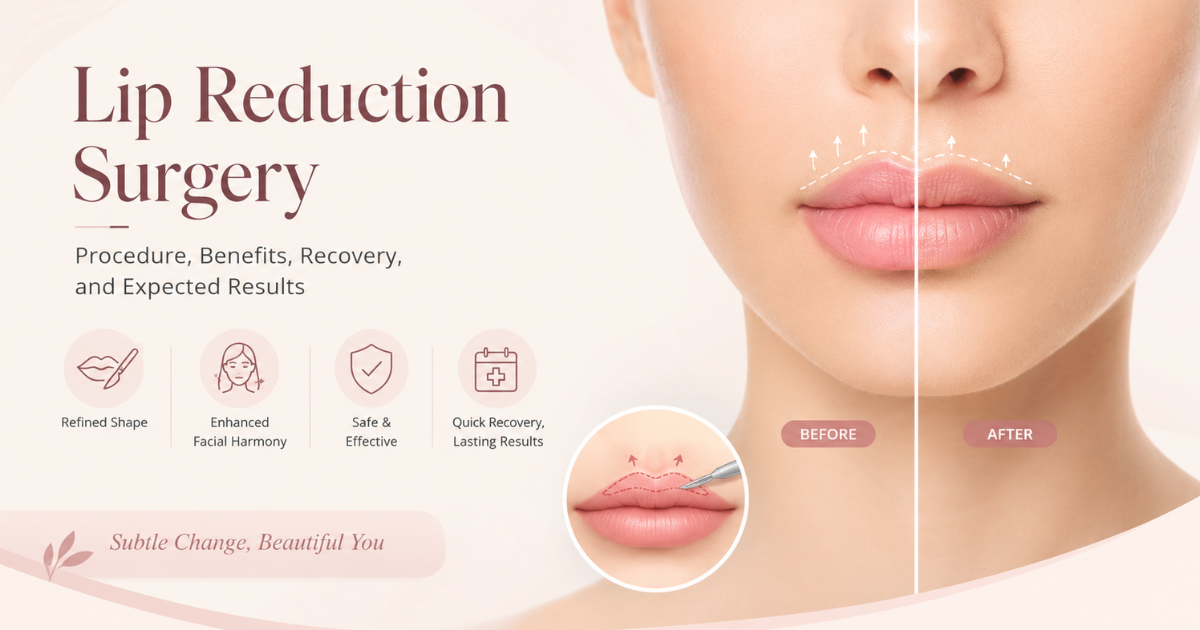
The lips play a major role in facial balance and expression. Their size, shape, and proportion can significantly influence overall facial appearance. While many cosmetic procedures focus on enhancing lip volume, some individuals seek the opposite - reducing lip size to achieve better harmony with their facial features.
Lip Reduction is a specialized cosmetic procedure designed to decrease the size of one or both lips while maintaining a natural appearance. The goal is not simply to make the lips smaller but to create a more balanced and proportionate Lip Shape that complements the rest of the face.
If you are considering Lip Surgery, understanding the procedure, benefits, recovery process, and expected outcomes can help you make an informed decision.
What Is Lip Reduction Surgery?
Lip Reduction is a type of Facial Surgery that removes excess tissue from the lips to reduce their size and improve overall facial proportions.
The procedure can be performed on:
- The upper lip
- The lower lip
- Both lips
The amount of tissue removed depends on the patient's facial structure, aesthetic goals, and existing lip size.
Unlike temporary cosmetic treatments, lip reduction surgery provides a long-term solution for individuals who feel their lips are disproportionately large or asymmetrical.
Why Do People Consider Lip Reduction?
Every face is unique, and beauty standards vary from person to person. Some individuals naturally have larger lips and may be completely satisfied with their appearance. Others may feel that the size or shape of their lips affects facial balance.
Common reasons for considering Lip Correction include:
- Excessively large lips
- Lip asymmetry
- Difficulty achieving facial harmony
- Discomfort with lip appearance
- Dissatisfaction with previous lip procedures
- Desire for a more proportionate facial profile
The objective is often to create better balance between the lips and other facial features such as the nose, chin, and cheeks.
Understanding Facial Aesthetics and Lip Proportion
When discussing Facial Aesthetics, proportion is often more important than size.
A well-balanced face typically involves harmony among various facial features.
The lips contribute to:
- Facial symmetry
- Smile appearance
- Facial expressions
- Overall profile balance
In some cases, excessively prominent lips may draw attention away from other features.
Lip Reduction aims to refine the lips while preserving their natural character and function.
Who Is a Good Candidate for Lip Reduction?
Not everyone seeking cosmetic improvement is automatically a suitable candidate for surgery.
Ideal candidates generally:
- Are in good overall health
- Have realistic expectations
- Feel their lips are disproportionately large
- Desire a permanent solution
- Understand the recovery process
- Are non-smokers or willing to stop smoking during recovery
A detailed consultation helps determine whether Lip Surgery is appropriate for an individual's goals and facial anatomy.
How Lip Reduction Surgery Is Performed
Understanding the procedure can help reduce anxiety and provide realistic expectations.
Initial Consultation
The process begins with a comprehensive evaluation.
During consultation, the surgeon may assess:
- Current lip size
- Lip symmetry
- Facial proportions
- Skin quality
- Medical history
- Desired outcome
Photographs may also be taken to assist with surgical planning.
The Surgical Procedure
During Lip Reduction, a small amount of tissue is removed from the inner portion of the lip.
Because the incision is typically placed inside the mouth, visible external scarring is usually minimal.
The procedure generally involves:
- Marking the treatment area
- Administering anesthesia
- Removing excess tissue
- Reshaping the lip contour
- Closing the incision with sutures
The exact technique varies depending on the patient's anatomy and treatment goals.
Areas That Can Be Treated
Upper Lip Reduction
Some individuals feel that the upper lip appears disproportionately large compared to the rest of the face.
Upper lip reduction focuses on refining volume while maintaining natural movement and expression.
Lower Lip Reduction
The lower lip is naturally larger than the upper lip in many individuals.
However, excessive fullness may affect facial balance.
Lower lip reduction aims to create a more proportional appearance.
Combined Lip Reduction
Some patients benefit from reduction of both lips to achieve overall facial harmony.
The surgical plan is customized according to the individual's facial proportions.
Benefits of Lip Reduction Surgery
When performed on suitable candidates, Lip Reduction can provide several aesthetic benefits.
Improved Facial Balance
One of the primary goals of the procedure is enhanced facial harmony.
Creating a more proportionate Lip Shape can improve overall facial aesthetics.
Enhanced Confidence
Many patients report feeling more comfortable with their appearance after surgery.
Improved self-confidence can positively influence both personal and social interactions.
Better Lip Symmetry
For patients with uneven lips, surgery can help create a more balanced appearance.
Long-Term Results
Unlike temporary cosmetic treatments, lip reduction provides lasting changes to lip size and shape.
Customized Results
Each procedure is tailored to the individual's unique anatomy and aesthetic goals.
Can Lip Reduction Look Natural?
A common concern among patients is whether surgery will make the lips appear artificial.
Modern Facial Surgery techniques focus on preserving natural contours and expressions.
A successful result should:
- Maintain natural lip movement
- Preserve facial expressions
- Complement surrounding features
- Avoid an overcorrected appearance
The objective is refinement rather than dramatic alteration.
What Makes Lip Reduction Different From Other Cosmetic Treatments?
Many cosmetic procedures involving the lips focus on adding volume.
Examples include:
- Lip fillers
- Fat grafting
- Lip enhancement procedures
Lip Reduction, however, addresses excessive volume by reducing tissue rather than increasing it.
This makes it a unique Cosmetic Treatment option for individuals seeking a smaller or more proportionate lip appearance.
Understanding Potential Risks
Like all surgical procedures, Lip Surgery carries certain risks.
Although complications are generally uncommon when performed by an experienced surgeon, patients should understand the possibilities.
Potential concerns may include:
- Swelling
- Bruising
- Temporary discomfort
- Infection
- Delayed healing
- Asymmetry
- Scar-related issues
Discussing these risks during consultation helps patients make informed decisions.
Preparing for Lip Reduction Surgery
Proper preparation contributes to a smoother experience and recovery.
Before surgery, patients may receive instructions regarding:
- Smoking cessation
- Medication adjustments
- Oral hygiene
- Dietary recommendations
- Recovery planning
A thorough consultation ensures that expectations, treatment goals, and potential outcomes are clearly understood before proceeding.
What to Expect Immediately After Lip Reduction Surgery
Following Lip Reduction surgery, it is normal to experience temporary swelling, mild discomfort, and tightness around the treated area. These effects are a natural part of the healing process and gradually improve over time.
Patients may notice that their lips appear larger than expected immediately after surgery due to post-operative swelling. This should not be mistaken for the final result.
During the first few days, common experiences include:
- Swelling
- Mild bruising
- Temporary tightness
- Minor discomfort while speaking
- Increased sensitivity of the lips
Most patients find these symptoms manageable with proper post-operative care and prescribed medications.
Lip Reduction Recovery Timeline
Understanding the expected Surgical Recovery process can help patients prepare for healing and set realistic expectations.
First Week After Surgery
The first week is typically when swelling is most noticeable.
Patients are usually advised to:
- Eat soft foods
- Maintain good oral hygiene
- Avoid excessive lip movement
- Stay hydrated
- Follow all post-operative instructions
Some discomfort while eating, smiling, or talking may occur during this period.
Weeks Two to Three
By this stage, swelling usually begins to improve significantly.
Patients often notice:
- Better comfort levels
- Improved lip appearance
- Reduced tightness
- Gradual return to normal activities
Although healing is progressing well, the lips are still settling into their new shape.
One to Three Months
As the tissues continue to heal, the final Lip Shape becomes more apparent.
Most residual swelling continues to decrease, allowing patients to appreciate the improvements in facial balance and proportion.
Long-Term Healing
The lips continue to soften and adapt over time.
Final results may take several months to fully develop as healing completes and tissues mature.
Recovery Tips for a Smooth Healing Process
Proper aftercare plays an important role in achieving optimal results.
Follow Dietary Recommendations
Soft foods are often recommended during the early stages of recovery.
Examples include:
- Yogurt
- Soups
- Smoothies
- Mashed vegetables
- Soft rice dishes
Avoiding foods that require excessive chewing can help minimize discomfort.
Maintain Oral Hygiene
Since incisions are commonly placed inside the mouth, maintaining good oral hygiene is important.
Patients should follow their surgeon's instructions regarding mouth rinses and oral care routines.
Avoid Smoking
Smoking can interfere with healing and increase the risk of complications.
Patients are typically advised to avoid smoking before and after surgery.
Attend Follow-Up Visits
Regular follow-up appointments allow the surgeon to monitor healing and address any concerns promptly.
Is Lip Reduction Permanent?
One of the most common questions patients ask is whether Lip Reduction provides permanent results.
In most cases, yes.
The excess tissue removed during surgery does not grow back under normal circumstances.
This makes lip reduction a long-term solution for individuals seeking a smaller and more proportionate lip appearance.
However, natural aging processes can still affect facial tissues over time.
While the surgical changes are generally permanent, subtle age-related changes may continue to occur throughout life.
Can Lip Reduction Look Natural?
A natural-looking outcome is one of the primary goals of modern Facial Surgery.
Successful lip reduction does not aim to make the lips unnaturally small. Instead, the objective is to create balance while preserving the unique characteristics of the patient's face.
Natural-looking results are achieved by:
- Maintaining proper proportions
- Preserving lip symmetry
- Respecting facial anatomy
- Avoiding excessive tissue removal
When planned carefully, Lip Correction can enhance facial harmony without making it obvious that surgery was performed.
Potential Risks of Lip Reduction Surgery
Like any Cosmetic Treatment, lip reduction surgery carries certain risks.
Although complications are uncommon, patients should understand the possible concerns before proceeding.
Swelling
Swelling is expected after surgery and typically improves gradually during recovery.
Bruising
Some patients experience mild bruising around the lips, which usually resolves naturally.
Infection
As with any surgical procedure, infection is possible but uncommon when proper aftercare instructions are followed.
Asymmetry
Perfect facial symmetry does not naturally exist.
While surgeons aim to improve balance, minor asymmetries may occasionally occur.
Scarring
Because incisions are generally placed inside the lips, visible scarring is typically minimal.
Delayed Healing
Healing times vary between individuals and may be influenced by overall health, smoking habits, and adherence to recovery instructions.
Benefits of Lip Reduction Beyond Appearance
Although aesthetic improvement is often the primary motivation, many patients report additional benefits.
Improved Facial Confidence
Feeling more comfortable with facial appearance can positively affect self-esteem and social confidence.
Better Facial Balance
A more proportionate Lip Shape can improve harmony between the lips, nose, chin, and surrounding facial structures.
Long-Term Satisfaction
Since results are generally permanent, many patients appreciate not needing ongoing maintenance treatments.
Personalized Outcomes
Each surgical plan is tailored to the individual's facial anatomy and aesthetic goals.
Setting Realistic Expectations
One of the most important aspects of any cosmetic procedure is understanding what can realistically be achieved.
Patients should remember that:
- Healing takes time
- Swelling is temporary
- Results develop gradually
- Every face is unique
- Perfection is not the goal
The best outcomes are often achieved when patients focus on facial balance rather than pursuing unrealistic ideals.
Who Should Consider Lip Reduction?
Lip reduction may be suitable for individuals who:
- Feel their lips are disproportionately large
- Desire improved facial harmony
- Have realistic expectations
- Want a permanent solution
- Are in good general health
A thorough consultation helps determine whether the procedure aligns with the patient's goals and anatomy.
Long-Term Results of Lip Reduction Surgery
Once healing is complete, patients typically enjoy long-lasting improvements in lip proportion and overall facial appearance.
The final results often include:
- Enhanced facial balance
- Refined lip contours
- Improved symmetry
- Greater confidence
- More harmonious facial features
When performed by an experienced surgeon, Lip Reduction can create subtle yet meaningful improvements that complement the rest of the face.
Conclusion
Lip Reduction is a specialized cosmetic procedure designed to create a more balanced and proportionate Lip Shape by reducing excess tissue from one or both lips. For individuals who feel their lips are disproportionately large or asymmetrical, the procedure can offer long-lasting improvements in Facial Aesthetics while maintaining a natural appearance.
Like any Facial Surgery, lip reduction requires careful planning, realistic expectations, and a commitment to proper recovery. Understanding the procedure, potential risks, and expected healing process can help patients make informed decisions about treatment.
At Shobhit Aesthetics, treatment plans are tailored to each patient's unique facial features and aesthetic goals. Through detailed consultations and personalized care, patients can better understand whether Lip Correction is the right option for achieving greater facial harmony and confidence.
Frequently Asked Questions
What is lip reduction surgery?
Lip Reduction is a cosmetic surgical procedure that removes excess tissue from the lips to reduce their size and improve facial balance.
How long does lip reduction recovery take?
Initial recovery generally takes a few weeks, while final results continue to improve over several months as swelling resolves and tissues heal.
Is lip reduction permanent?
Yes. The tissue removed during surgery is permanently eliminated, making the results long-lasting in most cases.
Can lip reduction look natural?
Yes. When properly planned and performed, lip reduction can create a more balanced Lip Shape while preserving natural facial expressions and appearance.
What are the risks of lip reduction surgery?
Potential risks include swelling, bruising, infection, asymmetry, delayed healing, and minor scarring. Most patients recover without major complications when appropriate aftercare is followed.