Achieving a well-defined waistline and balanced body proportions can be challenging, especially when stubborn fat remains around the abdomen, waist and back despite regular exercise and a healthy diet. Fat deposits do not always develop evenly, and treating only one area may not create the overall body contour a person desires.
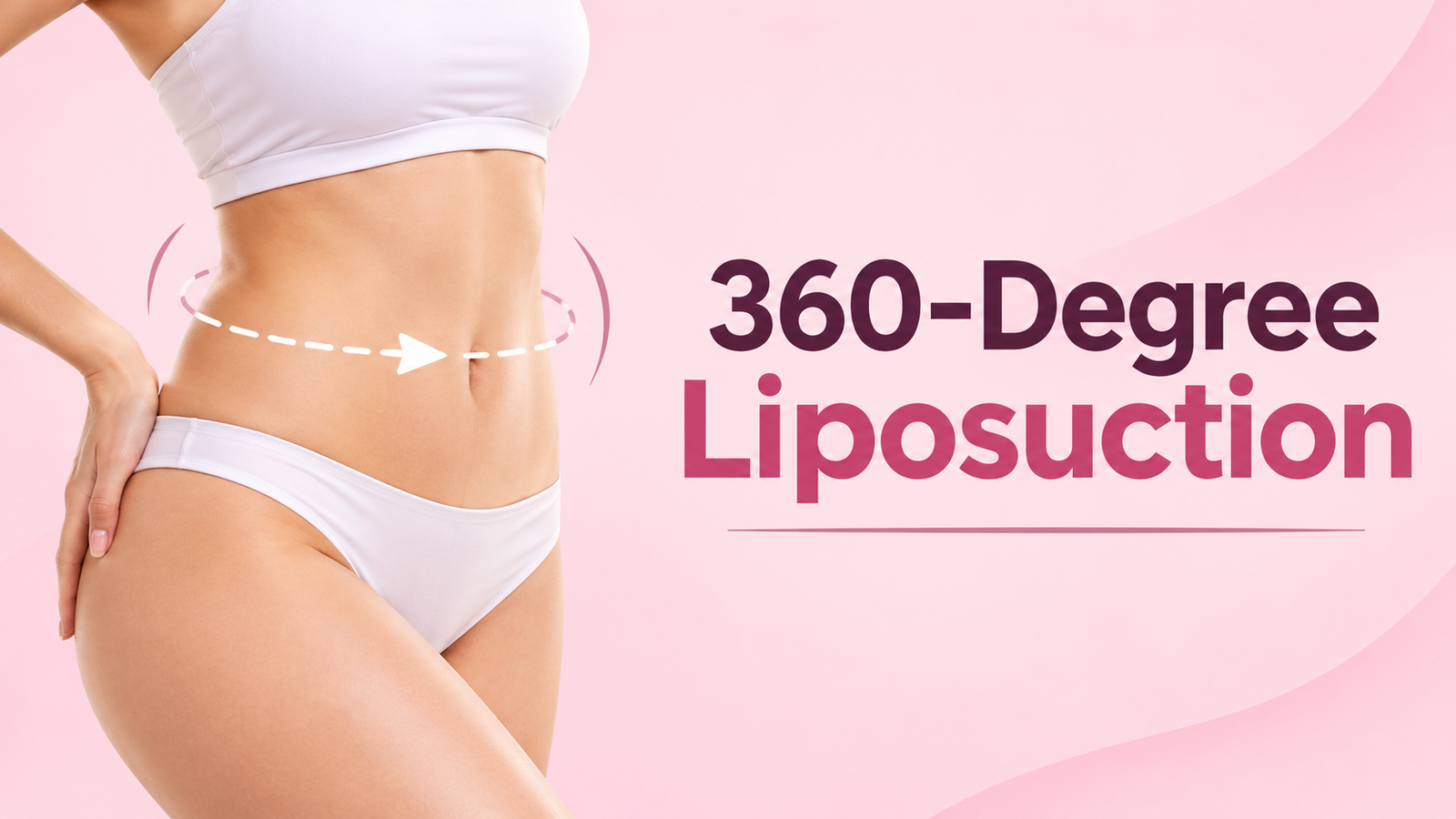
360-degree liposuction is a body contouring procedure designed to address unwanted fat around the entire midsection. Instead of focusing on just the abdomen or waist, it considers the front, sides and back of the torso to create a more balanced appearance.
Also known as circumferential liposuction, this approach can help reduce abdominal fat, improve waist definition and create smoother transitions between different areas of the body.
In this guide, we explore what 360-degree liposuction involves, which areas it treats, how it differs from traditional liposuction, what recovery looks like and what results patients can realistically expect.
Table of Contents
- What Is 360-Degree Liposuction?
- Which Areas of the Body Are Treated With 360-Degree Liposuction?
- How Is 360-Degree Liposuction Different From Traditional Liposuction?
- Who Is a Good Candidate for 360-Degree Liposuction?
- How Is the 360-Degree Liposuction Procedure Performed?
- Which Liposuction Technique Is Used for 360-Degree Body Contouring?
- What Results Can You Expect From 360-Degree Liposuction?
- How Long Does It Take to Recover From 360-Degree Liposuction?
- What Are the Risks of 360-Degree Liposuction?
- Why Choose Shobhit Aesthetics for 360-Degree Liposuction?
- Frequently Asked Questions
- Conclusion
What Is 360-Degree Liposuction?
360-degree liposuction is a body contouring approach that removes localised fat deposits from multiple areas around the torso.
The treatment commonly focuses on the abdomen, flanks, waist and back. By addressing these areas together, the surgeon aims to create a more consistent contour from the front to the sides and back of the body.
Unlike traditional liposuction, which may focus on one specific area, circumferential liposuction considers the entire midsection when planning fat removal.
The procedure is intended for people who have stubborn fat deposits despite maintaining a relatively stable weight. It is not a treatment for obesity or a substitute for weight management.
The amount of fat removed and the areas treated depend on individual anatomy, skin quality, medical suitability and the desired outcome.
Which Areas of the Body Are Treated With 360-Degree Liposuction?
One of the main advantages of 360-degree liposuction is that it considers multiple areas of the torso together.
The treatment plan may include the following regions:
1. Abdomen
The abdomen is one of the primary treatment areas. Liposuction can target localised fat deposits in the upper and lower abdominal regions to create a flatter and more defined appearance.
However, liposuction removes fat rather than excess skin or separated abdominal muscles. Patients with significant loose skin or muscle separation may need to discuss procedures such as a tummy tuck.
2. Flanks
The flanks are the areas along the sides of the waist, commonly associated with love handles.
Removing excess fat from these areas can help create a smoother transition between the abdomen and back.
3. Lower Back
Fat deposits around the lower back can sometimes affect the appearance of the waistline. Treating this region may help improve the overall contour when viewed from behind and from the sides.
4. Upper Back
In selected patients, fat deposits around the upper back and bra-line region may also be addressed.
The surgeon evaluates how these areas connect with the shoulders, waist and lower back before planning treatment.
5. Waistline
Waist sculpting focuses on improving the natural curves of the midsection. By treating the abdomen and flanks together, the surgeon may create a more defined waist-to-hip transition.
Not every patient requires treatment in all these areas. The final plan depends on where excess fat is present and which areas can be safely treated together.
How Is 360-Degree Liposuction Different From Traditional Liposuction?
The main difference is the treatment approach and the number of areas considered during surgery.
Traditional liposuction generally focuses on one or more selected areas where excess fat is present. For example, a patient may undergo liposuction of the abdomen alone or target the flanks separately.
360-degree liposuction takes a more comprehensive approach by considering the entire circumference of the midsection.
Here is a simple comparison:
| Feature | Traditional Liposuction | 360-Degree Liposuction |
|---|---|---|
| Treatment approach | Targets selected areas | Targets multiple areas around the torso |
| Common areas | Abdomen, thighs, arms or back | Abdomen, flanks and back |
| Main objective | Reduce localised fat | Improve overall waist and torso contours |
| Surgical planning | Focuses on specific treatment zones | Considers front, sides and back together |
| Expected outcome | Improved contour in treated areas | More balanced midsection definition |
It is worth noting that 360-degree liposuction is not necessarily a separate surgical technology. It describes the circumferential treatment approach. The surgeon may use traditional tumescent, VASER-assisted or other suitable liposuction techniques depending on the patient's requirements.
The American Society of Plastic Surgeons explains that liposuction can be performed on several body areas, with the technique selected according to the treatment area and individual needs.
Who Is a Good Candidate for 360-Degree Liposuction?
360-degree liposuction may be suitable for people who have stubborn fat deposits around their midsection despite maintaining a healthy lifestyle.
A potential candidate generally:
- Is close to a stable, healthy weight.
- Has localised fat around the abdomen, waist or back.
- Has reasonably good skin elasticity.
- Is in suitable general health for surgery.
- Does not expect liposuction to replace weight loss.
- Has realistic expectations about body contouring results.
People with significant loose skin may need a different or additional procedure, such as a tummy tuck.
Similarly, individuals with certain medical conditions, circulation problems or increased surgical risks may require further evaluation before treatment.
A consultation with a qualified plastic surgeon is important to determine whether circumferential liposuction is appropriate.
How Is the 360-Degree Liposuction Procedure Performed?
The 360-degree liposuction procedure involves several stages, beginning with a detailed assessment of the patient's body shape and treatment goals.
1. Consultation and Body Assessment
The surgeon examines the abdomen, waist, flanks and back to understand where excess fat is concentrated.
Skin elasticity, fat distribution, medical history and overall body proportions are also evaluated.
2. Treatment Area Marking
Before surgery, the surgeon marks the areas where fat removal is planned. These markings help guide treatment and maintain balanced contours around the torso.
3. Anaesthesia
Depending on the extent of surgery and the patient's medical requirements, general anaesthesia or an appropriate local anaesthesia technique may be used.
4. Fat Removal
Small incisions are made in selected locations, and a thin instrument called a cannula is inserted beneath the skin.
The cannula is used to remove targeted fat deposits from the abdomen, flanks and back.
The surgeon works carefully across the treatment areas to avoid removing excessive fat or creating uneven transitions.
5. Completion and Compression
Once the planned fat removal is complete, the incisions are managed and the patient is taken for post-operative monitoring.
A compression garment may be recommended to support the treated areas and help manage swelling during recovery.
The exact procedure duration, anaesthesia and surgical plan depend on the number of areas treated and the volume of fat being removed.
Which Liposuction Technique Is Used for 360-Degree Body Contouring?
Different liposuction techniques may be used for circumferential body contouring. The appropriate option depends on the patient's anatomy, treatment goals and the surgeon's assessment.
Traditional Tumescent Liposuction: A fluid containing saline, local anaesthetic and medication to reduce bleeding is introduced into the treatment area before fat removal. It is a commonly used approach for localised fat reduction.
VASER Liposuction: This technique uses ultrasound energy to help separate fat cells before they are removed through a cannula. It may be considered for selected patients seeking more detailed body contouring.
Laser-Assisted Liposuction: Laser energy is used to help break down fat before removal. It may also produce some tissue contraction, although the degree of skin tightening varies and should not be guaranteed.
Not every patient needs an advanced energy-assisted technique. The choice should be based on clinical suitability rather than the assumption that one technology always produces better results.
What Results Can You Expect From 360-Degree Liposuction?
The primary objective of 360-degree liposuction is to improve the overall shape of the midsection.
Depending on individual anatomy, potential results may include:
- Reduced fullness around the abdomen.
- Better-defined waist contours.
- Reduced fat around the flanks.
- Smoother transitions between the abdomen and back.
- Improved body proportions when viewed from different angles.
- A more sculpted torso appearance.
However, results vary between individuals.
Skin elasticity is particularly important because liposuction removes fat but does not directly remove significant excess skin. Patients with poor skin elasticity may experience loose or sagging skin after treatment.
The final appearance also depends on healing, swelling, fat distribution and the amount of fat removed.
Before-and-after photographs can provide an idea of possible outcomes, but they should not be treated as a guarantee of identical results.
How Long Does It Take to Recover From 360-Degree Liposuction?
360-degree liposuction recovery depends on the number of areas treated, the amount of fat removed and the individual's healing response.
Because the procedure addresses multiple areas around the torso, recovery may be more demanding than liposuction performed on a single small area.
Patients commonly experience swelling, bruising, soreness and temporary changes in skin sensation.
A general recovery overview is as follows:
| Recovery Stage | What to Expect |
|---|---|
| First week | Swelling, bruising and soreness; activity is usually restricted. |
| Weeks 2–3 | Discomfort generally improves and light daily activities may become easier. |
| Weeks 4–6 | Swelling gradually reduces; activity may be increased with medical clearance. |
| Following months | Remaining swelling settles and body contours become more defined. |
These are general expectations, not fixed recovery deadlines. Some patients may need additional time depending on the extent of surgery.
The American Society of Plastic Surgeons recommends following individual post-operative instructions, including guidance on compression garments, wound care, medication and returning to exercise.
Important Recovery Tips
- Wear the prescribed compression garment for the recommended duration.
- Begin gentle walking when advised by your medical team.
- Avoid strenuous exercise until cleared by your surgeon.
- Keep surgical incisions clean and follow wound-care instructions.
- Attend scheduled follow-up appointments.
- Maintain adequate hydration and a balanced diet.
Patients should seek prompt medical attention if they experience symptoms such as chest pain, breathlessness, severe swelling or other signs of a serious complication.
What Are the Risks of 360-Degree Liposuction?
Although liposuction is a commonly performed cosmetic procedure, it is still surgery and carries potential risks.
Possible complications include:
- Bruising and swelling.
- Bleeding or fluid accumulation.
- Infection.
- Uneven fat removal.
- Asymmetry or irregular contours.
- Loose or sagging skin.
- Temporary or persistent changes in sensation.
- Blood clots.
- Anaesthesia-related complications.
- Injury to underlying structures.
- Need for additional corrective surgery.
Because 360-degree liposuction involves multiple treatment areas, the surgeon must carefully consider the total volume of fat removed, operating time, fluid management and the patient's overall health.
The International Society of Aesthetic Plastic Surgery also highlights that more extensive liposuction requires careful surgical planning and appropriate post-operative monitoring.
Choosing an appropriately qualified surgeon and a suitable surgical facility is essential.
Why Choose Shobhit Aesthetics for 360-Degree Liposuction?
At Shobhit Aesthetics, body contouring is approached with an emphasis on individual anatomy, balanced proportions and personalised treatment planning.
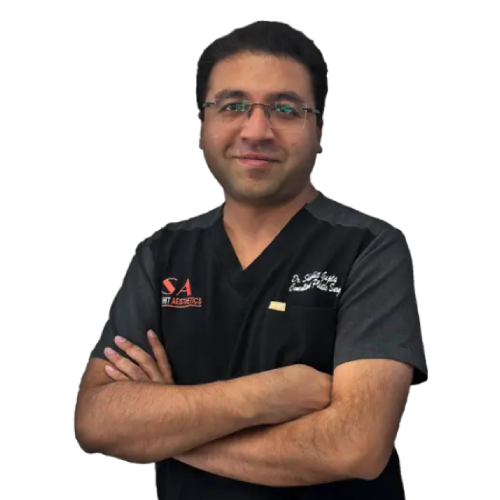
Led by Dr. Shobhit Gupta, a qualified plastic surgeon, the clinic offers liposuction procedures designed to address localised fat deposits across different body areas.
For 360-degree liposuction, the treatment plan considers the abdomen, flanks and back together rather than treating each area in isolation. This helps the surgeon plan fat removal with the overall waistline and body proportions in mind.
The consultation process includes an assessment of fat distribution, skin quality, medical suitability and desired results. Patients can also discuss the available liposuction techniques, anaesthesia, recovery requirements and potential risks.
The objective is to achieve proportionate body contours while prioritising patient safety and realistic expectations.
Frequently Asked Questions
What is 360-degree liposuction?
360-degree liposuction is a body contouring approach that removes localised fat from multiple areas around the midsection, commonly including the abdomen, flanks and back. Its objective is to create a more balanced and defined waistline.
Which areas of the body are treated with 360-degree liposuction?
The commonly treated areas include the upper and lower abdomen, waist, flanks, lower back and selected areas of the upper back. The exact treatment areas depend on individual fat distribution and the surgeon's assessment.
How is 360-degree liposuction different from traditional liposuction?
Traditional liposuction may focus on one or more selected body areas, whereas 360-degree liposuction considers the entire circumference of the midsection. Both use liposuction techniques to remove unwanted fat, but their treatment planning and overall contouring objectives differ.
How long does it take to recover from 360-degree liposuction?
Initial recovery generally takes a few weeks, although swelling and tissue changes can continue for several months. Patients may resume light activities gradually, while strenuous exercise should be avoided until the surgeon provides clearance.
Are the results of 360-degree liposuction permanent?
The fat cells removed during surgery do not regenerate, so results can be long-lasting. However, remaining fat cells can expand with weight gain. Maintaining a stable weight and healthy lifestyle helps preserve the results.
Conclusion
360-degree liposuction is an approach to body contouring that focuses on improving the appearance of the entire midsection rather than just one isolated area. By treating the abdomen, waist, flanks and back together, it can help create smoother contours and better-defined body proportions.
However, successful results depend on several factors, including fat distribution, skin elasticity, surgical technique and individual healing. Patients should also understand that liposuction is not a weight-loss procedure and cannot guarantee complete skin tightening.
At Shobhit Aesthetics, a personalised consultation can help determine whether 360-degree liposuction is suitable for your body type and aesthetic goals. Understanding the procedure, recovery requirements and realistic outcomes is the first step towards making an informed decision about body contouring.