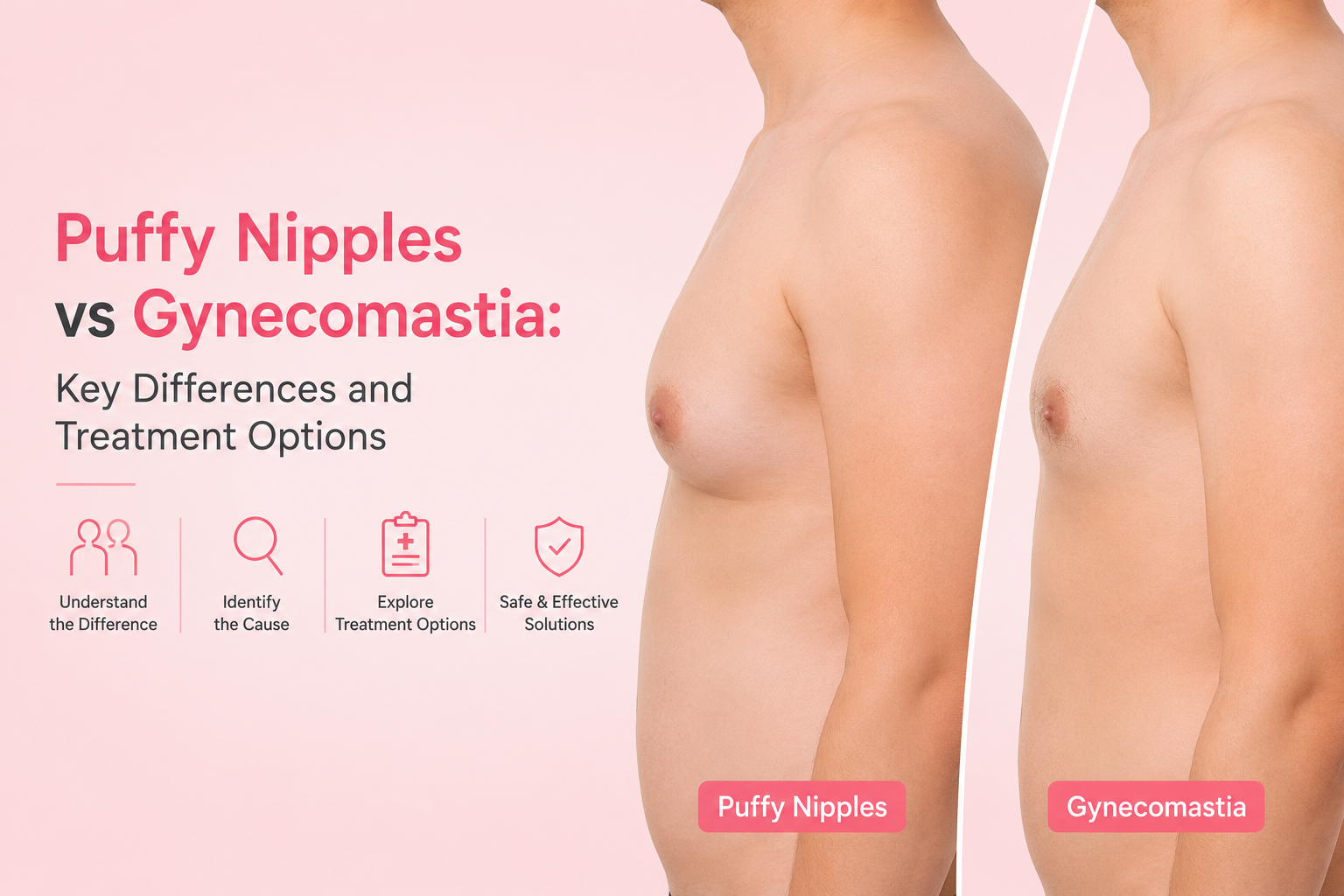
Many men notice changes in the appearance of their chest at some point in their lives. For some, it may be slightly protruding nipples, while others experience a fuller or more rounded chest. These changes often lead to confusion, with terms like puffy nipples and gynecomastia being used interchangeably. However, they are not always the same condition.
Understanding the difference between puffy nipples and gynecomastia is essential because the underlying causes, severity, and treatment options can vary significantly. While some cases may be related to temporary hormonal changes or excess chest fat, others may involve enlarged breast gland tissue that requires medical evaluation or treatment.
If you're wondering why your chest looks different despite maintaining a healthy lifestyle, this guide will help you understand the causes, symptoms, and available treatment options. Whether you're dealing with mild puffy nipples or true gynecomastia, knowing the difference is the first step toward finding the right solution.
What Are Puffy Nipples?
Puffy nipples refer to a condition in which the nipple and the surrounding areola appear swollen or raised compared to the surrounding chest. The puffiness is usually localized around the nipple area rather than affecting the entire chest.
This appearance may occur in one or both nipples and can range from mild to more noticeable. In many cases, puffy nipples become more visible when wearing fitted clothing or while standing in certain positions, which can affect a person's confidence.
Puffy nipples are not always a medical problem. For some men, they are simply a natural variation in chest anatomy. In others, they may be associated with hormonal changes, excess fatty tissue, or the early stages of gynecomastia.
Understanding the underlying cause is important because treatment depends on the reason behind the puffiness rather than the appearance alone.
What Is Gynecomastia?
Gynecomastia is a medical condition characterized by the enlargement of glandular breast tissue in males. Unlike simple fat accumulation, gynecomastia occurs when the breast glands increase in size, often due to a hormonal imbalance between estrogen and testosterone.
This condition can affect one or both sides of the chest and may develop during infancy, puberty, or later in adulthood. While it is usually harmless, it can sometimes cause tenderness, sensitivity, or emotional distress due to changes in the appearance of the male chest.
Gynecomastia is more common than many people realize. It can occur naturally during periods of hormonal fluctuation, but in some cases, it may also be associated with certain medications, medical conditions, or lifestyle factors.
Because gynecomastia involves glandular tissue rather than just fat, it often requires a different approach to treatment.
Puffy Nipples vs Gynecomastia: Understanding the Difference
Although these terms are frequently confused, there are several important differences between puffy nipples and gynecomastia.
|
|
|
|
|
|
|
|
|
|
|
|
|
|
|
|
|
|
It is also possible for someone to have both puffy nipples and gynecomastia simultaneously. A clinical examination by an experienced plastic surgeon helps determine the exact cause.
What Causes Puffy Nipples in Men?
There is no single cause of puffy nipples. Several factors may contribute to their appearance.
Hormonal Changes
Temporary hormonal fluctuations are among the most common reasons for puffy nipples, particularly during puberty.
As hormone levels stabilize, the puffiness may improve naturally without requiring treatment.
Excess Chest Fat
Weight gain can lead to increased fat accumulation around the male chest, making the nipples appear more prominent.
In such cases, reducing overall body fat through a healthy diet and exercise may improve chest appearance.
Mild Glandular Enlargement
Some individuals develop a small amount of glandular tissue directly beneath the nipple, causing localized puffiness even if the rest of the chest appears normal.
Genetics
Body shape and fat distribution are influenced by genetics. Some men naturally have more prominent nipples despite having a healthy body weight.
Certain Medications
Some medications may contribute to hormonal changes that affect breast tissue, increasing the likelihood of puffy nipples or gynecomastia.
What Causes Gynecomastia?
Unlike isolated puffy nipples, gynecomastia usually develops because of glandular breast enlargement.
Some common causes include:
Hormonal Imbalance
The most common cause of gynecomastia is an imbalance between estrogen and testosterone levels. Even small hormonal changes can stimulate breast tissue growth.
Puberty
Many teenage boys experience temporary gynecomastia during puberty due to natural hormonal fluctuations. In most cases, it resolves within a few months to a couple of years.
Ageing
As men grow older, testosterone levels naturally decline. This may increase the likelihood of developing gynecomastia.
Certain Medical Conditions
Conditions affecting hormone production, liver function, thyroid health, or the endocrine system may contribute to enlarged male breast tissue.
Medications
Some prescription medications can alter hormone levels and increase the risk of gynecomastia.
Lifestyle Factors
Excessive alcohol consumption, anabolic steroid use, and certain recreational drugs have also been linked to the development of gynecomastia.
Is It Chest Fat or Gynecomastia?
Many men assume they have gynecomastia when the actual cause is excess chest fat, a condition sometimes referred to as pseudogynecomastia.
The difference lies in the type of tissue involved.
Chest Fat (Pseudogynecomastia)
This condition occurs when fat accumulates in the chest due to weight gain. The chest feels soft and generally becomes smaller with overall weight loss.
Individuals with pseudogynecomastia often notice improvements after:
- Losing weight
- Following a healthy diet
- Performing regular strength training
- Improving overall fitness
True Gynecomastia
Gynecomastia involves enlarged glandular tissue rather than fat.
Signs that may suggest gynecomastia include:
- A firm or rubbery lump beneath the nipple
- Persistent chest enlargement despite weight loss
- Tenderness around the nipple
- One side appearing larger than the other
- Puffy nipples that remain unchanged despite exercise
Since both conditions can appear similar, a proper examination is necessary for an accurate diagnosis.
How Can You Tell the Difference?
It is not always possible to determine the cause simply by looking in the mirror.
A healthcare professional evaluates several factors, including:
- Medical history
- Current medications
- Hormonal health
- Body composition
- Physical examination of the chest
- Presence of glandular tissue
- Skin quality and elasticity
In some cases, additional investigations such as blood tests or imaging studies may be recommended to identify underlying hormonal or medical conditions.
Obtaining an accurate diagnosis is essential because the treatment plan depends entirely on the cause of the enlarged chest or puffy nipples.
Whether the concern is excess chest fat, temporary hormonal imbalance, or true gynecomastia, early evaluation helps patients understand their options and make informed decisions about treatment.
How Are Puffy Nipples and Gynecomastia Diagnosed?
An accurate diagnosis is the first step toward choosing the right treatment. Since puffy nipples, excess chest fat, and gynecomastia can appear similar, a thorough medical evaluation is essential.
During your consultation, the doctor will assess:
- Your medical history
- Current medications and supplements
- Lifestyle habits
- Family history
- Duration of symptoms
- Any pain or tenderness in the chest
A physical examination helps determine whether the enlargement is caused by fatty tissue, glandular tissue, or a combination of both.
If an underlying hormonal imbalance or medical condition is suspected, your doctor may recommend additional investigations such as blood tests or imaging studies. These tests help rule out other health conditions and ensure the most appropriate treatment plan.
Treatment Options for Puffy Nipples and Gynecomastia
The right treatment depends entirely on the underlying cause. While some individuals benefit from lifestyle changes, others may require medical or surgical intervention.
Lifestyle Changes
If the enlarged chest is mainly due to excess chest fat, adopting healthier habits can significantly improve the appearance of the chest.
These include:
- Maintaining a balanced diet
- Regular cardiovascular exercise
- Strength training
- Weight management
- Limiting alcohol consumption
Although these measures help reduce overall body fat, they may not eliminate glandular breast tissue.
Medical Management
If gynecomastia is caused by medications or hormonal disorders, your doctor may recommend addressing the underlying cause first.
This may involve:
- Adjusting certain medications under medical supervision
- Treating hormonal conditions
- Managing associated health issues
Early treatment can sometimes prevent the condition from progressing.
Gynecomastia Surgery
When enlarged glandular tissue persists despite weight loss or medical treatment, gynecomastia surgery may be the most effective solution.
The procedure is designed to remove excess glandular tissue, localized fat, and, when necessary, excess skin to restore a flatter, more masculine chest contour.
Depending on the individual's condition, surgery may involve:
- Liposuction to remove excess fatty tissue
- Surgical excision of enlarged glandular tissue
- A combination of both techniques for optimal chest reduction
The surgical approach is customised according to the patient's anatomy and aesthetic goals.
Can Exercise Reduce Puffy Nipples?
This is one of the most frequently asked questions by men concerned about their chest appearance.
The answer depends on the underlying cause.
If puffy nipples are mainly caused by excess chest fat, losing weight and building chest muscles may improve the overall appearance of the male chest.
Exercises such as:
- Push-ups
- Bench press
- Chest flys
- Incline press
- Cardio workouts
can help strengthen the chest muscles and reduce body fat.
However, if the puffiness is caused by enlarged glandular tissue, exercise alone cannot remove it.
Many men become frustrated after months of consistent workouts because their nipples continue to appear puffy despite achieving excellent overall fitness. In these situations, the issue is often glandular rather than fatty tissue.
A consultation with an experienced plastic surgeon can help determine whether lifestyle changes are sufficient or if additional treatment is recommended.
When Should You See a Doctor?
While puffy nipples are not always a cause for concern, certain symptoms should be evaluated by a healthcare professional.
You should consider seeking medical advice if:
- The enlargement persists for more than a year.
- One side is significantly larger than the other.
- You notice pain or tenderness.
- There is nipple discharge.
- A firm lump develops beneath the nipple.
- The condition affects your confidence or quality of life.
- The chest enlargement continues despite weight loss and exercise.
Early evaluation helps identify any underlying medical conditions and allows appropriate treatment to begin before the condition progresses.
Recovery After Gynecomastia Surgery
For patients undergoing gynecomastia surgery, recovery is generally straightforward when post-operative instructions are followed carefully.
Immediately after surgery, patients may experience:
- Mild swelling
- Bruising
- Temporary soreness
- Tightness across the chest
Compression garments are usually recommended for several weeks to support healing, reduce swelling, and help the skin adapt to its new contour.
Most patients can:
- Resume light daily activities within a few days.
- Return to office work within one week.
- Resume exercise gradually after four to six weeks, depending on their surgeon's advice.
Although improvements are noticeable soon after surgery, the final results become more visible as swelling subsides over the following months.
Why Choose Shobhit Aesthetics?
Choosing an experienced plastic surgery centre plays a significant role in achieving safe, natural-looking results.
At Shobhit Aesthetics, we understand that concerns such as puffy nipples and gynecomastia are not only physical but can also affect self-confidence and emotional well-being. Every patient receives personalised attention, beginning with a detailed consultation to understand their concerns, expectations, and overall health.
As a leading Plastic Surgery Superspeciality Centre, Shobhit Aesthetics combines advanced surgical techniques with patient-centred care to deliver outcomes that enhance both appearance and confidence. Our team focuses on creating natural chest contours rather than overcorrecting, ensuring results that complement your body proportions.
From diagnosis and treatment planning to surgery and post-operative care, every stage of your journey is guided by experienced specialists who prioritise safety, precision, and long-term patient satisfaction.
Whether your concern is excess chest fat, persistent puffy nipples, or true gynecomastia, our goal is to provide honest guidance and recommend the most appropriate treatment based on your individual needs—not a one-size-fits-all solution.
Conclusion
Although they may appear similar, puffy nipples and gynecomastia are different conditions with distinct causes and treatment approaches. While some cases are related to excess chest fat or temporary hormonal imbalance, others involve enlarged glandular tissue that may require specialised care.
Understanding the difference is the first step toward choosing the most effective treatment. Lifestyle changes may help improve the appearance of the male chest in some individuals, while others may benefit from medical management or gynecomastia surgery for long-lasting chest reduction and improved body confidence.
If you're unsure whether you're dealing with puffy nipples or gynecomastia, a professional consultation can provide the clarity you need. At Shobhit Aesthetics, our experienced team offers comprehensive evaluations and personalised treatment plans tailored to your unique concerns. With a commitment to patient safety, advanced techniques, and natural-looking results, we are dedicated to helping you regain confidence in your appearance.
Frequently Asked Questions
What causes puffy nipples in men?
Puffy nipples can develop due to several reasons, including hormonal changes during puberty, excess chest fat, mild glandular enlargement, genetics, certain medications, or hormonal imbalances. Identifying the underlying cause is essential for determining the most effective treatment.
How is gynecomastia different from puffy nipples?
Puffy nipples usually involve localized swelling around the nipple and areola, whereas gynecomastia is the enlargement of glandular breast tissue in males. Gynecomastia often affects a larger portion of the chest and may require different treatment options, including surgery in some cases.
Can exercise reduce puffy nipples?
Exercise can help if the puffiness is caused by excess body fat. However, if enlarged glandular tissue is responsible, workouts alone cannot eliminate it. A medical evaluation can help determine the exact cause.
When should I see a doctor for puffy nipples?
You should consult a doctor if the condition persists, causes pain, develops suddenly, is accompanied by a firm lump or nipple discharge, or continues despite maintaining a healthy weight and regular exercise.
Is surgery necessary for gynecomastia?
Not always. Mild cases related to temporary hormonal changes may resolve without surgery. However, persistent gynecomastia caused by enlarged glandular tissue often requires gynecomastia surgery to achieve a flatter, more masculine chest contour.