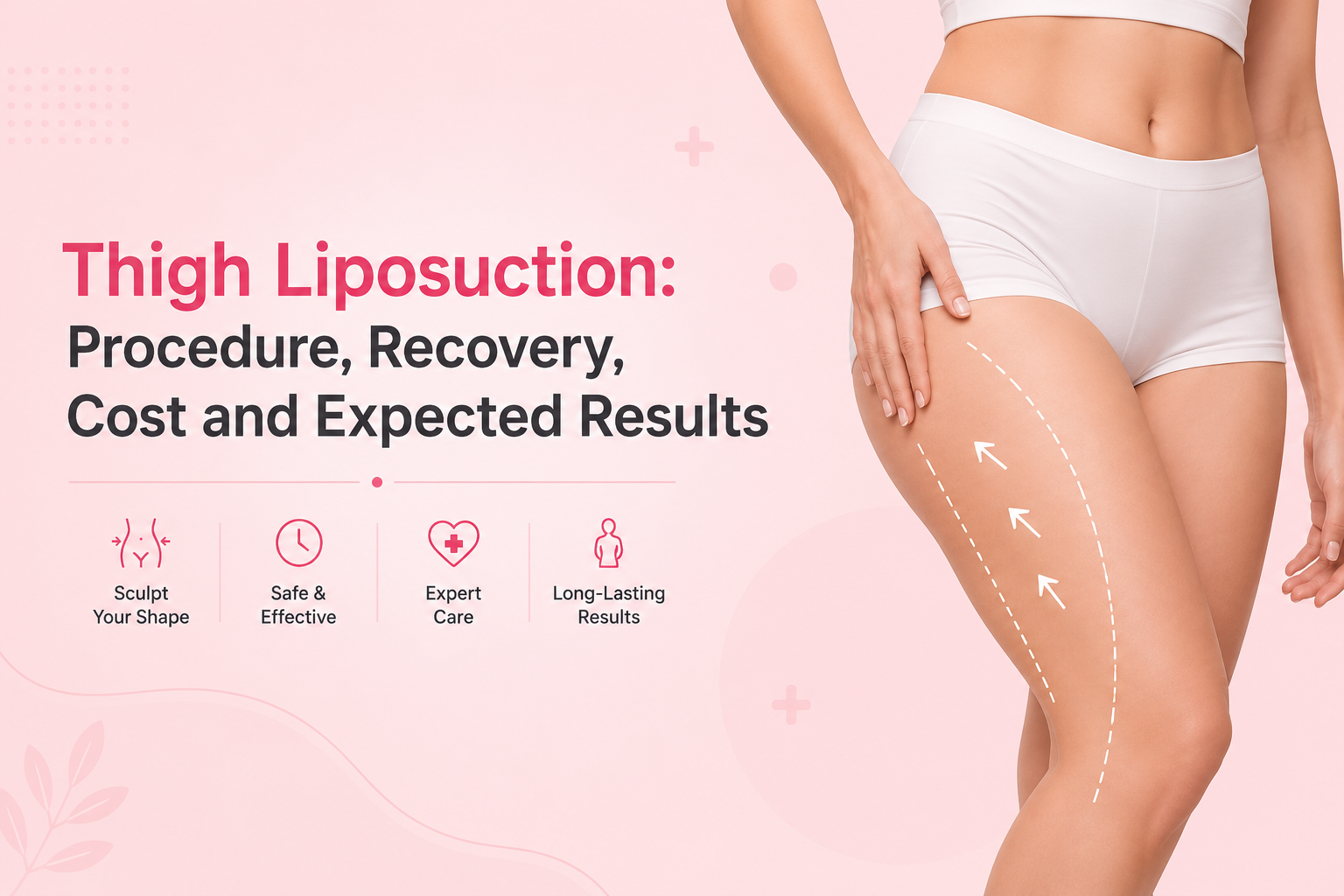
Many people struggle with stubborn fat around their thighs despite following a healthy diet and exercising regularly. While weight loss can improve overall body shape, certain fat deposits, especially around the inner and outer thighs, often remain resistant to traditional methods. This is where thigh liposuction can help.
Thigh liposuction is a cosmetic procedure designed to remove excess fat from the thighs, creating a slimmer, more proportionate lower body. Whether your goal is to reduce the appearance of bulky inner thighs, contour the outer thighs, or improve the overall shape of your legs, this procedure offers a targeted solution. It is important to understand that thigh liposuction is not a weight-loss treatment but a body contouring procedure intended to enhance body proportions.
In this guide, we'll explain everything you need to know about thigh liposuction, including the procedure, who it is suitable for, recovery expectations, cost factors, and the results you can expect.
What is Thigh Liposuction?
Thigh liposuction is a cosmetic surgical procedure that removes unwanted fat deposits from different areas of the thighs using a thin, hollow tube called a cannula. The cannula is inserted through small incisions, and excess fat is gently suctioned out to improve the shape and contour of the legs.
The procedure is commonly performed on:
- Inner thighs
- Outer thighs (commonly known as saddlebags)
- Front thighs
- Back of the thighs
- Circumferential thigh areas, when needed
The main objective of thigh liposuction is to create smoother body proportions while preserving a natural appearance. Rather than making the thighs look unnaturally thin, the procedure focuses on improving balance between the thighs, hips, and lower body.
Modern liposuction techniques allow surgeons to remove fat with greater precision, helping achieve more refined thigh contouring results while minimizing trauma to surrounding tissues.
Why Do People Choose Thigh Liposuction?
Many individuals notice that fat tends to accumulate around the thighs due to genetics, hormonal changes, ageing, or weight fluctuations. Even after significant weight loss, these localized fat deposits may remain.
Some of the most common reasons people consider thigh liposuction include:
Persistent Fat Deposits
Some fat pockets simply do not respond to exercise or dieting. Liposuction directly removes these stubborn fat cells.
Improved Body Contouring
Excess thigh fat can affect the overall body silhouette. Removing localized fat helps create smoother transitions between the hips, thighs, and knees.
Better Clothing Fit
Many patients find that clothes fit more comfortably after reducing excess thigh fat, especially fitted trousers, dresses, and athletic wear.
Reduced Inner Thigh Friction
For individuals with larger inner thighs, constant rubbing may lead to skin irritation and discomfort. Carefully performed fat removal may help reduce this issue.
Increased Confidence
Feeling more comfortable with your appearance often contributes to improved self-confidence, particularly when body proportions become more balanced.
Who is a Good Candidate for Thigh Liposuction?
Thigh liposuction is most effective for individuals who have localized fat deposits rather than significant obesity. A consultation with a qualified plastic surgeon helps determine whether the procedure is appropriate for your goals.
Generally, suitable candidates include people who:
- Have stubborn fat deposits around the thighs
- Are close to their ideal body weight
- Have good skin elasticity
- Are physically healthy
- Maintain realistic expectations
- Do not smoke, or are willing to stop smoking before and after surgery
Patients with good skin elasticity often achieve smoother results because the skin adapts more effectively to the newly contoured thighs after fat removal.
Who May Not Be an Ideal Candidate?
The procedure may not be recommended if someone:
- Is significantly overweight
- Has poor skin elasticity with excessive loose skin
- Has certain uncontrolled medical conditions
- Is expecting liposuction to serve as a weight-loss solution
In cases where loose skin is a major concern, additional body contouring procedures may be discussed during consultation.
Areas That Can Be Treated During Thigh Liposuction
One advantage of thigh liposuction is that treatment can be customized based on each person's body shape and concerns.
Inner Thigh Liposuction
The inner thighs are among the most commonly treated areas. Removing excess fat here can help create a noticeable gap between the thighs in suitable candidates while improving comfort during walking.
Outer Thigh Liposuction
The outer thighs, often referred to as saddlebags, may hold stubborn fat that widens the lower body. Liposuction can improve the transition between the hips and thighs for a more balanced appearance.
Front Thigh Contouring
Some individuals have fullness in the front of the thighs, making the legs appear heavier. Careful fat removal can improve the overall shape while maintaining natural contours.
Posterior (Back) Thigh Liposuction
Fat accumulation beneath the buttocks or at the back of the thighs may affect the overall profile of the legs. This area can also be addressed when appropriate.
Circumferential Thigh Contouring
In selected cases, multiple areas of the thighs are treated together to create uniform and symmetrical results rather than improving only one isolated region.
Understanding the Thigh Liposuction Procedure
Knowing what happens during surgery can help reduce anxiety and prepare patients for the treatment journey.
Initial Consultation
The process begins with a detailed consultation. During this appointment, the plastic surgeon evaluates:
- Your medical history
- Current health condition
- Body proportions
- Skin quality
- Areas of fat accumulation
- Personal aesthetic goals
Photographs may also be taken for surgical planning and comparison after recovery.
Pre-Surgical Planning
Before surgery, the surgeon carefully marks the treatment areas while you are standing. These markings guide precise fat removal and help maintain natural body proportions.
Patients also receive instructions regarding medications, smoking, diet, and preparation before surgery.
Anaesthesia
Depending on the extent of treatment, thigh liposuction may be performed under local anaesthesia with sedation or general anaesthesia. Your surgeon will recommend the safest option based on your individual case.
Fat Removal
Small incisions are made in discreet locations around the treatment area. A special solution is introduced to reduce bleeding and improve patient comfort.
A thin cannula is then inserted through these tiny openings to gently loosen and remove unwanted fat deposits.
The surgeon carefully sculpts the thighs rather than simply removing as much fat as possible. This artistic approach helps achieve smoother, more natural-looking slim thighs while preserving healthy contours.
Closing the Incisions
Once the desired contour is achieved, the small incisions are closed or allowed to heal naturally, depending on the surgical technique used. Compression garments are then applied to support healing and minimize swelling.
How Surgeons Achieve Natural-Looking Thigh Contouring
Successful thigh contouring is about much more than fat removal. An experienced plastic surgeon carefully evaluates the body's natural proportions before deciding how much fat should be removed from each area.
Removing too much fat can create uneven contours or skin irregularities, while removing too little may not provide noticeable improvement. The goal is to achieve balance rather than extreme thinness.
Several factors influence the final outcome, including:
- Skin elasticity
- Existing muscle tone
- Fat distribution
- Body proportions
- Healing response
Modern body contouring techniques emphasize precision, allowing surgeons to create smoother transitions between the hips, thighs, knees, and buttocks. This careful approach helps patients achieve results that look natural both in clothing and without it.
With proper surgical planning and realistic expectations, thigh liposuction can significantly improve lower body proportions while maintaining harmony with the rest of the body.
Recovery After Thigh Liposuction
Recovery is one of the most common concerns among patients considering thigh liposuction. While every individual's healing process is different, most people can expect a gradual recovery over several weeks.
Immediately after the procedure, mild swelling, bruising, and soreness are normal. These symptoms are temporary and improve as the body heals. Your plastic surgeon will provide detailed post-operative instructions to help ensure a smooth recovery.
The First Week
During the first few days, you may experience:
- Mild discomfort or tenderness
- Swelling around the treated areas
- Bruising
- Temporary numbness
Pain is usually manageable with prescribed medications. Patients are encouraged to take short walks within 24 hours after surgery, as gentle movement helps improve blood circulation and reduces the risk of complications.
Wearing Compression Garments
Compression garments play an important role during recovery. They help:
- Minimize swelling
- Support healing tissues
- Improve skin retraction
- Enhance the final contour of the thighs
Most patients are advised to wear these garments continuously for several weeks, depending on their surgeon's recommendations.
Returning to Daily Activities
Recovery time varies depending on the amount of fat removed and the areas treated.
In general:
- Light activities can often be resumed within a few days.
- Office work is usually possible after one week.
- Strenuous exercise and heavy lifting should be avoided for approximately four to six weeks.
- Your surgeon will advise when it is safe to gradually return to your normal fitness routine.
Following post-operative instructions carefully helps promote better healing and optimal body contouring results.
What Results Can You Expect?
One of the biggest advantages of thigh liposuction is that improvements become more noticeable as swelling gradually subsides.
Although patients may observe changes soon after surgery, the final outcome develops over time.
Typically:
- Initial improvements are visible within a few weeks.
- Swelling continues to decrease over two to three months.
- Final results usually become apparent after three to six months.
The thighs generally appear:
- Better contoured
- More proportionate to the rest of the body
- Smoother in shape
- Slimmer while maintaining a natural appearance
It is important to remember that thigh liposuction enhances body contours rather than creating perfection. Individual results depend on factors such as skin elasticity, body type, healing response, and maintaining a stable weight after surgery.
Are the Results of Thigh Liposuction Permanent?
This is one of the most frequently asked questions by patients.
The fat cells removed during thigh liposuction are permanently eliminated from the treated area. Since these fat cells do not grow back, the improvements achieved through surgery can be long-lasting.
However, maintaining the results depends largely on your lifestyle.
If significant weight gain occurs after surgery, the remaining fat cells in the body can enlarge, which may affect your overall body shape. While the treated thighs usually retain better contour than before, excessive weight gain can reduce the visible benefits of the procedure.
To maintain your results, it is recommended to:
- Follow a balanced diet
- Stay physically active
- Exercise regularly
- Maintain a stable body weight
- Stay well hydrated
When combined with healthy lifestyle habits, thigh liposuction can provide long-term improvements in body contour.
What Are the Possible Risks of Thigh Liposuction?
Like any surgical procedure, thigh liposuction carries certain risks. Fortunately, serious complications are uncommon when the procedure is performed by a qualified and experienced plastic surgeon in a well-equipped medical facility.
Some potential risks include:
- Temporary swelling
- Bruising
- Infection
- Bleeding
- Fluid accumulation
- Temporary numbness
- Minor contour irregularities
- Changes in skin sensation
These risks can often be minimized through careful surgical planning, proper patient selection, and following all post-operative instructions.
Choosing an experienced plastic surgeon is one of the most important factors in achieving safe treatment and natural-looking results.
What Influences Thigh Liposuction Cost?
Many patients ask about the liposuction cost before deciding on treatment. However, there is no single fixed price because every patient has different requirements.
Several factors influence the overall cost, including:
- The amount of fat being removed
- One or both thighs being treated
- The complexity of the procedure
- Surgical technique used
- Type of anaesthesia
- Hospital or surgical facility charges
- Surgeon's expertise and experience
- Post-operative care and follow-up visits
Rather than focusing only on cost, patients should also consider the surgeon's qualifications, safety standards, and quality of care. A personalised consultation allows the surgeon to evaluate your concerns and provide an accurate treatment plan with a detailed cost estimate.
Tips to Maintain Slim Thighs After Liposuction
Although the procedure permanently removes fat cells from the treated area, maintaining the results requires a healthy lifestyle.
Some practical tips include:
- Eat a nutritious and balanced diet.
- Stay physically active throughout the week.
- Include strength training and cardiovascular exercise.
- Avoid significant weight fluctuations.
- Drink enough water every day.
- Attend all scheduled follow-up appointments.
- Follow your surgeon's long-term recommendations.
These simple habits help preserve your new body contours for years to come.
Why Choose Shobhit Aesthetics for Thigh Liposuction?
Choosing the right plastic surgery centre is just as important as choosing the right procedure. At Shobhit Aesthetics, every treatment is planned with a strong focus on patient safety, natural-looking outcomes, and personalised care.
As a dedicated Plastic Surgery Superspeciality Centre, Shobhit Aesthetics offers advanced cosmetic and reconstructive procedures performed using modern surgical techniques and evidence-based practices. Every patient receives an individual assessment because body shape, skin quality, and aesthetic goals are unique to each person.
Whether you are looking to improve thigh contours or explore other body contouring procedures, Shobhit Aesthetics is committed to delivering safe, ethical, and patient-centred care in a professional environment.
Conclusion
For individuals who struggle with stubborn thigh fat despite maintaining a healthy lifestyle, thigh liposuction can be an effective solution for achieving improved thigh contouring and better body proportions. The procedure offers targeted fat removal, helping create slim thighs while preserving a natural appearance.
Understanding the procedure, recovery process, expected results, possible risks, and factors affecting liposuction cost allows patients to make informed decisions about their treatment.
If you are considering thigh liposuction, scheduling a consultation with an experienced plastic surgeon is the best way to determine whether the procedure is right for you. At Shobhit Aesthetics, every treatment plan is tailored to the individual's goals, with a commitment to safety, precision, and natural-looking outcomes. With expert guidance and comprehensive care, you can take the first step towards achieving the body contours you desire with confidence.
Frequently Asked Questions
What is thigh liposuction?
Thigh liposuction is a cosmetic procedure that removes stubborn fat deposits from the inner, outer, front, or back of the thighs to improve body contour and create slimmer, more proportionate legs. It is intended for body contouring rather than weight loss.
Who is a good candidate for thigh liposuction?
Good candidates are healthy adults who are close to their ideal body weight, have localized fat deposits that do not respond to diet or exercise, have good skin elasticity, and have realistic expectations about the results.
How long is the recovery after thigh liposuction?
Most patients can return to light daily activities within a few days and resume office work in about one week. Swelling gradually improves over several weeks, while final results are typically visible within three to six months.
Are the results of thigh liposuction permanent?
Yes. The fat cells removed during thigh liposuction are permanently eliminated. However, maintaining a stable weight through a healthy lifestyle is important for preserving long-term results.
What are the risks of thigh liposuction?
Like any surgery, thigh liposuction has potential risks, including swelling, bruising, infection, temporary numbness, bleeding, fluid accumulation, and contour irregularities. Choosing an experienced plastic surgeon and following post-operative instructions can significantly reduce these risks.