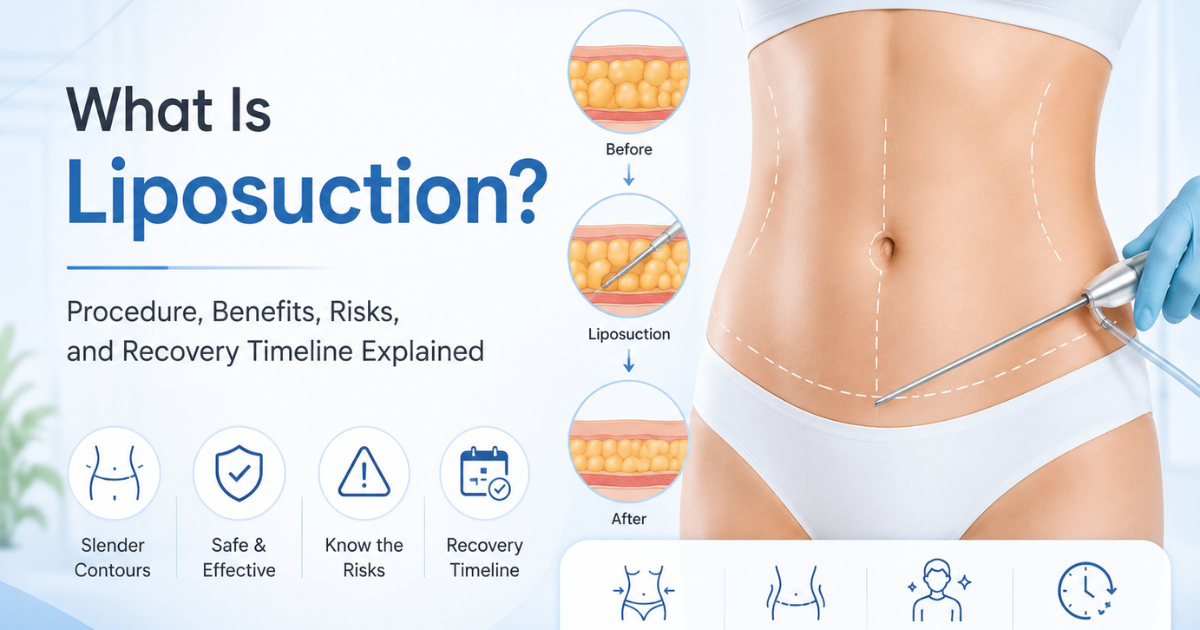
Stubborn fat deposits can be frustrating, especially when they do not respond to diet and exercise. Many people work hard to maintain a healthy lifestyle yet continue to struggle with fat accumulation in specific areas of the body. In such cases, Liposuction may be considered as a solution for targeted Fat Removal and improved body contours.
Liposuction is one of the most commonly performed cosmetic procedures worldwide. It is designed to remove unwanted fat deposits from specific areas of the body and help create a more balanced and proportionate appearance. However, it is important to understand that liposuction is not a weight-loss procedure. Instead, it is a Body Contouring treatment that helps refine body shape by removing localized fat pockets.
If you are considering Liposuction, understanding the procedure, benefits, risks, and recovery process can help you make an informed decision.
What Is Liposuction?
Liposuction is a surgical procedure that removes excess fat from targeted areas of the body. The treatment is commonly used to improve body proportions and achieve smoother contours in areas where fat tends to be resistant to traditional weight-loss methods.
The procedure focuses on Fat Reduction rather than overall weight loss.
Common treatment areas include:
- Abdomen
- Waist and flanks
- Thighs
- Hips
- Arms
- Back
- Chin and neck
- Chest area in men
The goal is to improve body shape and create a more sculpted appearance through targeted Fat Removal.
How Does Liposuction Work?
During the procedure, a surgeon uses specialized instruments to remove fat cells from selected areas of the body.
Small incisions are made in the treatment area, and a thin tube called a cannula is inserted beneath the skin.
The cannula is used to loosen and remove excess fat deposits.
Once the fat cells are removed, the treated area gradually adapts to its new contour during the healing process.
Modern liposuction techniques focus on achieving smoother and more natural-looking results while minimizing trauma to surrounding tissues.
Who Is a Good Candidate for Liposuction?
Liposuction is most suitable for individuals who are close to their ideal body weight but have localized fat deposits that do not improve despite healthy lifestyle habits.
Ideal candidates generally:
- Are in good overall health
- Have realistic expectations
- Maintain a stable weight
- Have good skin elasticity
- Want targeted Body Sculpting
- Understand the limitations of the procedure
Liposuction is not intended to replace exercise, healthy eating, or long-term weight management.
Areas Commonly Treated With Liposuction
One of the reasons liposuction remains popular is its versatility.
Abdomen
The abdomen is one of the most frequently treated areas.
Many patients struggle with persistent abdominal fat despite regular exercise and dietary efforts.
Waist and Flanks
Fat deposits around the waist can affect body proportions and clothing fit.
Liposuction can help improve contour in these areas.
Thighs
Both the inner and outer thighs are common treatment areas for Body Contouring.
Arms
Some individuals experience stubborn fat accumulation in the upper arms that may not respond to exercise alone.
Chin and Neck
Small amounts of fat beneath the chin can create the appearance of a double chin.
Targeted Fat Removal can help improve jawline definition.
Male Chest
In selected cases, liposuction may be used as part of treatment for excess fat in the male chest area.
Understanding Body Contouring
Many patients mistakenly believe that liposuction is primarily a weight-loss procedure.
In reality, the procedure is best understood as a Body Contouring treatment.
Body contouring focuses on improving shape and proportion rather than significantly reducing body weight.
For example:
- A patient may lose only a few kilograms after liposuction.
- However, the change in body shape can be much more noticeable.
The procedure aims to enhance natural body contours rather than dramatically alter overall body size.
Types of Liposuction Techniques
Several liposuction techniques are used today.
The choice depends on the patient's needs, treatment area, and surgeon's recommendations.
Tumescent Liposuction
This is one of the most commonly performed techniques.
A specialized fluid is injected into the treatment area before fat removal.
The fluid helps:
- Reduce bleeding
- Improve patient comfort
- Facilitate fat removal
Power-Assisted Liposuction
This technique uses a vibrating cannula to help break up fat deposits before removal.
It can be useful for treating larger areas or denser fat.
Ultrasound-Assisted Liposuction
Ultrasound energy may be used to help liquefy fat before extraction.
This technique may be considered in specific cases.
Combination Approaches
Many modern procedures use a combination of technologies to achieve optimal results.
The exact technique is determined based on the patient's anatomy and treatment goals.
Benefits of Liposuction
When performed on suitable candidates, liposuction can offer several advantages.
Improved Body Shape
One of the primary benefits is enhanced body contour.
Removing stubborn fat deposits can create a more balanced and proportionate appearance.
Better Clothing Fit
Many patients find that clothing fits more comfortably after treatment.
Enhanced Confidence
Improving body contours often leads to greater self-confidence and body satisfaction.
Long-Lasting Fat Reduction
The fat cells removed during liposuction do not regenerate.
This contributes to long-term Fat Reduction, provided the patient maintains a stable weight.
Targeted Body Sculpting
Unlike general weight-loss methods, liposuction allows for precise Body Sculpting in specific areas.
What Liposuction Cannot Do
Understanding the limitations of liposuction is just as important as understanding its benefits.
Liposuction is not designed to:
- Treat obesity
- Replace healthy habits
- Tighten severely loose skin
- Eliminate cellulite completely
- Prevent future weight gain
Patients who have realistic expectations are generally more satisfied with their results.
Potential Risks of Liposuction
Like any form of Plastic Surgery, liposuction carries certain risks.
Although complications are uncommon when the procedure is performed by an experienced surgeon, patients should understand the potential concerns.
Possible risks may include:
- Swelling
- Bruising
- Temporary numbness
- Infection
- Fluid accumulation
- Irregular contours
- Delayed healing
Most side effects improve as healing progresses.
Discussing individual risk factors during consultation helps patients make informed decisions.
Preparing for Liposuction
Preparation plays an important role in achieving a smooth surgical experience.
Before treatment, patients may undergo:
- Medical evaluation
- Physical examination
- Review of medical history
- Discussion of treatment goals
- Assessment of skin quality and fat distribution
Patients may also receive instructions regarding:
- Smoking cessation
- Medication adjustments
- Recovery planning
- Post-operative care
Proper preparation helps support both safety and results.
Recovery Timeline After Liposuction
One of the most common concerns patients have before undergoing Liposuction is understanding how long recovery will take.
While every individual's healing journey is different, most patients can expect a gradual recovery process over several weeks.
The extent of recovery often depends on:
- The treatment area
- The amount of fat removed
- Overall health
- Adherence to post-operative instructions
Understanding the recovery timeline can help patients prepare both physically and mentally for the healing process.
The First Few Days
During the initial days after surgery, patients may experience:
- Swelling
- Bruising
- Mild discomfort
- Temporary soreness
- Fluid drainage from incision sites
These effects are generally expected and improve gradually.
Compression garments are commonly recommended to support healing and help reduce swelling.
The First Two Weeks
Most patients begin noticing gradual improvement during the first two weeks.
During this period:
- Bruising starts to fade
- Swelling begins to decrease
- Daily activities become easier
- Comfort levels improve
Many individuals are able to return to desk-based work within a relatively short period, depending on the extent of the procedure.
One to Three Months
The body continues to heal during this stage.
Patients often notice:
- Improved body contours
- Reduced swelling
- Better skin adaptation
- Enhanced definition in treated areas
Results become increasingly visible as recovery progresses.
Three to Six Months
Most residual swelling continues to settle during this period.
The final outcome of the Body Contouring procedure becomes more apparent, allowing patients to appreciate the full benefits of treatment.
Recovery Tips for a Smooth Healing Process
Following proper Recovery Tips can help support healing and improve overall comfort after surgery.
Wear Compression Garments
Compression garments help:
- Minimize swelling
- Support treated tissues
- Promote smoother contours
- Improve comfort during recovery
Patients should follow their surgeon's recommendations regarding duration of use.
Stay Hydrated
Adequate hydration supports the body's natural healing processes.
Drinking sufficient water may also help reduce post-operative fatigue and improve overall recovery.
Follow Activity Guidelines
Light walking is often encouraged after surgery to promote circulation.
However, strenuous activities and heavy exercise should only be resumed when approved by the surgeon.
Attend Follow-Up Appointments
Regular follow-up visits allow the surgical team to monitor healing and address any concerns promptly.
Maintain a Healthy Lifestyle
A balanced diet and regular physical activity help support long-term results after Fat Removal.
Is Liposuction Permanent?
One of the most frequently asked questions is whether liposuction results are permanent.
The answer is generally yes.
The fat cells removed during Liposuction are permanently eliminated from the treated area.
However, this does not mean that future weight gain is impossible.
What Happens After Fat Removal?
When fat cells are removed, the number of fat cells in the treated area is reduced.
If a patient gains weight later, the remaining fat cells can still enlarge.
As a result:
- Body shape may change
- New fat deposits may develop
- Contours may become less defined
Maintaining a stable weight is one of the most important factors in preserving long-term results.
How Much Fat Can Be Removed Safely?
The amount of fat that can be removed safely varies from patient to patient.
Several factors influence this decision, including:
- Body size
- Overall health
- Treatment goals
- Surgical safety considerations
The primary goal of liposuction is not to remove the maximum possible amount of fat but to achieve safe and aesthetically balanced results.
Experienced surgeons prioritize patient safety over aggressive fat removal.
A personalized treatment plan helps determine the most appropriate approach for each individual.
Possible Side Effects of Liposuction
As with any Cosmetic Procedure, certain side effects are expected during recovery.
Most side effects are temporary and improve with time.
Swelling
Swelling is one of the most common post-operative effects.
Although significant improvement occurs within weeks, mild swelling may persist for several months.
Bruising
Bruising around treated areas is normal and typically fades gradually.
Temporary Numbness
Some patients experience temporary changes in sensation following surgery.
These sensations often improve as nerves recover.
Mild Discomfort
Soreness and tenderness are common during the early recovery period.
Most patients find that discomfort becomes increasingly manageable over time.
Potential Risks and Complications
While liposuction is generally considered safe when performed by an experienced surgeon, every surgical procedure carries potential risks.
Possible complications may include:
- Infection
- Fluid accumulation
- Irregular contours
- Delayed healing
- Changes in skin sensation
- Scarring
Careful surgical planning and adherence to post-operative instructions help reduce these risks.
Long-Term Benefits of Liposuction
When performed on suitable candidates, liposuction can offer several lasting benefits.
Improved Body Contours
The primary advantage is enhanced body shape through targeted Fat Reduction.
Better Proportions
Removing localized fat deposits can create a more balanced appearance.
Enhanced Confidence
Many patients report feeling more comfortable and confident in their clothing and overall appearance.
Motivation for Healthy Living
For some individuals, achieving their desired contours serves as motivation to maintain healthy lifestyle habits.
Long-Lasting Results
With proper weight management, the benefits of Body Sculpting can remain visible for many years.
Setting Realistic Expectations
Although liposuction can provide significant improvement, it is important to understand what the procedure can and cannot achieve.
Patients should remember that:
- Results develop gradually
- Swelling takes time to resolve
- Liposuction is not a substitute for weight loss
- Healthy habits remain important
- Perfection is not the goal
The most satisfied patients are often those who approach treatment with realistic expectations and a clear understanding of the recovery process.
Is Liposuction Right for You?
The decision to undergo Liposuction should be based on individual goals, anatomy, and overall health.
Good candidates are typically those who:
- Have stubborn fat deposits
- Are close to their ideal weight
- Want targeted Fat Removal
- Have realistic expectations
- Are committed to maintaining results
A detailed consultation can help determine whether liposuction is the most suitable treatment option.
Conclusion
Liposuction remains one of the most effective procedures for targeted Fat Removal and Body Contouring. While it is not a weight-loss solution, it can help address stubborn fat deposits that do not respond to diet and exercise, creating a more balanced and refined appearance.
Like any Cosmetic Procedure, liposuction involves both benefits and potential risks. Understanding the procedure, recovery process, and realistic outcomes is essential before making a decision. Following proper Recovery Tips and maintaining a healthy lifestyle can help preserve results for years to come.
At Shobhit Aesthetics, every treatment plan is tailored to the individual's body type, goals, and expectations. Through personalized consultations and a patient-focused approach, individuals can better understand whether liposuction is the right step toward achieving their desired body contours.
Frequently Asked Questions
What is liposuction used for?
Liposuction is used to remove localized fat deposits that are resistant to diet and exercise. It is primarily a Body Contouring procedure rather than a weight-loss treatment.
Is liposuction permanent?
Yes, the fat cells removed during liposuction are permanently eliminated. However, maintaining a stable weight is important to preserve long-term results.
How much fat can be removed safely?
The amount varies depending on the patient's body type, health status, and treatment goals. Patient safety is always the primary consideration.
What is the recovery time after liposuction?
Most patients can return to normal daily activities within a few weeks, although complete healing and final results may take several months.
Are there any side effects of liposuction?
Common side effects include swelling, bruising, temporary numbness, and mild discomfort. These effects usually improve as the body heals.