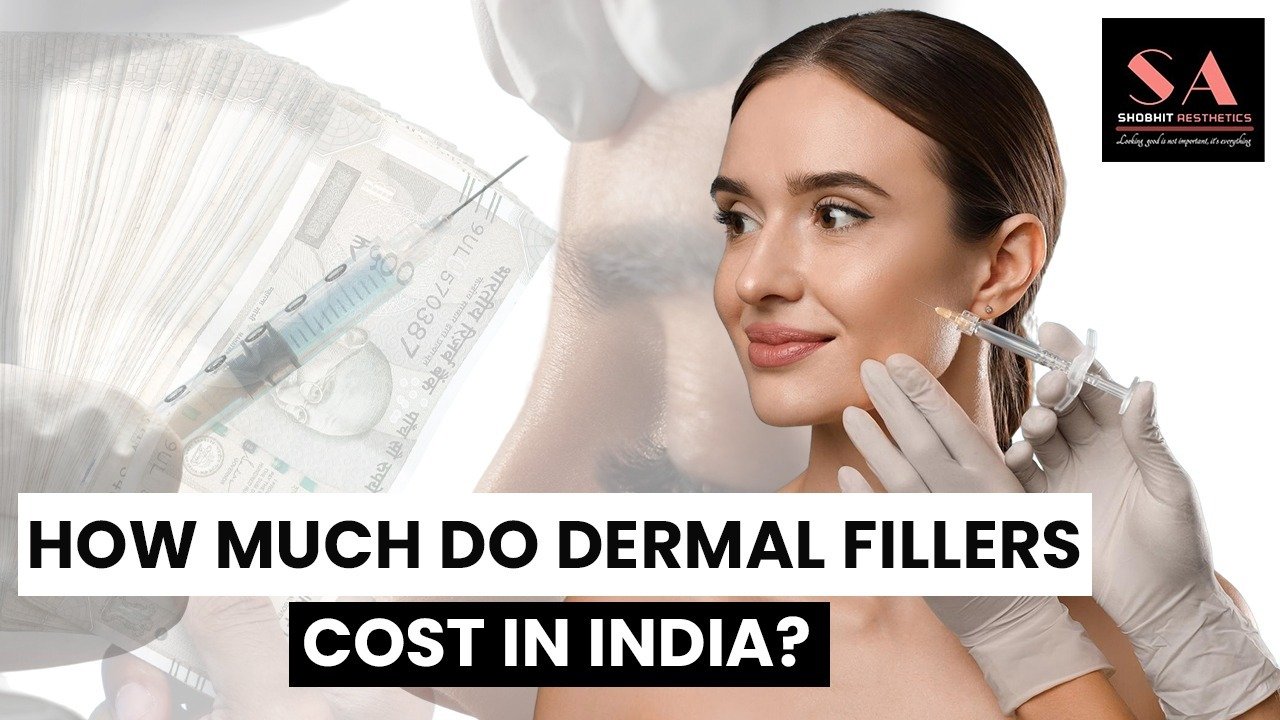
Dermal fillers have become one of the most sought-after cosmetic procedures in India. Safe, effective, and non-surgical, they can restore volume, contour the face, and diminish visible signs of ageing. One question many patients ask during their first consultation is: “How much do dermal fillers cost in India?”
The cost varies and depends on a range of factors. I understand that patients want to know costs upfront and this post is my attempt to provide a transparent, in-depth look at what you can expect to pay, what affects it, and how to make an informed decision
Understanding Dermal Fillers
Dermal fillers are gel-like substances injected beneath the skin. They:
- Restore volume
- Smooth fine lines and wrinkles
- Enhance lips, cheeks, chin, jawline
- Fill in hollows under the eyes (tear troughs)
- Improve facial balance, symmetry, and youthfulness
The most common dermal fillers are made of hyaluronic acid (HA). This is a substance that occurs naturally in the body and is well-tolerated with minimal complications. It also helps hydrate and volumeize. Other dermal fillers include Calcium Hydroxylapatite, Poly-L-lactic Acid, and PMMA microspheres. Each has a slightly different effect and duration.
Factors That Influence the Cost of Dermal Fillers in India:-
Here are some factors to understand why dermal filler costs may be different across clinics, locations, and treatment plans:
Type and Brand of Filler
Higher-priced filler brands, like Juvederm, Restylane, Belotero and Voluma are more expensive because they are internationally approved, thoroughly tested in clinical trials and tend to last longer. Cheaper brands may not be FDA-approved and are often inferior, shorter-lasting, or compromise on safety.
Quantity Required (ml of Filler)
Cost of fillers is usually calculated per syringe (1 ml). For smaller corrections, a single syringe might be enough, while more volumising, like cheek augmentation or jawline contour, may require 2–3 ml or more.
Area of Treatment
Average amount required & longevity:
- Lips: 1 ml, 6–12 months
- Under-eyes: 1–2 ml, 9–12 months
- Cheeks & jawline: 2–4 ml, 12–24 months (noticeable lift)
- Full facial rejuvenation: multiple syringes
Expertise of the Injector
Expect to pay more if the injector is a board-certified plastic surgeon with years of training and experience versus a general doctor or someone with limited training. The price also reflects their precision, expertise in achieving natural results, and patient safety.
Clinic Infrastructure & Safety Standards
Clinics with well-equipped, sterile procedure rooms, high-end equipment, and rigorous hygiene standards are more expensive but also ensure your safety.
Longevity of the Filler
Fillers that last 18–24 months (Juvederm Voluma) are naturally more costly than those that last 6–9 months. Longer-lasting fillers require less touch-ups later, so the cost may be offset over time.
A Deeper Look at the Most Popular Dermal Filler Brands in India
When it comes to dermal fillers, not all products are created equal. The brand of filler your doctor chooses has a direct bearing on the safety, longevity, and naturalness of your results. Understanding the most trusted and widely used filler brands available in India helps you ask the right questions during your consultation and make a genuinely informed decision about your treatment.
Juvederm is one of the most recognised dermal filler brands in the world, manufactured by Allergan — a globally respected pharmaceutical company. The Juvederm range includes several formulations designed for specific areas of the face. Juvederm Voluma, for instance, is specifically engineered for deep cheek augmentation and can last up to two years. Juvederm Volbella is a softer formulation designed for delicate areas like the lips and fine lines around the mouth, while Juvederm Vollure is used for moderate to severe facial wrinkles and folds. All Juvederm products use a proprietary Vycross technology that cross-links hyaluronic acid molecules for greater longevity and a smoother, more consistent gel texture.
Restylane, manufactured by Galderma, is another internationally acclaimed brand with a long safety track record spanning more than two decades. The Restylane range includes products tailored for lip enhancement, cheek volumising, under-eye hollows, and fine surface lines. Restylane Lyft is particularly well-regarded for mid-face volumising and hand rejuvenation, while Restylane Kysse is a newer formulation specifically developed for natural-looking lip augmentation with improved flexibility and colour vibrancy.
Belotero, produced by Merz Aesthetics, is known for its exceptionally smooth integration into the skin tissue, making it particularly well-suited for treating superficial fine lines and delicate areas where other fillers might create a visible or palpable lump. Its unique Cohesive Polydensified Matrix technology allows it to adapt to facial movement in a way that feels and looks remarkably natural.
Sculptra, based on Poly-L-lactic acid rather than hyaluronic acid, works differently from conventional fillers. Rather than providing immediate volume, Sculptra stimulates the body's own collagen production gradually over several months. The results develop slowly but can last up to two years or longer, making it an excellent choice for patients seeking subtle, progressive facial rejuvenation rather than immediate transformation. It is particularly effective for restoring lost facial volume in the cheeks, temples, and jawline in patients whose faces have developed a hollowed appearance with age.
Radiesse, based on calcium hydroxylapatite, is a biostimulatory filler that both fills immediately and stimulates collagen production over time. It is particularly well-suited for deeper facial folds, jawline definition, and hand rejuvenation. Its thicker consistency makes it ideal for structural support in areas that require more significant volumising.
At Shobhit Aesthetics, only internationally approved, genuinely sourced filler brands are used — never counterfeit or unverified products. Dr. Shobhit Gupta selects the most appropriate brand and formulation for each individual patient based on their specific anatomy, treatment area, and desired outcome, ensuring that the product used is always the best possible choice for that particular case.
Area-by-Area Guide: What Dermal Fillers Can Achieve
One of the most powerful aspects of modern dermal filler treatment is the versatility it offers. Different areas of the face respond beautifully to filler treatment, each with its own technique requirements, product considerations, and expected outcomes. Understanding what fillers can achieve in each specific area helps set realistic expectations and allows you to have a more informed conversation with your doctor during consultation.
Lip fillers remain one of the most requested filler treatments globally, and India is no exception. Hyaluronic acid fillers used in the lips can add volume to thin lips, define the cupid's bow, enhance the lip border for greater definition, reduce vertical lines above the upper lip, and create a subtle upturn at the corners of the mouth. The key to beautiful lip filler results lies in preserving the natural proportions of the lips relative to the rest of the face. Over-filled lips that look disproportionately large are almost always the result of poor technique or inadequate understanding of facial aesthetics rather than a limitation of the filler itself. A skilled injector like Dr. Shobhit Gupta understands that the goal of lip filler is enhancement, not transformation — the lips should look naturally full, not artificially inflated.
Cheek augmentation with fillers is one of the most impactful treatments available for facial rejuvenation. As we age, the fat pads of the mid-face descend and diminish, causing the cheeks to flatten and the nasolabial folds to deepen. Strategic placement of volumising filler in the cheeks can restore the lifted, youthful contour of the mid-face, creating what is often described as a subtle but significant improvement in overall facial appearance. The effect is not merely localised to the cheeks — lifting the mid-face with filler can reduce the appearance of nasolabial folds, improve the under-eye hollow, and restore the natural triangular contour of youth to the face.
Under-eye or tear trough filler treatment addresses one of the most common aesthetic concerns that patients present with — the hollow, shadowed appearance beneath the eyes that creates a perpetually tired look. The tear trough is a technically demanding area that requires precise product selection and injection technique, as the skin in this region is extremely thin and unforgiving of error. When performed correctly by an experienced injector, tear trough filler can dramatically brighten the under-eye area, reduce the appearance of dark circles caused by hollowing, and restore a rested, refreshed appearance that no amount of concealer can fully replicate.
Jawline and chin contouring with fillers has grown enormously in popularity over the past several years, driven in part by the increased awareness of facial structure fostered by high-definition social media content and video calling. A well-defined jawline is associated with youth, health, and attractiveness across genders. Filler placed strategically along the jawline can sharpen a soft or undefined jaw, reduce the appearance of jowling, and create a more sculpted facial profile. Chin augmentation with filler can project a recessed chin, elongate a short chin, or correct asymmetry — all without surgery and with results that are immediately visible.
Nasolabial fold treatment — addressing the lines that run from the sides of the nose to the corners of the mouth — was among the earliest applications of dermal fillers and remains one of the most commonly requested. While some degree of nasolabial fold is natural and even desirable as it indicates facial expressiveness, deep folds can add years to the appearance and create a look of heaviness or sadness. Filler placed in and around the nasolabial area softens these lines and restores a smoother, more youthful transition between the cheek and the lower face.
Temple filler is a less widely discussed but highly effective treatment for a hollow that develops in many people as they age — the concave indentation at the sides of the forehead above the cheekbones. Temple hollowing can cause the face to take on a skeletal appearance even in otherwise well-preserved faces, and restoring volume to this area with filler can have a remarkably rejuvenating effect on the overall facial frame.
The Consultation Process at Shobhit Aesthetics: What to Expect
For many patients, the first consultation for dermal filler treatment is also their first experience with any form of cosmetic procedure, and it is natural to approach it with a mixture of excitement and nervousness. Understanding what a thorough, patient-centred consultation looks like helps ease that anxiety and ensures you arrive prepared to make the most of the time with your doctor.
At Shobhit Aesthetics, every dermal filler consultation begins with a detailed conversation about your concerns and goals. Dr. Shobhit Gupta takes the time to understand not just what you would like to change, but why — and what outcome would make you feel genuinely satisfied. This distinction matters enormously. Patients who come with a very specific outcome in mind — "I want my lips to look exactly like this celebrity's" — may need gentle guidance toward a goal that is realistic and appropriate for their individual anatomy. Patients who come with a more general sense of dissatisfaction — "I just look tired all the time and I want to look more refreshed" — may benefit from a broader facial assessment to identify which areas would benefit most from treatment.
The physical assessment that follows is systematic and thorough. Dr. Gupta evaluates the entire face rather than focusing narrowly on the area of primary concern, because the face is a unified aesthetic unit and changes in one area inevitably affect the appearance of adjacent areas. He assesses facial proportions, skin quality, bone structure, volume distribution, and the degree and pattern of any visible ageing changes. This holistic approach ensures that the treatment plan recommended addresses the underlying cause of aesthetic concerns rather than simply treating symptoms.
The filler brand, formulation, and quantity required for your specific treatment plan will be discussed in detail, along with the expected results, the duration of those results, and the maintenance schedule you can expect. Crucially, the consultation at Shobhit Aesthetics always includes a frank and transparent discussion of what fillers cannot achieve — because managing expectations honestly is just as important as delivering excellent technical results.
Dermal Fillers vs. Surgical Alternatives: Understanding When Each Is Appropriate
A question that arises frequently in consultations is whether dermal fillers are a genuine alternative to surgical procedures or simply a temporary measure that delays the inevitable. The honest answer is that fillers and surgery occupy different but complementary positions in the spectrum of facial rejuvenation, and understanding when each is most appropriate is key to making the right decision for your individual situation.
Dermal fillers are most effective for patients who are experiencing volume loss and the early to moderate signs of facial ageing, but whose skin still has adequate elasticity and structural integrity. They are particularly powerful for patients in their thirties, forties, and early fifties who want to address specific concerns — hollowing under the eyes, flattening of the cheeks, loss of lip volume, early jowling — without committing to surgery. They are also an excellent option for younger patients seeking subtle enhancement of features such as the lips, chin, or jawline.
However, fillers have limitations. They cannot address significant skin laxity or sagging — the kind of drooping skin at the jawline or neck that develops in more advanced facial ageing. They cannot remove excess skin or reposition deep structural tissues. For these concerns, surgical procedures such as a facelift, neck lift, or blepharoplasty remain the gold standard. Attempting to correct severe facial sagging with fillers alone leads to the over-filled, unnatural appearance that has come to be associated with poor cosmetic work — faces that look puffy or heavy rather than youthful.
The most sophisticated approach to facial rejuvenation recognises that fillers and surgery are not competitors but collaborators. Many patients achieve their best results through a combination of surgical correction of structural issues combined with filler maintenance for volume restoration. Dr. Shobhit Gupta's expertise across both surgical and non-surgical facial aesthetics means that he is uniquely positioned to assess each patient's needs objectively and recommend the approach — or combination of approaches — that will genuinely serve them best.
Addressing Common Concerns and Misconceptions About Dermal Fillers
Despite the enormous popularity of dermal fillers, a number of persistent misconceptions continue to circulate — sometimes deterring patients who would genuinely benefit from treatment, and sometimes giving false reassurance to those who approach the procedure without adequate caution.
One of the most widespread misconceptions is that fillers are entirely risk-free because they are non-surgical. While it is true that dermal fillers carry a significantly lower risk profile than surgical procedures, they are not without potential complications — particularly when administered by inadequately trained practitioners. The face is a complex anatomical landscape threaded with important blood vessels, and an injection placed incorrectly can in rare cases cause vascular occlusion — a blockage of a blood vessel that, if not recognised and treated immediately, can cause tissue damage or, in extremely rare cases, more serious complications. This is precisely why it is essential to have filler injections performed only by a fully qualified, experienced medical professional who understands facial anatomy comprehensively and is equipped to recognise and manage complications promptly.
Another common misconception is that filler results look fake or unnatural. This is almost exclusively a consequence of poor technique, inappropriate product selection, or excessive volumes — not an inherent characteristic of the procedure itself. When performed by a skilled injector with a refined aesthetic eye, filler results should be invisible to anyone who does not know you have had treatment. The goal is always for people to notice that you look refreshed and well-rested, not to notice that you have had a procedure.
Many patients also worry that once they start having fillers, they will become dependent on them or their face will look worse than before if they stop. This concern is largely unfounded. Hyaluronic acid fillers are fully reversible using an enzyme called hyaluronidase, and if a patient decides to stop having filler treatments, their face simply returns to how it would naturally look at that point in time without any accelerated ageing. There is no rebound effect or worsening of the natural ageing process as a result of having had fillers.
Finally, some patients believe that all dermal fillers are the same and that the brand does not matter. As discussed earlier in this article, this is emphatically not the case. Different formulations have meaningfully different properties, different durations, and different suitability profiles for different areas of the face. Using the wrong filler in the wrong area — or using an unverified, low-quality product — can produce results that are not just aesthetically disappointing but potentially unsafe.
The Growing Popularity of Dermal Fillers in India: Trends and the Future
India's cosmetic aesthetics market has experienced remarkable growth over the past decade, and dermal fillers have been at the forefront of this expansion. A combination of factors has driven this trend — rising disposable incomes in urban centres, greater awareness of non-surgical aesthetic options through social media and digital content, reduced stigma around cosmetic procedures particularly among younger generations, and the increasing availability of world-class practitioners trained to international standards.
The demographic profile of filler patients in India has also shifted significantly. While cosmetic procedures were once associated primarily with older patients seeking to reverse visible signs of ageing, today a substantial proportion of filler patients are in their twenties and thirties — seeking subtle preventive treatments, feature enhancement, or non-surgical contouring rather than rejuvenation. Lip fillers and jawline contouring are particularly popular among younger patients, reflecting both global aesthetic trends and the specific influence of social media on beauty ideals.
Looking ahead, the future of dermal fillers in India is characterised by increasing sophistication in both product technology and injection technique. Biostimulatory fillers that work by triggering the body's own collagen production are growing in popularity as patients seek results that improve gradually and naturally rather than appearing immediately and dramatically. Combination approaches — using multiple filler types strategically across the face in a single session — are increasingly standard in expert practices, delivering more comprehensive and harmonious outcomes than single-area treatment alone.
The trend toward greater personalisation is also accelerating. Advanced assessment tools, including three-dimensional facial imaging and digital simulation technology, are being incorporated into the consultation process at leading clinics, allowing doctors and patients to plan treatments with greater precision and to set more realistic, clearly defined expectations before any injection takes place.
At Shobhit Aesthetics, Dr. Shobhit Gupta remains at the forefront of these developments — continuously updating his knowledge and technique to ensure that every patient receives the most advanced, evidence-based, and genuinely personalised care available. Whether you are considering dermal fillers for the first time or seeking a more refined approach to a treatment you have had before, a consultation with Dr. Gupta is the most important step you can take toward achieving results that are safe, natural, and lasting.
Average Dermal Filler Cost in India
The average cost of dermal fillers in India is between ₹15,000 to ₹70,000 per syringe (1 ml). The price is affected by the filler brand, treatment area, and the injector’s expertise.
| Treatment Area | Average Cost (Delhi & Metros) | Longevity |
| Lip Fillers (1 ml) | ₹20,000 – ₹30,000 | 6–12 months |
| Tear Trough / Under-Eye | ₹25,000 – ₹40,000 | 9–12 months |
| Cheek Augmentation | ₹35,000 – ₹70,000 | 12–24 months |
| Chin / Jawline Contouring | ₹25,000 – ₹60,000 | 12–18 months |
| Nasolabial Folds | ₹20,000 – ₹35,000 | 9–12 months |
Why Costs Differ Across Clinics
You will find many clinics offering dermal fillers at very low costs (₹10,000–₹15,000). While this sounds attractive, there are reasons to be careful and avoid such clinics. Low cost almost always means:
- Use of non-authentic or unapproved fillers
- Lack of sterile environments
- Injections by underqualified practitioners
- Limited or no follow-up care
On the other hand, Shobhit Aesthetics (SA) and other established, well-run cosmetic surgery centres charge more, but offer premium fillers, safe procedures, follow-up, and support.
Cost vs. Value: Why Paying More May Save You Later
Price of course matters. But the real value is in natural, safe, and long-lasting results. Inexperienced injectors, substandard products, or wrongly placed fillers can cause visible lumps, asymmetry, or even infections. This not only looks unnatural but requires a second procedure to fix, which may cost more than what you initially saved.
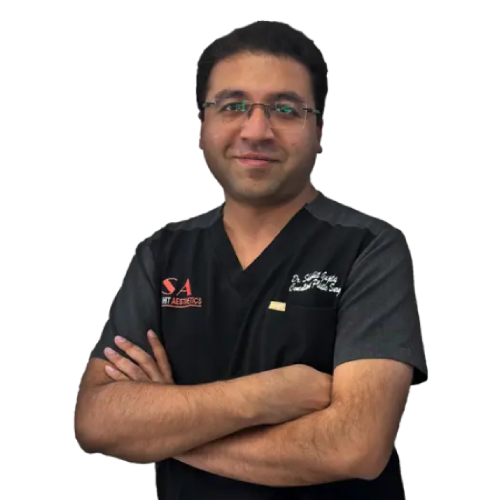
Shobhit Aesthetics sources its fillers only from registered, licensed distributors, ensuring they are 100% genuine, safe, and efficacious. Moreover, all filler injections are done by Dr. Shobhit Gupta, a gold medalist, board-certified plastic surgeon with years of experience in surgical and non-surgical facial aesthetics.
About Dr. Shobhit Gupta
- Dr. Shobhit Gupta is a Gold Medalist Senior Consultant Plastic Surgeon with an MCh in Plastic & Reconstructive Surgery, MS in General Surgery, and MBBS.
- He is the Founder & Director of Shobhit Aesthetics, a specialised cosmetic surgery & women’s health centre in Karol Bagh, New Delhi.
- He has trained at top national and international institutes, has authored many publications, and is an active member of plastic surgery associations in India and overseas.
- Shobhit Aesthetics has been recognised as one of the top cosmetic surgery centres in Delhi for its patient care, safety standards, and natural results.
Longevity and Maintenance of Fillers
When calculating cost, it is also important to consider how long fillers last
- 6–18 months (Hyaluronic Acid Fillers)
- 12–18 months (Calcium Hydroxylapatite)
- Up to 2 years (Poly-L-lactic Acid. Stimulates collagen.)
Follow-up treatments are usually shorter, require less filler, and are therefore less expensive than the initial session.
Tips for Patients Considering Dermal Fillers
- Ensure your doctor is a qualified, board-certified plastic surgeon.
- Ask about the brand. Insist on only FDA-approved fillers from known companies.
- Check the cost. Is it “per syringe” or “per session”? If you’re getting multiple areas done, this can be double or triple the base price.
- Look beyond cost. Deals that are too cheap are almost always unsafe.
- Factor in the maintenance costs. You will need follow-ups every 12–18 months depending on the filler used.
The cost of dermal fillers in India is typically in the range of ₹15,000 to ₹70,000 per syringe. But the most important consideration is not just the cost, but the reputation, experience, and safety of the clinic and doctor.
Shobhit Aesthetics, Delhi, is one of the best dermal filler clinics in the city. We offer not just affordability, but trust, authenticity, and natural, long-lasting results. With state-of-the-art techniques, genuine products, and the experience of Dr. Shobhit Gupta, you can be assured of the best care in facial aesthetics.
If you are considering dermal fillers, visit Shobhit Aesthetics and Dr. Shobhit Gupta for your consultation. He will provide a customised treatment plan, an accurate and transparent cost estimate, and the confidence of knowing that you are in safe, expert hands.
Frequently Asked Questions:-
Q.1 How much do dermal fillers cost in India?
The cost of dermal fillers in India typically ranges from ₹15,000 to ₹70,000 per syringe of 1 ml, depending on several factors including the brand of filler used, the area being treated, the quantity required, and the expertise of the injector. In metropolitan cities like Delhi, prices tend to reflect the higher standards of clinic infrastructure, product authenticity, and practitioner qualifications. At Shobhit Aesthetics, the cost is determined on a per-patient basis following a thorough consultation, ensuring that you receive a transparent and accurate estimate tailored to your specific treatment plan rather than a generic price that may not reflect your actual needs.
Q.2 How long do dermal fillers last?
The longevity of dermal fillers varies depending on the type of filler used, the area treated, and individual factors such as metabolism and lifestyle. Hyaluronic acid fillers, which are the most commonly used, typically last between six to eighteen months depending on the specific formulation and treatment area. Lip fillers tend to dissolve more quickly — usually within six to twelve months — due to the high degree of movement in that area. Cheek and jawline fillers, placed in areas with less movement, can last twelve to twenty-four months. Biostimulatory fillers such as Sculptra can produce results that last up to two years or longer, as they work by stimulating the body's own collagen production rather than simply adding volume directly.
Q.3 Are dermal fillers safe?
When administered by a qualified, board-certified plastic surgeon using genuine, internationally approved products, dermal fillers are considered a very safe procedure with a well-established safety profile spanning decades of clinical use. The most commonly used fillers — based on hyaluronic acid — are made from a substance that occurs naturally in the body, which minimises the risk of allergic reactions or rejection. However, like any medical procedure, fillers are not without risk when performed by inadequately trained practitioners or when substandard products are used. Risks such as vascular occlusion, infection, visible lumps, and asymmetry are almost always associated with poor technique or unverified products rather than the procedure itself. At Shobhit Aesthetics, all filler treatments are performed exclusively by Dr. Shobhit Gupta, a gold medalist board-certified plastic surgeon, using only genuine, licensed filler products sourced from registered distributors.
Q.4 Do dermal filler injections hurt?
Most patients describe the sensation of dermal filler injections as mild to moderate discomfort rather than significant pain. The level of discomfort varies depending on the area being treated — the lips, for instance, are more sensitive than the cheeks or jawline. To minimise discomfort, topical anaesthetic cream is applied to the treatment area prior to injection, and most modern premium fillers also contain lidocaine — a local anaesthetic — within the gel itself, which further reduces any stinging or discomfort during the procedure. The entire treatment typically takes between thirty minutes to an hour depending on the number of areas being addressed, and most patients find it very manageable. Any mild soreness or tenderness at the injection sites after the procedure usually resolves within a day or two.
Q.5 What is the difference between hyaluronic acid fillers and biostimulatory fillers?
Hyaluronic acid fillers work by directly adding volume to the treated area immediately upon injection. They are gel-like substances that physically fill hollows, smooth lines, and enhance contours on the spot, with results visible as soon as the treatment is complete. They are also reversible — an enzyme called hyaluronidase can dissolve them if needed. Biostimulatory fillers, such as Sculptra which is based on Poly-L-lactic acid, and Radiesse which is based on calcium hydroxylapatite, work differently. Rather than providing immediate volume, they stimulate the body's own natural collagen production over a period of weeks and months. The results develop gradually and look extremely natural, but they require patience — visible improvement typically emerges over two to three months following treatment. Biostimulatory fillers are not reversible in the same way that hyaluronic acid fillers are, which makes the expertise and precision of the injector even more critical.
Q.6 Can dermal fillers be dissolved or reversed if I am unhappy with the results?
Hyaluronic acid fillers — which represent the majority of filler treatments performed — can be dissolved using an enzyme called hyaluronidase. This enzyme breaks down hyaluronic acid quickly and effectively, allowing the filler to be partially or fully reversed in the event of an unsatisfactory result, an adverse reaction, or a complication such as vascular occlusion. The dissolving process is straightforward when performed by an experienced practitioner and results in the treated area returning to its pre-treatment appearance. This reversibility is one of the key reasons hyaluronic acid fillers are considered the gold standard for most filler treatments, particularly for first-time patients. It is important to note that biostimulatory fillers such as Sculptra and Radiesse are not reversible using hyaluronidase, which underscores the importance of choosing a highly skilled injector for these treatments.
Q.7 How do I choose the right clinic for dermal fillers in India?
Choosing the right clinic for dermal fillers is arguably the most important decision in your treatment journey, as it directly determines the safety, quality, and longevity of your results. There are several key criteria to evaluate when making this choice. First and most importantly, ensure that the person performing your injections is a fully qualified medical professional — ideally a board-certified plastic surgeon with specific training and extensive experience in facial aesthetics. Avoid clinics where fillers are administered by beauticians, inadequately trained staff, or practitioners who cannot demonstrate formal medical qualifications. Second, ask specifically about the brand of filler being used and insist on internationally approved, FDA-cleared products from registered distributors. Third, assess the clinic's infrastructure — proper sterile procedure rooms, rigorous hygiene standards, and access to emergency management protocols are non-negotiable. Finally, be cautious of prices that seem unusually low, as deeply discounted filler treatments almost always involve compromises on product quality, safety standards, or practitioner qualifications.
Q.8 What is the recovery time after dermal filler treatment?
One of the significant advantages of dermal fillers over surgical procedures is the minimal recovery time involved. Most patients experience some degree of mild swelling, redness, and tenderness at the injection sites immediately following treatment, but these effects are temporary and typically resolve within twenty-four to forty-eight hours. Bruising is possible, particularly in sensitive areas such as the lips and under-eye region, and may take up to a week to fully resolve. Most patients feel comfortable returning to normal daily activities, including work, on the same day or the day following their treatment. There are a few simple precautions to observe in the days immediately after filler treatment — avoiding strenuous exercise, excessive heat such as saunas or steam rooms, and alcohol for at least twenty-four hours, and refraining from massaging or applying pressure to the treated areas unless specifically instructed to do so by your doctor.
Q.9 At what age can someone start getting dermal fillers?
Dermal fillers are generally appropriate for adults aged eighteen years and above, though the motivations and goals for treatment differ significantly across age groups. Younger patients in their twenties and early thirties typically seek fillers for feature enhancement — fuller lips, a more defined jawline or chin, or subtle cheek augmentation — rather than for rejuvenation. Patients in their thirties and forties more commonly present with early volume loss, hollowing under the eyes, or softening of facial contours that they wish to restore. Older patients may seek more comprehensive facial volumising to address the accumulated effects of age-related volume loss. There is no single "right age" to start filler treatment — the appropriate time is whenever a specific, realistic concern exists that filler can genuinely address. What is important at any age is having realistic expectations, choosing a qualified practitioner, and approaching the decision thoughtfully rather than impulsively.
Q.10 How many sessions of dermal fillers will I need?
The number of sessions required depends on your specific goals, the areas being treated, and the type of filler being used. For many patients, a single session addressing one or two areas provides satisfying results that last for twelve months or longer before a maintenance top-up is needed. For patients seeking more comprehensive facial rejuvenation across multiple areas, a staged approach across two or three sessions may be recommended — both to allow each treatment area to settle before additional work is done, and to avoid making too many changes at once, which can feel overwhelming and makes it harder to assess the contribution of each individual treatment. Biostimulatory filler treatments such as Sculptra typically require a series of two to three sessions spaced several weeks apart, as the results develop gradually over time rather than appearing immediately. During your consultation at Shobhit Aesthetics, Dr. Shobhit Gupta will provide a clear and honest assessment of how many sessions your specific goals are likely to require, along with a realistic timeline and maintenance schedule.