When we talk about body image, we often focus on women. However, for many men, a physical concern can be just as distressing, yet it’s rarely discussed openly at the dinner table or in the gym locker room. We’re talking about gynecomastia, often colloquially (and sometimes unkindly) referred to as ‘man boobs’.
At Shobhit Aesthetics, led by Dr. Shobhit Gupta, we see men from all walks of life who share the same story: they’ve spent years wearing baggy t-shirts, avoiding the beach, or feeling self-conscious in professional attire. If you are reading this, you are likely looking for more than just a quick fix; you are looking for medical clarity.
In this guide, we will break down the different gynecomastia stages, the science behind the condition, and the professional treatment options available to help you regain a masculine chest profile.
What Exactly is Gynecomastia?
Before diving into the grades, it is vital to understand what gynecomastia actually is. It isn’t simply "chest fat." True gynecomastia is the enlargement of glandular breast tissue in males.
While chest fat removal (treating 'pseudogynecomastia') involves targeting adipose tissue, true gynecomastia involves the firm, glandular tissue behind the nipple. This is often caused by a hormonal imbalance in men, specifically, an imbalance between oestrogen and testosterone.
Whether it’s triggered by puberty, medication, or age, the result is the same: a chest contour that feels out of alignment with your masculine identity.
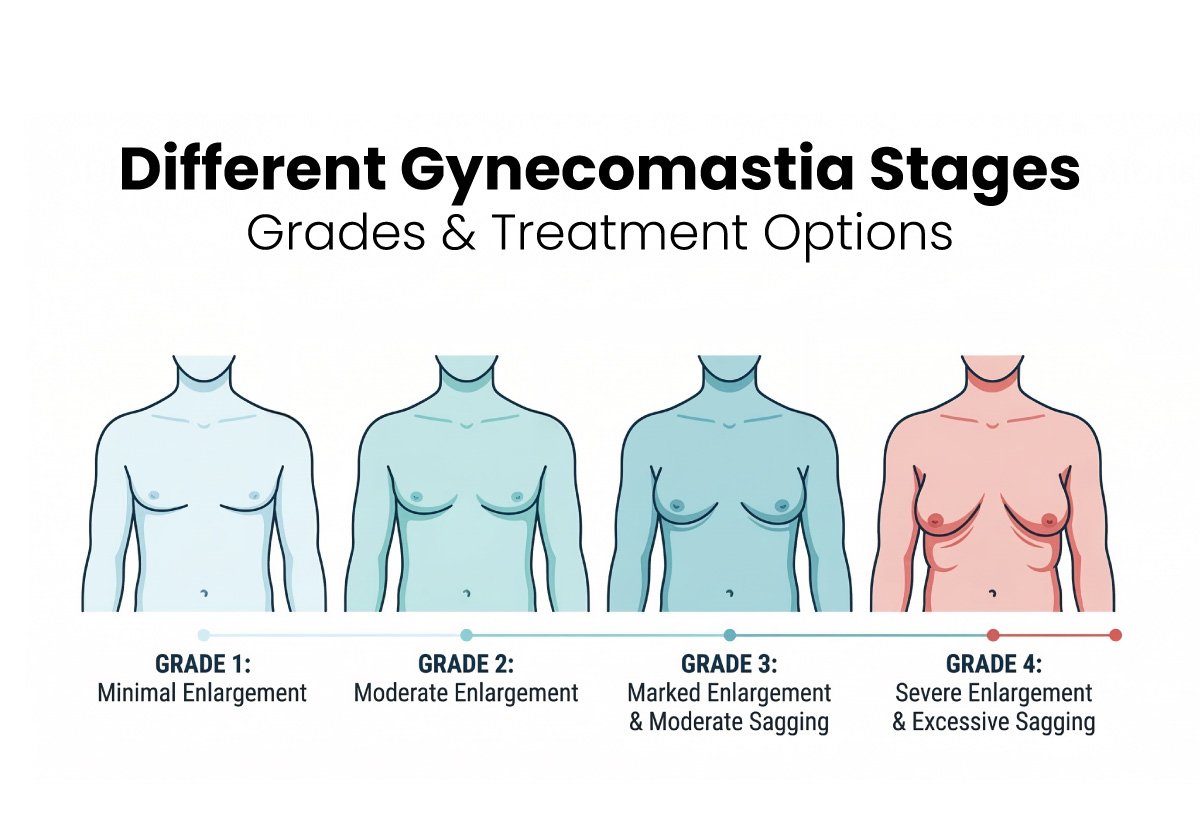
The Four Gynecomastia Stages (Grades)
Medical professionals use a grading system to determine the severity of the condition. Understanding which grade you fall into is the first step toward a tailored treatment plan.
Grade 1: Minor Enlargement
At this stage, the enlargement is very localised. There is usually a small "button" of firm tissue directly behind the nipple and areola.
- Appearance: The chest looks mostly normal, but the nipples may appear "puffy" or protrude through thin shirts.
- Skin: There is no skin sagging or excess skin at this stage.
Grade 2: Moderate Enlargement
In Grade 2, the breast tissue spreads beyond the borders of the areola. The edges of the tissue begin to blend into the chest wall.
- Appearance: The chest looks fuller, resembling a small female breast or a very "soft" pectoral area.
- Skin: The skin remains taut, and there is no sagging yet.
Grade 3: Moderate Enlargement with Skin Laxity
This is a significant turning point. Not only is there a substantial amount of glandular tissue and fat, but the skin begins to lose its elasticity.
- Appearance: The chest has a definite female breast shape.
- Skin: You will notice visible sagging (ptosis). The skin may hang slightly below the lower crease of the chest.
Grade 4: Severe Enlargement and Sagging
This is the most advanced of the gynecomastia grades. There is a large amount of tissue, and the chest looks pendulous.
- Appearance: Significant breast development.
- Skin: Major skin laxity. The nipple may sit much lower than the chest's natural "fold." At this stage, a simple extraction isn't enough; skin contouring becomes a priority.
Early Signs and Symptoms of Gynecomastia
Gynecomastia often develops gradually, and many men fail to recognise the early signs. In the beginning stages, the changes can be subtle and may not seem significant. However, identifying these symptoms early can help individuals seek medical guidance sooner and prevent the condition from progressing further.
One of the most common early signs is swelling around the nipple area. The tissue directly behind the nipple may feel slightly firm or rubbery. Unlike chest fat, which feels soft and spread out across the chest, glandular tissue forms a more defined lump beneath the areola.
Another early symptom is puffy nipples. Even in otherwise lean individuals, the nipple may appear enlarged or protruding through clothing. This can become particularly noticeable when wearing thin or fitted shirts.
Some men also experience tenderness or sensitivity in the chest area. During the active phase of gynecomastia, hormonal changes can cause the breast tissue to feel sore or slightly painful when touched. This discomfort usually decreases as the tissue stabilises.
As the condition progresses, asymmetry between the two sides of the chest may develop. One side may appear larger or fuller than the other. Although gynecomastia can affect both sides of the chest, it does not always develop evenly.
Another noticeable sign is a gradual change in chest shape. The chest may start to appear rounder or softer compared to the flat, muscular contour typically associated with a masculine chest.
Recognising these symptoms early allows individuals to consult a specialist and determine whether the enlargement is due to gynecomastia or simply excess fat.
Causes of Gynecomastia: Understanding the Hormonal Mechanism
Gynecomastia is primarily linked to hormonal imbalance, particularly the relationship between testosterone and oestrogen in the male body. Although oestrogen is often referred to as a “female hormone,” it is naturally present in men as well. Problems arise when oestrogen levels become relatively higher than testosterone levels.
When this hormonal balance shifts, the breast gland tissue can begin to grow. Several factors may trigger this imbalance.
Hormonal Changes During Puberty
One of the most common causes of gynecomastia occurs during adolescence. During puberty, hormone levels fluctuate significantly. Temporary increases in oestrogen may cause breast tissue to enlarge in teenage boys.
In many cases, this condition resolves naturally within six months to two years as hormone levels stabilise. However, if the tissue persists into adulthood, medical treatment may be required.
Age-Related Hormonal Changes
As men grow older, testosterone levels naturally decline. This decrease can alter the balance between testosterone and oestrogen, leading to the development of gynecomastia later in life.
Age-related gynecomastia is particularly common in men over the age of 50 and may also be influenced by weight gain or metabolic changes.
Medications
Certain medications are known to interfere with hormone levels and may contribute to gynecomastia. Some common examples include:
- Anti-androgen medications used to treat prostate conditions
- Certain antidepressants and anti-anxiety medications
- Some heart and blood pressure medications
- Steroid or hormone-based treatments
- Certain medications used for ulcers or gastric reflux
These medications may increase oestrogen levels or reduce testosterone activity, leading to breast tissue growth.
Medical Conditions
In some cases, gynecomastia may be associated with underlying medical conditions that affect hormone production. These include:
- Thyroid disorders
- Liver disease
- Kidney failure
- Testicular tumors
- Obesity
Such conditions may disrupt hormone regulation and contribute to the enlargement of male breast tissue.
Lifestyle Factors
Certain lifestyle habits can also play a role in gynecomastia development. The use of anabolic steroids, excessive alcohol consumption, or recreational drugs such as marijuana may affect hormonal balance.
Additionally, obesity can increase the body’s production of oestrogen because fat cells convert testosterone into oestrogen through a process called aromatization.
Understanding these underlying causes is important because treatment plans often involve addressing the root of the hormonal imbalance.
Diagnosis: How Doctors Identify Gynecomastia
Proper diagnosis is essential before determining the most suitable treatment. Many men assume they have gynecomastia when they actually have pseudogynecomastia, which is simply excess fat accumulation in the chest.
A medical evaluation helps differentiate between the two conditions.
Physical Examination
The first step in diagnosis is a detailed physical examination. The doctor will assess the chest area to determine whether the enlargement is caused by firm glandular tissue or soft fatty deposits.
The specialist will also examine the symmetry, skin elasticity, and nipple position to determine the stage or grade of gynecomastia.
Medical History Review
A thorough review of the patient’s medical history is conducted to identify possible causes. The doctor may ask about:
- Current medications
- Past medical conditions
- Hormonal disorders
- Family history
- Lifestyle habits
These details help determine whether the gynecomastia is related to medication, hormonal imbalance, or another medical condition.
Blood Tests
In some cases, blood tests may be recommended to measure hormone levels. These tests help evaluate testosterone, oestrogen, thyroid hormones, and liver function.
Abnormal hormone levels may indicate an underlying condition that requires medical treatment.
Imaging Tests
If necessary, imaging tests such as ultrasound or mammography may be used to examine breast tissue more closely. These tests help rule out rare conditions such as male breast cancer or other abnormalities.
Once the diagnosis is confirmed, the doctor can determine whether medical management or surgery is the most appropriate treatment option.
Non-Surgical Management Options for Gynecomastia
Although surgery is considered the most definitive solution for persistent gynecomastia, non-surgical treatments may be effective in certain situations, particularly in early stages.
Hormonal Treatment
If gynecomastia is caused by a hormonal imbalance, medications may sometimes help restore hormone levels. Doctors may prescribe drugs that block oestrogen activity or increase testosterone production.
However, these medications are generally effective only during the early inflammatory phase before the glandular tissue becomes fibrous.
Weight Management
For individuals with pseudogynecomastia caused by excess fat, weight loss can significantly improve chest appearance. A balanced diet combined with regular exercise may reduce fat deposits in the chest area.
However, it is important to note that exercise cannot eliminate glandular tissue, which is why true gynecomastia often requires surgical correction.
Lifestyle Changes
Addressing lifestyle habits may help prevent further progression of the condition. This may include:
- Avoiding anabolic steroids
- Reducing alcohol intake
- Maintaining a healthy weight
- Reviewing medications with a healthcare professional
Although these changes may not reverse existing glandular tissue, they can help prevent worsening of the condition.
The Long-Term Benefits of Gynecomastia Surgery
For men with persistent gynecomastia, surgery offers the most reliable and permanent solution. Modern surgical techniques allow surgeons to create a natural-looking masculine chest contour with minimal scarring and relatively quick recovery.
Improved Chest Contour
The most immediate benefit is the restoration of a flatter, firmer chest shape. Removing both fat and glandular tissue ensures that the chest appears proportional to the rest of the body.
Permanent Results
Once the glandular tissue is removed, it does not grow back. As long as the patient maintains a stable weight and healthy lifestyle, the results of surgery are typically permanent.
Increased Confidence
Many patients report significant improvements in self-confidence after surgery. Activities that once felt uncomfortable—such as swimming, exercising at the gym, or wearing fitted clothing—become much easier.
Better Physical Comfort
In some cases, enlarged breast tissue can cause physical discomfort, including tenderness or irritation from clothing. Surgical treatment can eliminate these symptoms and improve daily comfort.
Improved Posture and Body Language
When individuals feel confident about their appearance, it often reflects in their posture and body language. Many patients find that they stand straighter and feel more comfortable in social and professional environments.
Preventing Gynecomastia Recurrence
Although surgical treatment removes existing glandular tissue, maintaining long-term results requires attention to certain lifestyle factors.
Maintain Hormonal Balance
Regular medical check-ups can help monitor hormone levels and detect potential imbalances early.
Avoid Anabolic Steroids
Steroid use is one of the most common preventable causes of gynecomastia in men. Avoiding these substances significantly reduces the risk of recurrence.
Maintain a Healthy Body Weight
Excess body fat can increase oestrogen production. Maintaining a healthy weight helps support hormonal balance.
Follow Medical Advice
Patients should follow all post-operative instructions provided by their surgeon, including wearing compression garments and attending follow-up appointments.
These steps help ensure long-lasting surgical results and reduce the likelihood of future complications.
Why Is This Happening?
It is easy to blame a lack of exercise, but for most of our patients, the gym isn’t the solution. Hormonal imbalance in men is the primary driver. If your body produces too much oestrogen or is insensitive to testosterone, the breast tissue reacts by growing.
Other factors include:
- Puberty: Temporary shifts that sometimes don't resolve on their own.
- Medications: Certain blood pressure meds, antidepressants, or hair loss treatments.
- Lifestyle: The use of certain supplements or substances.
- Ageing: As testosterone levels naturally dip, the ratio shifts, leading to late-onset gynecomastia.
Looking for a Man Boobs Treatment: What are the Options?
If you’ve tried "chest-focused" workouts and seen no results, it’s because exercise cannot "burn away" glandular tissue. You need a clinical approach.
1. Medical Management
In the very early stages (Grade 1), if the condition is caught during the "active" inflammatory phase, some medications may help. However, once the tissue has become fibrous (usually after 12 months), surgery is the only definitive gynecomastia treatment.
2. Liposuction (For Fat Removal)
If your condition is primarily fat-based (chest fat removal), modern liposuction techniques can sculpt the area. At Shobhit Aesthetics, we use precision tools to ensure the chest looks athletic and flat, not hollow.
3. Surgical Excision (The Gold Standard)
For most gynecomastia surgery, a small, discreet incision is made at the edge of the areola. Dr. Shobhit Gupta then manually removes the firm glandular tissue. This ensures the "puffiness" is gone for good.
4. Combined Approach and Skin Tightening
For Grades 3 and 4, we combine liposuction, glandular excision, and sometimes skin redundant removal. This ensures that after the volume is gone, you aren’t left with "empty" sagging skin.
Why Choose Shobhit Aesthetics for Your Surgery?
When it comes to male breast enlargement, many clinics treat it as a routine "beauty" procedure. We don't.
A Medical Focus: Dr. Shobhit Gupta is a highly qualified plastic and cosmetic surgeon. He understands the anatomy of the male chest, the need for a flat, contoured, and masculine finish rather than just "reducing size."
A Premium Experience: We understand that our patients are busy professionals who value their privacy and seek excellence. From your first consultation to your final follow-up, you are treated in a clinical, high-end environment where your comfort and safety are paramount.
Long-Term Results: Our goal isn't just to remove the tissue; it's to provide a result that lasts. By addressing both the fat and the gland, we ensure a smooth, permanent transition.
Recovery: What to Expect
Many men hesitate to book gynecomastia surgery simply because they worry about taking too much time off work or missing their gym routine.
- The Procedure: Usually takes 1 to 2 hours under general or local anaesthesia.
- The First Week: You’ll wear a compression vest. This is crucial, it helps the skin "stick" back to the muscle and reduces swelling.
- Back to Work: Most of our patients return to office jobs within 3 to 5 days.
- The Gym: You can resume light walking almost immediately, but heavy chest presses will need to wait about 4 to 6 weeks.
The Psychological Impact of Treatment
We often see a physical transformation in our clinic, but the mental transformation is even more profound. When you no longer have to worry about how your shirt fits or whether people are looking at your chest, your posture changes. You stand taller. You speak with more authority.
Choosing to undergo gynecomastia treatment is a serious decision. It’s an investment in your self-esteem and your quality of life.
Final Thoughts
Gynecomastia is more common than many men realise, yet it often remains a topic that people hesitate to discuss openly. Male breast enlargement can affect confidence, body image, and even everyday choices such as clothing, social activities, or fitness routines. Understanding the condition, its causes, and the different gynecomastia stages is an important step toward finding the right solution.
As explained throughout this guide, gynecomastia is not simply excess chest fat. In many cases, it is the result of enlarged glandular tissue caused by hormonal imbalance. This is why diet, exercise, or chest workouts alone may not provide the desired results. By identifying the grade of gynecomastia—from mild puffiness in Grade 1 to more advanced enlargement with skin laxity in Grade 4—specialists can recommend a treatment approach that is tailored to the individual’s condition.
Modern medical treatments have made it possible to address gynecomastia safely and effectively. In early cases, lifestyle adjustments or medical management may help control the underlying hormonal factors. However, when the glandular tissue becomes permanent, surgical treatment remains the most reliable and long-lasting solution. Advanced techniques such as liposuction, glandular excision, and skin tightening allow surgeons to reshape the chest and restore a flat, firm, and masculine contour with natural-looking results.
If you have been struggling with male breast enlargement, it is important to remember that you are not alone—and more importantly, you do not have to simply live with it. Thousands of men seek treatment every year and successfully regain their confidence through professional care and expert guidance.
At Shobhit Aesthetics, patients are treated in a medically credible and premium environment designed for individuals who value both safety and excellence. Under the expertise of Dr. Shobhit Gupta, the focus is not just on reducing chest size but on creating a balanced, masculine chest contour that looks natural and proportionate to the body.
Choosing to undergo gynecomastia treatment is a personal decision, but it can be a powerful step toward improving both physical appearance and self-confidence. If you are ready to explore your options, the next step is a professional consultation. By evaluating your condition, understanding your goals, and assessing your gynecomastia stage, a customised treatment plan can be created to help you feel comfortable and confident in your body again.
Frequently Asked Questions:-
Q.1 What are the stages of gynecomastia?
Gynecomastia is classified into four stages, ranging from minor "puffy" nipples (Grade 1) to severe breast enlargement with significant skin sagging (Grade 4).
Q.2 How is gynecomastia graded?
It is graded during a clinical exam by assessing the volume of glandular tissue and the amount of excess skin to determine the most effective surgical approach.
Q.3 Can gynecomastia go away naturally?
While it may resolve on its own during puberty or if caused by temporary medication, persistent glandular tissue usually becomes permanent and requires medical intervention.
Q.4 When is surgery required for gynecomastia?
Surgery is necessary when the enlarged tissue has been present for over a year and does not respond to diet, exercise, or hormonal correction.
Q.5 What is the best treatment for gynecomastia?
The most effective treatment is a combination of liposuction to remove fat and surgical excision to permanently remove the firm glandular tissue.
Q.6 What causes gynecomastia in men?
Gynecomastia is mainly caused by a hormonal imbalance between testosterone and oestrogen. When oestrogen levels become relatively higher, it can stimulate the growth of glandular breast tissue in men.
Q.7 At what age can gynecomastia occur?
Gynecomastia can occur at different stages of life. It is most common during puberty, middle age, and older adulthood when hormonal changes are more likely to occur.
Q.8 Is gynecomastia the same as chest fat?
No, gynecomastia involves the enlargement of glandular breast tissue, whereas chest fat (pseudogynecomastia) is simply the accumulation of fat in the chest area. Both conditions may look similar but require different treatments.
Q.9 Can exercise reduce gynecomastia?
Exercise can help reduce chest fat and improve overall body composition. However, it cannot remove glandular tissue, which is the primary cause of true gynecomastia.
Q.10 Is gynecomastia surgery permanent?
Yes, gynecomastia surgery removes the enlarged glandular tissue, and the results are generally permanent. However, maintaining a stable weight and healthy lifestyle is important to prevent new fat accumulation.
Q.11 How long does gynecomastia surgery take?
The procedure typically takes between one to two hours, depending on the severity of the condition and whether liposuction or glandular excision is required.
Q.12 Is gynecomastia surgery painful?
The surgery itself is performed under local or general anaesthesia, so patients do not feel pain during the procedure. Some mild discomfort or soreness may occur during recovery, but it is usually manageable with prescribed medication.
Q.13 Will there be visible scars after gynecomastia surgery?
Most gynecomastia procedures involve small incisions around the edge of the areola. These scars are usually minimal and fade over time, becoming barely noticeable.
Q.14 How long is the recovery period after gynecomastia surgery?
Most patients can return to desk jobs within 3 to 5 days. However, strenuous activities and heavy workouts should be avoided for about 4 to 6 weeks.
Q.15 Can gynecomastia come back after surgery?
Recurrence is rare if the glandular tissue is completely removed. However, hormonal imbalance, steroid use, or significant weight gain could potentially contribute to new chest enlargement.
Q.16 Is gynecomastia surgery safe?
Yes, gynecomastia surgery is generally safe when performed by a qualified and experienced plastic surgeon in a proper medical facility.
Q.17 How do doctors diagnose gynecomastia?
Doctors diagnose gynecomastia through a physical examination and medical history review. In some cases, blood tests or imaging tests may be used to identify underlying causes.
Q.18 Can medications cause gynecomastia?
Yes, certain medications such as antidepressants, steroids, anti-androgen drugs, and some blood pressure medications may contribute to gynecomastia.
Q.19 How soon can I see results after gynecomastia surgery?
Initial improvements are visible once swelling begins to reduce within a few weeks. Final results typically appear after 3 to 6 months when the chest has fully healed.
Q.20 When should I consult a doctor for gynecomastia?
You should consult a doctor if you notice persistent breast enlargement, tenderness, or swelling in the chest that does not improve with weight loss or exercise. Early medical evaluation helps determine the most suitable treatment.