For many individuals, specifically men, a change in the hairline is an early and unwelcome sign of ageing. A receding hairline is often the first significant visible signal of what is medically termed androgenetic alopecia, more commonly known as male pattern baldness.
While it may seem inevitable, knowledge is power. You can make smart choices about how to intervene and manage this condition if you know what it is, what causes it, and how it usually gets better. Shobhit Aesthetics experts say that the best way to keep your natural hair density is to find out about it early, before the follicles reach a point of no return.
What is a Receding Hairline?
A receding hairline is when the hair at the front of your head slowly starts moving backward. It usually begins near the temples on both sides of the forehead. Over time, the hairline forms a shape that looks like an “M” or sometimes a “V”. Many people first notice this change when their forehead starts looking bigger or when they compare their current photos with older ones.
A receding hairline is most commonly linked to male pattern baldness. It is more common in men, but women can also experience hairline changes. In women, the pattern may look a little different. Instead of deep recession at the temples, women often notice thinning in the middle part of the hair or at the crown area on top of the head. This change usually does not happen suddenly. In most cases, it happens slowly over several months or even years. The small hair follicles in the scalp, which are responsible for growing hair, start becoming weaker and smaller. Because of this, the hair that grows becomes thinner and less strong.
At first, you may see that the hair near your temples feels softer or looks lighter compared to the hair at the back of your head. This happens because thick, healthy hair slowly turns into very fine and short hair called vellus hair. These hairs are thin, light, and sometimes hard to notice.
If the process continues for a long time, the hair follicles may stop growing visible hair completely. This is when the affected area may start looking bald. That is why noticing the early signs of a receding hairline is important, as early care can help slow down further hair loss.
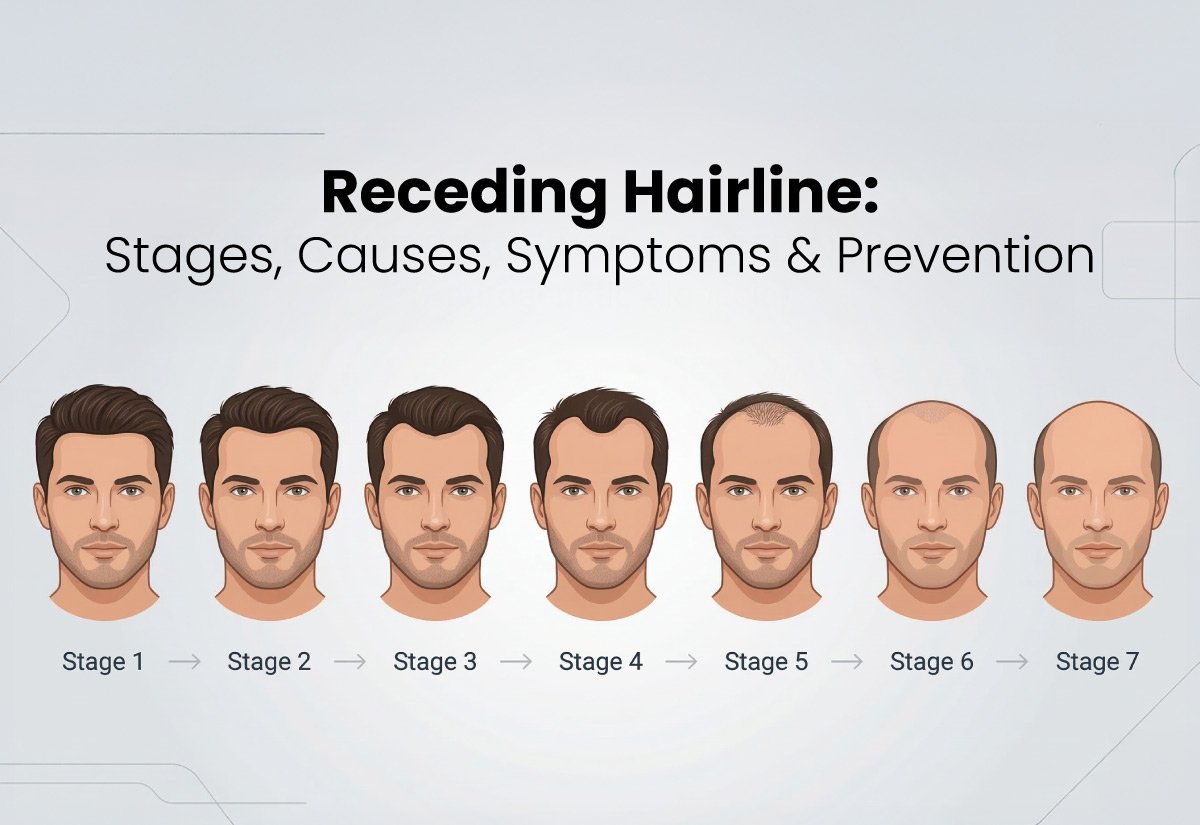
The Balding Stages: Visualising the Norwood Scale
The Norwood Scale is a standard way for specialists to figure out how bad hair loss is and put it into groups. This scale is necessary for figuring out the best way to treat hair loss and mapping out the normal stages of balding.
Stage 1: The Adolescent Hairline
At this stage, there is little to no significant hair loss or hairline recession. Most teenagers and young men in their early 20s fall into this category. It serves as the baseline for all future comparisons.
Stage 2: The Mature Hairline
There is a slight, symmetrical recession in the temple areas. People often call this a "mature" hairline. A lot of men think this means they're going bald, but it's just a normal change that happens as the face gets older. The hair is still thick in the middle of the forehead.
Stage 3: The Critical Turning Point
This is the stage of "clinically significant" balding. The recession at the temples is deep, forming a clear 'M', 'U' or 'V' shape. At this point, the scalp may become visible through the thinning hair.
- Stage 3 Vertex: In some cases, the hairline stays relatively stable while a bald spot begins to develop at the crown (the vertex).
Stage 4: Advanced Recession
The hairline recession at the temples is worse than Stage 3. There is a lot of hair loss or thinning at the top of the head. A distinct band of hair that connects the remaining hair on the sides of the head separates these two areas.
Stage 5: The Narrowing Bridge
The areas where the hair falls out on the vertex and the front are still separate, but the band of hair across the top is noticeably thinner and shorter. The "horseshoe" pattern starts to show up.
Stages 6 & 7: Extensive Hair Loss
These represent advanced balding stages. The hair that connects the two sides of the head has completely fallen out, leaving a big bald spot on the top of the head. There is only a ring of hair left on the back and sides.
How to Identify Early Signs of a Receding Hairline
Detecting a receding hairline early can make a significant difference in how effectively hair loss can be managed. Many people fail to notice the early warning signs because the change usually happens slowly over time. However, paying attention to subtle shifts in your hairline can help you take preventive action before the condition progresses.
One of the earliest indicators is temple thinning. The hair near the temples may begin to look slightly lighter or less dense compared to the rest of the scalp. This often happens before visible recession becomes obvious. You might notice that styling your hair becomes slightly more difficult, or that the hairline does not look as even as it used to.
Another early sign is excessive hair shedding. While losing 50–100 strands of hair per day is normal, an increased amount of hair falling during washing, combing, or styling could signal the beginning of hair loss. If this shedding continues for several weeks, it may be worth consulting a specialist.
A gradual widening of the forehead can also indicate a receding hairline. Many individuals notice this change when they compare recent photos with older pictures. The forehead appears larger because the hairline has slowly shifted backward.
You may also observe hair miniaturisation, where the strands become thinner and softer than before. This occurs when the hair follicles shrink due to hormonal influences such as DHT. Eventually, these thinner strands may stop growing altogether.
Lastly, some people experience increased scalp visibility, especially under bright lighting or when the hair is wet. This occurs when hair density decreases in specific areas near the hairline.
Recognising these early signs is important because treatments such as medication or PRP therapy tend to be more effective when hair follicles are still active. Once follicles become completely dormant, restoring hair typically requires surgical solutions like hair transplantation.
Deep Dive: What Causes a Receding Hairline?
Understanding the "why" is the first step toward the "how" of treatment. Biological factors are the most important, but lifestyle also plays a role.
1. Genetics and Polygenic Inheritance
If your father or maternal grandfather had a receding hairline, your risk level goes up a lot. But hair loss is polygenic, which means it has to do with more than one gene. Even if your parents have a full head of hair, you can still get the "balding gene."
2. The Function of Dihydrotestosterone (DHT)
DHT is an androgen, which is a type of sex hormone that makes men more masculine. DHT makes hair follicles on the scalp too sensitive in people who are genetically prone to it. When DHT binds to these follicles, it initiates a process that shortens the hair's growth phase (anagen). After a few cycles, the hair gets so thin that it can't get through the skin anymore.
3. Age and Cellular Senescence
Age is another factor that can influence changes in the hairline. As the body grows older, many cells naturally slow down in their ability to repair and renew themselves. Hair follicles are also affected by this process. Over time, the stem cells inside the follicles may become less active, which means the follicles produce weaker and thinner hair. This does not happen suddenly but develops gradually over many years. Because of this, some people notice their hairline slowly moving back as they age.
However, specialists often explain that age alone is not the main reason. In most cases, sensitivity to hormones, especially DHT, still plays a larger role in the receding hairline pattern.
4. Stress and Telogen Effluvium
High levels of stress can also affect the health of your hair. When the body goes through extreme physical or emotional stress, many hair follicles can enter a resting stage of the hair cycle called the telogen phase. During this stage, the hair stops growing and may fall out after a few weeks. This condition is known as telogen effluvium. It does not directly cause a permanent receding hairline, but it can make existing hair loss look worse. People may suddenly notice more hair falling while washing or combing their hair. Once the stress is controlled and the body recovers, hair growth may gradually return in many cases.
Receding Hairline vs Mature Hairline: Understanding the Difference
Many people mistakenly believe that any change in the hairline automatically means they are going bald. In reality, there is a clear distinction between a mature hairline and a receding hairline.
A mature hairline is a natural part of ageing. During late adolescence or early adulthood, the hairline may move slightly upward and form a subtle “M” shape. This change typically occurs symmetrically and stabilises over time. Importantly, the hair density behind the hairline remains strong and consistent.
On the other hand, a receding hairline continues to move backward over time. The temples gradually deepen, and the pattern of recession becomes more pronounced. Unlike a mature hairline, this process usually does not stop on its own and may continue to progress through the stages of the Norwood Scale.
Another difference lies in hair thickness. In a mature hairline, the hair remains thick and healthy. However, in a receding hairline, the hair near the temples often becomes finer and weaker due to follicle miniaturisation.
Additionally, a mature hairline usually stabilises after early adulthood, whereas a receding hairline often continues to worsen throughout a person’s life. Over time, this may lead to thinning at the crown and eventually widespread hair loss.
Understanding this distinction can prevent unnecessary panic. Not every individual who develops a mature hairline will experience significant hair loss. However, if the recession continues to progress, it is advisable to seek medical advice and explore treatment options early.
Identifying the Symptoms
Early detection is the difference between saving your hair and needing a full hair transplant. Look for these signs:
- Miniaturisation at the Temples: If the hair at your temples feels softer or "fuzzier" than the hair at the back, it is miniaturising.
- The "Widow's Peak" Accentuation: If your natural widow's peak is becoming more prominent because the hair around it is disappearing, your hairline is receding.
- Sunburn on the Scalp: If you suddenly find that the skin near your hairline burns easily in the sun, it indicates a loss of hair density.
Prevention and Maintenance Strategies
Can you stop a receding hairline? In many cases, you can significantly delay the progression.
Nutritional Support
Your hair is made of a protein called keratin. Ensure your diet includes:
- Biotin (B7): Supports keratin production.
- Iron and Zinc: Essential for follicle cell division.
- Omega-3 Fatty Acids: Keeps the scalp hydrated.
Scalp Health
Avoid "traction alopecia" by not wearing tight hats, man-buns, or braids that pull on the frontal hair. Using a ketoconazole-based shampoo can also help reduce scalp inflammation and slightly inhibit DHT at the surface.
Lifestyle Factors That Can Accelerate Hairline Recession
Although genetics plays the biggest role in a receding hairline, lifestyle choices can also influence how quickly hair loss progresses. Certain habits and environmental factors may weaken hair follicles and accelerate the recession process.
One of the most common contributors is poor nutrition. Hair follicles require essential nutrients such as protein, iron, zinc, and vitamins to maintain healthy growth cycles. A diet lacking these nutrients may weaken the follicles and increase hair shedding. Individuals who follow extremely restrictive diets or experience nutritional deficiencies may notice faster hair thinning.
Chronic stress is another important factor. When the body experiences prolonged stress, it releases hormones that can disrupt the natural hair growth cycle. This may lead to increased shedding and exacerbate existing hairline recession. Stress-related hair loss is often temporary, but when combined with genetic predisposition, it can accelerate balding.
Smoking has also been linked to hair loss. Nicotine reduces blood circulation in the scalp, which means hair follicles receive less oxygen and fewer nutrients. Over time, this can weaken the follicles and impair their ability to grow healthy hair.
Excessive heat styling and chemical treatments may also damage the hairline. Frequent use of hair dryers, straighteners, or harsh chemical products can weaken the hair shaft and increase breakage near the hairline.
Another overlooked factor is poor scalp hygiene. Excess oil, dandruff, and scalp inflammation can clog hair follicles and disrupt healthy hair growth. Conditions such as seborrheic dermatitis may worsen hair thinning if not properly managed.
Although lifestyle factors may not be the primary cause of hairline recession, improving these habits can help slow down hair loss and maintain overall scalp health.
Psychological Impact of Hair Loss and Self-Confidence
Hair loss is not only a physical change but also an emotional experience for many individuals. A receding hairline can significantly affect a person’s confidence, self-image, and overall well-being.
For many people, hair is closely associated with youth, attractiveness, and personal identity. When hair loss begins, individuals may feel self-conscious about their appearance. They might avoid social events, feel uncomfortable in photographs, or spend excessive time trying to style their hair to hide thinning areas.
Studies have shown that hair loss can lead to increased anxiety and reduced self-esteem, especially in younger individuals who experience early balding. In some cases, it may even affect professional confidence, particularly in industries where appearance plays an important role.
However, it is important to remember that hair loss is extremely common and affects millions of people worldwide. Modern medical advancements have also made it easier than ever to manage and treat the condition.
Many individuals find that taking proactive steps toward treatment can significantly improve their confidence. Consulting a specialist, learning about available solutions, and developing a personalised treatment plan can provide a sense of control over the situation.
In addition, maintaining a healthy lifestyle, practicing stress management, and focusing on overall well-being can help individuals cope with the emotional aspects of hair loss.
Ultimately, hair loss does not define a person’s worth or attractiveness. With the right support and treatment options, many people successfully restore both their hair and their confidence.
When Should You See a Hair Loss Specialist?
Knowing when to consult a hair loss specialist is crucial for effective treatment. Many individuals wait until hair loss becomes severe before seeking help, but early intervention often produces the best results.
If you notice consistent thinning near the temples or hairline, it may be time to seek professional advice. A specialist can examine your scalp and determine whether the hair loss is temporary or related to androgenetic alopecia.
Another reason to consult a professional is sudden or excessive hair shedding. If large amounts of hair fall out during washing or brushing for several weeks, it may indicate an underlying issue such as telogen effluvium, nutritional deficiency, or hormonal imbalance.
You should also consider visiting a specialist if over-the-counter treatments are not working. Many individuals try hair growth products without understanding the root cause of their hair loss. A professional evaluation can help identify the most appropriate treatment plan.
A hair loss specialist may perform several diagnostic steps, including:
-
Scalp examination
-
Hair density measurement
-
Blood tests to identify nutritional deficiencies
-
Assessment of hormonal levels
-
Evaluation of family history
Based on the diagnosis, the specialist may recommend treatments such as medications, PRP therapy, laser therapy, or hair transplantation.
Early consultation is particularly important because treatments like Minoxidil and Finasteride work best when follicles are still active. Once hair follicles become completely dormant, restoring hair may require surgical procedures.
Seeking professional guidance early not only improves treatment outcomes but also helps individuals make informed decisions about their hair restoration journey.
Clinical Hair Loss Treatments
When home remedies aren't enough, medical science offers several pathways.
1. FDA-Approved Medications
- Minoxidil: This topical treatment makes blood flow to the follicles better, giving them more oxygen and nutrients.
- Finasteride is a pill you take that lowers the amount of DHT in your body. It works very well to stop more hair loss and, in many cases, to regrow hair in the crown area.
2. Platelet-Rich Plasma (PRP) Therapy
PRP is a treatment that uses your own blood to get growth factors out of it. These are then injected into the areas that are getting thinner to "jump-start" hair follicles that aren't growing. It is a common choice for people in Stages 2 or 3 of the Norwood Scale who don't want to have surgery.
3. Laser Therapy (LLLT)
Low-level laser therapy uses certain wavelengths of light to make the mitochondria in hair cells work harder, which helps them stay in the growth phase longer.
The Ultimate Solution: Hair Transplant Surgery
For people who are very bald, medication can only do so much. A surgical procedure is required to physically elevate the hairline.
FUE (Follicular Unit Extraction)
This is the best way to restore hair in modern times. Individual hair follicles are taken from the "donor area" (the back of the head, where hair is naturally resistant to DHT) and put into the areas where hair is thinning.
Why Precision Matters
Creating a hairline is an art form. It requires a specific angle, depth, and density to look natural. A poorly executed transplant can look "pluggy" or artificial. The surgical team at Shobhit Aesthetics specialises in creating a "feathered" hairline that mimics the natural irregularity of a real hairline, ensuring that even under close inspection, the results look completely authentic.
A receding hairline is a natural biological progression for millions, but it no longer has to be an accepted fate. From understanding your position on the Norwood Scale to implementing DHT-blocking treatments, there are more tools available today than ever before.
Whether you are just starting to notice thinning at the temples or are looking to fully restore your silhouette, the key is professional guidance. Clinics like Shobhit Aesthetics offer the expertise needed to navigate these choices, providing everything from medical management to world-class hair transplant surgery. Don't wait until the follicles have completely disappeared; early intervention is your best defence.
Conclusion
A receding hairline is a very common concern, and, for many people, it is the first visible sign of ongoing hair loss. While it is often influenced by genetics and hormones, understanding the condition early can make a meaningful difference in how it is managed. By recognising the stages of hair loss, identifying early symptoms, and learning about the factors that contribute to it, individuals can make more informed decisions about their hair health. Simple steps such as maintaining good scalp care, improving nutrition, and seeking medical advice when needed can help slow the progression.
Modern treatments, including medications, PRP therapy, and hair transplant surgery, also offer effective solutions for many patients. The key is not to ignore early signs. With timely guidance and the right treatment approach, it is often possible to preserve hair density and maintain a natural hairline for longer.
Frequently Asked Questions (FAQs):-
Q.1 What causes a receding hairline?
- The primary causes are genetics and a sensitivity to the hormone Dihydrotestosterone (DHT), which miniaturises hair follicles.
Q.2 At what age does a receding hairline start?
- It can start anytime after puberty. Many men notice changes in their early 20s or 30s, though some see signs as late as their 50s.
Q.3 Can a receding hairline grow back naturally?
- Generally, no. If the cause is androgenetic alopecia, the follicle shrinkage is permanent without medical or surgical intervention.
Q.4 How do I know if my hairline is receding?
- Compare photos of yourself from two years ago. Look for symmetrical thinning at the temples and a widening "V" or "M" shape.
Q.5 What is the best treatment for a receding hairline?
- The "best" treatment is a combination: Finasteride/Minoxidil to stop further loss and a hair transplant to restore areas where the hair has already vanished.
Q.6 Can a receding hairline stop on its own?
- In some cases, a hairline may stabilise temporarily, especially if it is a mature hairline rather than progressive hair loss. However, if the recession is caused by androgenetic alopecia (male pattern baldness), it usually continues over time. Early treatment with medications or clinical therapies can help slow down or control the progression.
Q.7 Is a receding hairline permanent?
- A receding hairline caused by genetic hair loss is generally permanent if left untreated. Once hair follicles shrink significantly, they may stop producing visible hair. However, treatments such as medications, PRP therapy, or hair transplant surgery can help restore hair density in many cases.
Q.8 Can women develop a receding hairline?
- Yes, women can also experience hairline recession, although it is less common than in men. Women usually experience overall thinning along the hair part or crown rather than deep temple recession. Hormonal changes, genetics, and medical conditions can contribute to hairline changes in women.
Q.9 Does wearing hats cause a receding hairline?
- No, wearing hats does not directly cause a receding hairline. Hair loss is primarily influenced by genetics and hormones. However, extremely tight headwear that constantly pulls on the hairline may contribute to traction alopecia, which can damage hair follicles over time.
Q.10 Can stress cause a receding hairline?
- Severe stress can lead to temporary hair shedding known as telogen effluvium. While this condition does not directly cause permanent hairline recession, it can make existing hair thinning appear worse. Once stress levels return to normal, hair growth may gradually recover.
Q.11 How long does it take for a receding hairline to progress?
- The progression varies from person to person. Some individuals may experience slow hairline changes over decades, while others may notice significant recession within a few years. Genetic predisposition and hormonal factors largely determine the speed of progression.
Q.12 Can changing my diet help prevent hairline recession?
- A healthy diet can support overall hair health, but it cannot completely prevent genetically driven hair loss. Nutrients such as protein, iron, zinc, vitamin D, and biotin help maintain strong hair follicles and may reduce excessive hair shedding.
Q.13 Are natural remedies effective for a receding hairline?
- Natural remedies such as scalp massage, essential oils, or herbal treatments may improve scalp health and blood circulation. However, there is limited scientific evidence showing that they can reverse genetic hair loss. Medical treatments are usually more effective for long-term results.
Q.14 Does frequent shampooing cause hair loss?
- No, washing your hair regularly does not cause a receding hairline. Some people notice hair strands in the shower, but this is usually hair that was already in the shedding phase of the hair growth cycle. Keeping the scalp clean actually helps maintain a healthy environment for hair growth.
Q.15 Can exercise improve hair growth?
- Regular exercise improves blood circulation throughout the body, including the scalp. Better circulation may help deliver oxygen and nutrients to hair follicles, which can support healthy hair growth. However, exercise alone cannot stop genetic hair loss.
Q.16 What is the difference between hair thinning and a receding hairline?
- Hair thinning usually refers to a general reduction in hair density across the scalp. A receding hairline specifically refers to hair loss at the front of the scalp, particularly around the temples and forehead.
Q.17 Can hair styling products damage the hairline?
- Using hair styling products occasionally is generally safe. However, excessive use of strong chemicals, gels, sprays, or heat styling tools may weaken the hair shaft and lead to breakage near the hairline if not used properly.
Q.18 How effective is PRP therapy for a receding hairline?
- Platelet-Rich Plasma (PRP) therapy can help stimulate hair follicles and improve hair density in the early stages of hair loss. The treatment works best for individuals who still have active hair follicles in the thinning areas.
Q.19 Is hair transplant surgery painful?
- Hair transplant procedures are typically performed under local anaesthesia, which means the patient remains awake but does not feel pain during the procedure. Some mild discomfort or swelling may occur after surgery, but it usually subsides within a few days.
Q.20 Can a hair transplant create a natural-looking hairline?
- Yes, modern hair transplant techniques such as Follicular Unit Extraction (FUE) can create very natural results. Skilled surgeons carefully design the hairline to match natural hair growth patterns, ensuring that the restored hair blends seamlessly with existing hair.