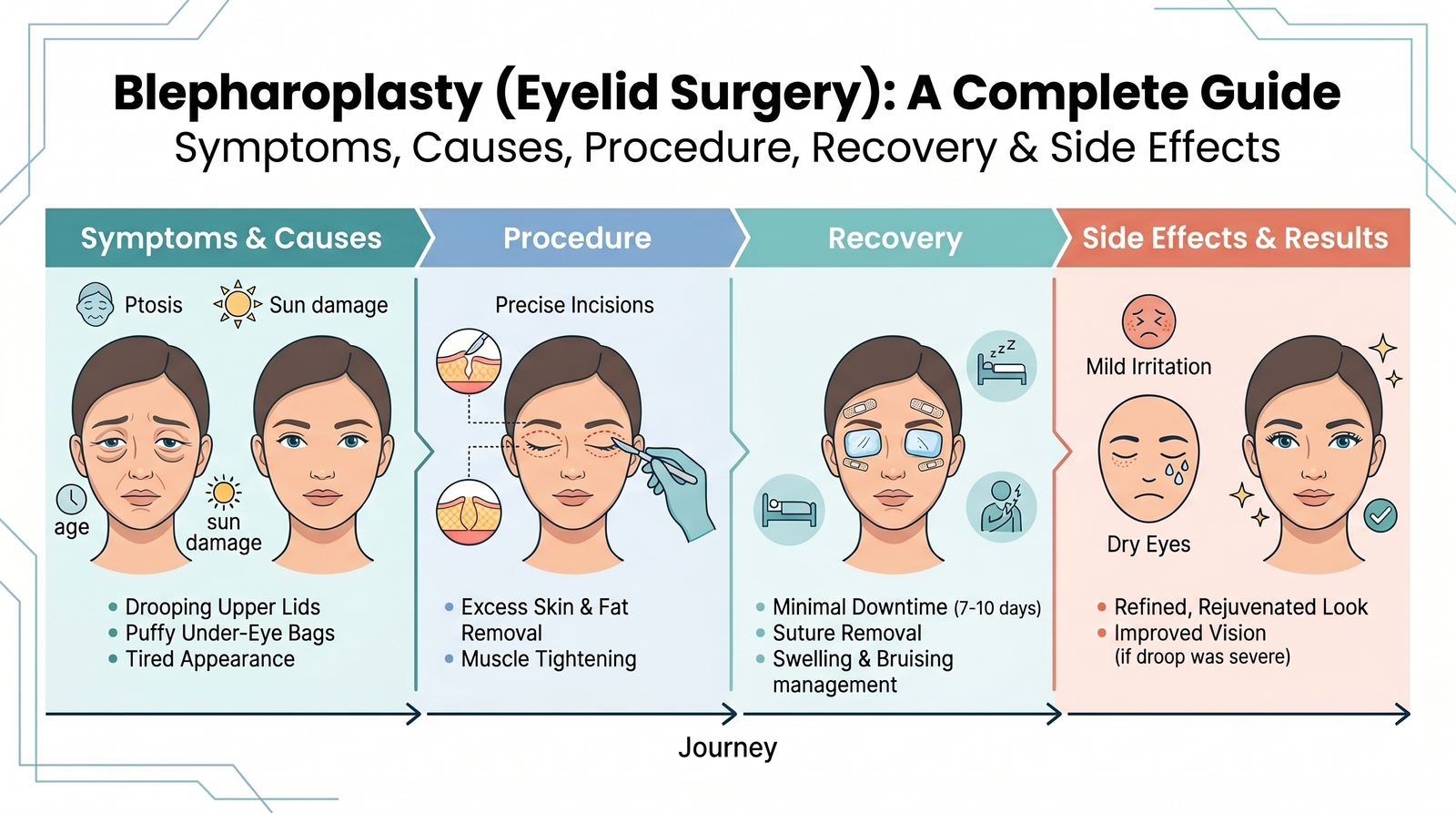
Your eyes are often the first thing people notice about you - and when drooping eyelids or puffy under-eye bags start affecting how you look or even how well you see, it can take a real toll on your confidence and daily life. Blepharoplasty, commonly known as eyelid surgery, is one of the most popular cosmetic and functional surgical procedures performed worldwide. Whether you're dealing with vision obstruction caused by sagging upper eyelids or simply want to refresh a tired, aged appearance, this procedure offers a proven solution.
In this comprehensive guide, we'll walk you through everything you need to know about blepharoplasty - what it is, who needs it, how it's performed, what recovery looks like, and what side effects to expect.
What Is Blepharoplasty?
Blepharoplasty is a surgical procedure that repairs drooping or sagging eyelids by removing or repositioning excess skin, muscle, and fat around the eyes. The word comes from the Greek blepharon (eyelid) and plassein (to form).
The procedure can be performed on the upper eyelids, lower eyelids, or both, depending on the patient's needs. While many people pursue it for cosmetic reasons - to achieve a more youthful, alert appearance - blepharoplasty is also performed for functional reasons when drooping upper eyelids (a condition called ptosis) obstruct peripheral vision.
According to the American Society of Plastic Surgeons, blepharoplasty consistently ranks among the top five cosmetic surgical procedures performed each year, making it one of the most trusted and well-studied operations in modern medicine.
Types of Blepharoplasty
Understanding the different blepharoplasty types helps set clear expectations before surgery.
Upper Blepharoplasty
Upper blepharoplasty focuses on the upper eyelids and is often performed to remove excess, overhanging skin that makes the eyes look heavy or tired. In more advanced cases, the drooping skin can actually fall over the lash line and block parts of the visual field - a functional issue that may be covered by health insurance.
During upper blepharoplasty, the surgeon makes incisions along the natural crease of the eyelid, removes or redistributes fat deposits, trims away excess skin and muscle, and then closes the incision with fine sutures. Because the scar falls naturally within the eyelid crease, it becomes nearly invisible once healed.
Lower Blepharoplasty
Lower blepharoplasty targets the area beneath the eyes, addressing issues like under-eye bags, puffiness, and excess skin that creates a perpetually tired or aged look. It can be performed using two different approaches:
- Transcutaneous (external) approach: An incision is made just below the lower lash line, allowing the surgeon to access and reposition fat, remove excess skin, and tighten the area.
- Transconjunctival approach: The incision is made inside the lower eyelid (the conjunctiva), leaving no external scar. This technique is ideal for younger patients with good skin elasticity who primarily need fat removal or repositioning without significant skin tightening.
Combination (Four-Eyelid) Surgery
Many patients opt to have both upper and lower blepharoplasty performed in a single session for a more comprehensive rejuvenation. This approach also reduces overall anesthesia exposure and recovery time compared to two separate procedures.
Who Needs Blepharoplasty? Signs and Symptoms
People seek blepharoplasty for a variety of cosmetic and medical reasons. Common signs and symptoms that may indicate you're a candidate include:
- Drooping or sagging upper eyelids that make you look older or more tired than you feel
- Excess skin folds on the upper eyelids that partially obstruct vision, particularly peripheral (side) vision
- Puffy or swollen-looking upper eyelids caused by fat prolapse
- Under-eye bags — persistent puffiness beneath the eyes that doesn't improve with rest or lifestyle changes
- Excess skin and fine wrinkles on the lower eyelids
- A heavy or hooded eyelid appearance that conceals the natural eyelid crease
- Difficulty wearing contact lenses or glasses comfortably due to skin overhang
- Frequent headaches or eyebrow fatigue caused by unconsciously raising the brows to lift drooping lids
It's important to note that blepharoplasty does not treat dark circles under the eyes, crow's feet, or brow drooping (ptosis of the brow). These concerns may require complementary procedures such as a brow lift or laser resurfacing.
What Causes Eyelid Changes?
The changes that make someone a candidate for eyelid surgery don't happen overnight. Several factors contribute to the gradual loosening and sagging of eyelid tissue:
1. Natural Aging
As we age, the skin loses collagen and elastin — the proteins that keep it firm and resilient. The eyelid skin, which is the thinnest skin on the entire body, is particularly susceptible to this loss. Over time, it stretches and sags under its own weight.
2. Weakened Muscles
The orbicularis oculi muscle that surrounds the eye and the levator muscle that lifts the upper eyelid can weaken with age, contributing to drooping.
3. Fat Repositioning
The fat pads that cushion and protect the eyes are held in place by a thin membrane. As this membrane weakens with age, fat can protrude forward, creating the bulging appearance associated with under-eye bags and puffy upper lids.
4. Genetics
A predisposition to early eyelid aging or prominent fat prolapse runs in families. Some people develop significant eyelid changes in their 30s or 40s due to hereditary factors.
5. Sun Exposure and Lifestyle
Chronic sun exposure accelerates skin aging and collagen breakdown. Smoking, poor sleep, allergies, and fluid retention can also contribute to under-eye puffiness and skin laxity over time.
Who Is a Good Candidate?
The best candidates for blepharoplasty are generally:
- Adults in good overall health with no serious eye conditions
- Non-smokers (or those willing to quit smoking before and after surgery)
- People with realistic expectations about outcomes
- Individuals whose drooping eyelids are affecting their vision or significantly impacting their quality of life
- Those who have stable, well-managed conditions such as diabetes, thyroid disorders (like Graves' disease), or dry eye syndrome — though these require extra evaluation before surgery is approved
A thorough consultation with a board-certified plastic surgeon or ophthalmologist is essential to determine candidacy. Your surgeon will assess your overall health, the structure of your eyes and eyelids, and your goals for surgery.
The Blepharoplasty Procedure: Step by Step
Pre-Surgical Preparation
Before your blepharoplasty procedure, you'll undergo a comprehensive pre-operative evaluation that typically includes:
- A detailed medical history review
- A physical examination of your eyelids and surrounding structures
- A visual field test (to document any vision impairment caused by drooping lids — important for insurance coverage)
- Photographs from multiple angles to plan the surgery
- Discussion of medications: You'll be asked to stop blood thinners (like aspirin or ibuprofen), certain vitamins, and herbal supplements for at least two weeks prior to surgery to minimize bleeding risk
Anesthesia
Blepharoplasty is most commonly performed under local anesthesia with sedation (twilight anesthesia), meaning you'll be relaxed and comfortable but not fully unconscious. General anesthesia may be used in more complex cases or when combined with other procedures.
The Surgery Itself
The duration of the procedure depends on whether one or both eyelid areas are being treated:
- Upper eyelid surgery alone: Approximately 45 minutes to 1 hour
- Lower eyelid surgery alone: Approximately 45 minutes to 1 hour
- Combined upper and lower (four-eyelid surgery): 2 to 3 hours
For upper eyelids: The surgeon marks the incision lines along the natural crease of the eyelid, makes precise cuts, removes or repositions the targeted fat and skin, and closes the incision with very fine sutures or skin adhesive.
For lower eyelids: Using either the external or internal (transconjunctival) approach, the surgeon carefully removes or redistributes the fat deposits responsible for puffiness and addresses any excess skin. If needed, the lower eyelid may be slightly tightened using a canthopexy or canthoplasty technique to prevent the eyelid from pulling downward after surgery.
Blepharoplasty is typically performed as an outpatient procedure, meaning patients go home the same day.
Recovery After Blepharoplasty
Immediate Post-Operative Period
After surgery, your eyelids will be lubricated with ointment, and your eyes may be loosely covered with gauze. You'll be monitored in a recovery area before being discharged home with a responsible adult who can care for you overnight.
Expect the following in the first few days:
- Swelling and bruising around the eyes — this is normal and peaks around days 2 to 3
- Mild to moderate discomfort and tightness — manageable with prescribed or over-the-counter pain relief
- Blurred or double vision temporarily due to lubricating ointment
- Sensitivity to light and watery eyes
First Two Weeks
Most patients take 10 to 14 days off work or social activities during the initial recovery period. Key care instructions during this time include:
- Applying cold compresses to reduce swelling during the first 48 hours
- Keeping the head elevated, even during sleep, to minimize fluid accumulation
- Using prescribed antibiotic eye drops or ointment to prevent infection
- Avoiding rubbing or touching the eyes
- Refraining from contact lens use for at least two weeks
- Avoiding strenuous activity, heavy lifting, and bending over, which can increase blood pressure around the eyes
Sutures are typically removed within 5 to 7 days for upper eyelids and slightly longer for lower eyelids, if external stitches were used.
Blepharoplasty Recovery Time: Full Timeline
|
|
|
|
|
|
|
|
|
|
|
|
|
|
|
|
|
|
|
|
|
It's worth noting that healing timelines vary between individuals. Age, skin type, and overall health all play a role in how quickly you recover.
Side Effects of Blepharoplasty
Like any surgical procedure, blepharoplasty carries the potential for side effects — both temporary and, in rare cases, longer-lasting.
Common, Temporary Side Effects
These are expected and typically resolve within days to weeks:
- Swelling and bruising — the most universal side effect, usually resolving within 2 weeks
- Dry eyes or excessive tearing — common in the first few weeks as the eyes adjust
- Sensitivity to light and wind
- Blurred or double vision — usually temporary and caused by lubrication ointment
- Difficulty fully closing the eyes — a temporary issue as the eyelids adjust to the new contour
- Numbness or altered sensation along the incision lines
Potential Complications
While rare, more serious complications can occur and should be discussed with your surgeon:
- Infection — minimized with proper wound care and antibiotic drops
- Noticeable scarring — uncommon when performed by an experienced surgeon, as incisions are placed within natural skin folds
- Asymmetry — subtle differences between the two eyes may require minor revision
- Ectropion — a condition where the lower eyelid pulls away from the eye; more common with lower blepharoplasty, especially if skin is over-resected
- Lagophthalmos — inability to fully close the eyelids, which can lead to corneal dryness and damage if not addressed
- Vision changes — very rarely, temporary or permanent vision changes can occur; vision loss is an extremely rare but serious complication
- Hematoma — a collection of blood under the skin that may require drainage
Choosing a board-certified, experienced surgeon and following all pre- and post-operative instructions significantly reduces these risks.
Long-Term Results of Blepharoplasty: How Long Do Outcomes Last?
One of the most common questions patients ask before undergoing eyelid surgery is how long the results will last. Blepharoplasty is considered a long-lasting procedure, but like all cosmetic surgeries, it does not stop the natural aging process.
For upper eyelid blepharoplasty, results can last anywhere from 7 to 10 years, and in many cases, even longer. Some patients may never require a second procedure, especially if the surgery is performed later in life when most of the aging-related changes have already occurred. However, gradual skin laxity may return over time due to aging and environmental factors.
For lower eyelid blepharoplasty, the results are often even more durable. Since the procedure typically involves repositioning or removing fat pads, the improvements in under-eye bags are usually permanent. It is uncommon for fat to reaccumulate in the same way after surgery.
That said, external factors can influence how long your results last:
- Sun exposure accelerates collagen breakdown and skin aging
- Smoking reduces skin elasticity and delays healing
- Lifestyle habits like poor sleep, stress, and diet can impact skin quality
- Genetics play a significant role in how your skin ages over time
To maximize longevity, patients are advised to:
- Use high-quality sunscreen daily
- Follow a consistent skincare routine with retinoids and antioxidants
- Maintain a healthy lifestyle with proper hydration and nutrition
In some cases, minor non-surgical treatments such as Botox, fillers, or skin resurfacing may be used years later to maintain or enhance the surgical results.
Risks vs Benefits: Is Blepharoplasty Worth It?
When considering any surgical procedure, especially one involving the eyes, patients naturally weigh the risks against the expected benefits. Blepharoplasty has a high satisfaction rate globally, largely because it delivers both aesthetic and functional improvements.
Key Benefits
- Improved Vision: For patients with drooping upper eyelids, removing excess skin can significantly enhance peripheral vision.
- More Youthful Appearance: The eyes appear more open, rested, and alert, often making patients look years younger.
- Enhanced Facial Symmetry: Correcting asymmetry between eyelids can improve overall facial balance.
- Boost in Confidence: Many patients report improved self-esteem and comfort in social or professional settings.
- Long-lasting Results: Compared to non-surgical treatments, results are significantly more durable.
Potential Risks
While complications are rare, they are not negligible:
- Surgical risks such as infection or bleeding
- Temporary discomfort and downtime
- Rare but serious complications affecting vision
The critical factor in minimizing risks is choosing the right surgeon. A board-certified plastic surgeon or oculoplastic specialist with extensive experience in eyelid surgery will have a deep understanding of eyelid anatomy and precision techniques.
Is It Worth It?
For individuals experiencing functional impairment (vision obstruction) or significant cosmetic concerns that affect confidence, blepharoplasty is often considered highly worthwhile. The procedure addresses root structural issues that non-surgical treatments cannot fix.
However, patients seeking correction for concerns like dark circles or fine lines alone may benefit more from less invasive treatments. A proper consultation is key to setting realistic expectations and ensuring the procedure aligns with your goals.
Tips for a Smooth Recovery and Best Results
Recovery plays a crucial role in determining the final outcome of your blepharoplasty. While the procedure itself may be relatively straightforward, how well you follow post-operative care instructions can significantly impact healing, scarring, and overall satisfaction.
Pre-Surgery Preparation Tips
A smooth recovery starts even before the surgery:
- Stop smoking at least 2–4 weeks prior, as it interferes with healing
- Avoid blood-thinning medications and supplements unless prescribed
- Arrange for someone to assist you during the first 24–48 hours post-surgery
- Prepare your recovery space with essentials like cold compresses, prescribed medications, and lubricating eye drops
Post-Surgery Care Guidelines
Following surgery, adherence to care instructions is critical:
- Cold Compresses: Use regularly in the first 48 hours to reduce swelling
- Head Elevation: Sleep with your head elevated to minimize fluid buildup
- Medication Compliance: Use prescribed ointments or drops to prevent infection and dryness
- Avoid Screen Strain: Limit screen time initially to reduce eye fatigue
- Sun Protection: Wear dark sunglasses outdoors to protect sensitive skin and healing incisions
What to Avoid
- Rubbing or touching the eyes
- Heavy exercise or bending over for at least 2 weeks
- Wearing contact lenses too soon
- Exposure to dust, smoke, or harsh environments
Scar Management
Although scars from blepharoplasty are minimal and well-hidden, proper care helps ensure optimal healing:
- Keep incision areas clean and moisturized as advised
- Avoid direct sun exposure on healing scars
- Use doctor-recommended scar gels if necessary
When to Contact Your Surgeon
While most recoveries are uneventful, you should immediately consult your doctor if you notice:
- Severe pain or sudden swelling
- Vision disturbances that persist or worsen
- Signs of infection such as redness, warmth, or discharge
A well-managed recovery not only ensures safety but also enhances the final aesthetic outcome, helping you achieve natural-looking, long-lasting results.
How Much Does Blepharoplasty Cost?
Blepharoplasty cost varies widely depending on several factors:
- Geographic location and the surgeon's level of expertise
- Whether upper, lower, or both eyelids are being treated
- Facility and anesthesia fees
- Whether the procedure is cosmetic or medically necessary
In the United States, the average cost of cosmetic blepharoplasty ranges from $3,000 to $7,000 or more when all fees are included. Upper eyelid surgery tends to be less expensive than lower eyelid surgery due to the added complexity of the lower procedure.
Importantly, if drooping eyelids are impairing your vision (confirmed by a visual field test), your health insurance may cover upper blepharoplasty as a medically necessary procedure. Always check with your insurer and get pre-authorization before scheduling surgery.
Blepharoplasty vs. Other Eye Rejuvenation Options
It's worth knowing that blepharoplasty isn't the only option for addressing aging around the eyes. Depending on the degree of concern, alternatives or complementary treatments include:
- Brow lift (forehead lift): Addresses brow drooping, which can mimic or worsen the appearance of heavy upper eyelids
- Botox (botulinum toxin): Can subtly lift the brow and reduce crow's feet but cannot address excess skin or fat
- Dermal fillers: Can improve under-eye hollowing (tear trough deformity) but don't address bags caused by fat prolapse
- Laser resurfacing: Improves skin texture, tone, and fine lines around the eyes but doesn't treat structural issues
Your surgeon can help you determine the right approach - or combination of approaches - to meet your specific goals.
Frequently Asked Questions (FAQs)
What is blepharoplasty surgery?
Blepharoplasty is a surgical procedure that removes or repositions excess skin, fat, and muscle around the eyelids. It can be performed on upper or lower eyelids to improve appearance or correct vision issues caused by drooping skin.
Who is a good candidate for blepharoplasty (eyelid surgery)?
Good candidates are healthy adults with drooping eyelids, under-eye bags, or excess skin affecting appearance or vision. Non-smokers with realistic expectations and no serious eye conditions are typically suitable for this procedure.
How long does it take to recover from blepharoplasty?
Initial recovery takes about 10–14 days, during which swelling and bruising reduce. Most patients resume normal activities within two weeks, while complete healing and final results may take several months to fully develop.
What are the possible side effects of eyelid surgery?
Common side effects include swelling, bruising, dry eyes, and temporary blurred vision. Rare complications may include infection, asymmetry, or difficulty closing the eyes. Serious risks are uncommon when performed by an experienced surgeon.
Are the results of blepharoplasty permanent?
Blepharoplasty results are long-lasting but not permanent. Upper eyelid results may last 5–10 years, while lower eyelid improvements are often permanent. Aging and lifestyle factors can gradually affect the appearance over time.